Home
Home
 About Us



Tea exports: Raising quality standards, creating value
02/03/2026 03:19
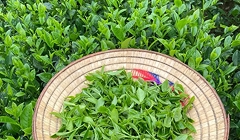
Restructuring the tea value chain in the period 2026–2030 is not only an internal requirement but also a condition for the tea industry to establish a new position in the international market.
Internal production capacity: The foundation of long-term competitiveness.
Currently, Viet Nam maintains its position as the 5th largest tea producer and exporter in the world , with tea growing areas stretching from the northern mountainous midlands to the Central Highlands. Major production centers are concentrated in Thai Nguyen, Phu Tho, Lam Dong, and several northern mountainous provinces.
In 2025, tea exports are projected to reach 136,952 tons, with a value of nearly $238 million, a decrease of 7.07% in volume and 0.72% in value compared to 2024. However, January 2026 shows positive signs of recovery, with exports increasing by 28% in volume and 27% in value, reaching nearly $21 million.
Despite maintaining a large scale, the average export price of Vietnamese tea only fluctuates between US$1,644 and US$1,737 per ton, equivalent to 55-65% of the world average (approximately US$2,600 per ton in 2023). Compared to countries that have successfully positioned themselves in the premium segment, such as Sri Lanka or Kenya, the price difference remains significant. This indicates that there is still ample room for increasing added value if the tea industry improves its product structure and market strategy.
The period 2005–2024 witnessed a notable shift in tea production. The planted area peaked at 133.6 thousand hectares in 2015, then contracted to approximately 121.9 thousand hectares in 2024 due to profit pressures and crop diversification. However, fresh tea leaf production increased sharply from 570 thousand tons in 2005 to 1.154 million tons in 2024 thanks to new varieties accounting for about 54% of the planted area and improved cultivation techniques.
Increased productivity helps maintain a stable supply for processing and export, but also poses a challenge in controlling pesticide residue levels (MRLs) as high-end markets tighten standards.
The average farm size is only about 0.2 hectares per household, resulting in weak supply chain linkages and difficulties in implementing Organic, VietGAP, GlobalGAP, or Rainforest Alliance certifications due to high auditing costs. Only about 10% of factories have their own or closely linked raw material sources, leading to inconsistent input quality.
According to Associate Professor Dr. Nguyen Dinh Tho from the Institute of Agricultural and Environmental Strategy and Policy, in the context of markets such as the EU and North America demanding transparency in origin and low emissions, restructuring production organizations according to large-scale cooperative models, long-term supply contracts, and digital traceability platforms has become a prerequisite.
The global tea industry is shifting strongly towards advanced processing, packaging design, and brand storytelling. Tea is no longer just a traditional beverage but is being redefined as a health-supporting product, rich in polyphenols, catechins, and L-theanine.
The herbal tea and blended tea segment recorded a compound annual growth rate (CAGR) of approximately 8.1%. The ready-to-drink (RTD) tea market is projected to reach $70.85 billion by 2034, with an annual growth rate of 5.9%. This presents significant potential for tea extracts, instant powders, and tea concentrates.
However, Viet Nam's export structure currently relies 94% on conventionally processed green tea, resulting in low profit margins. The new direction needs to prioritize investment in extraction technology, spray drying, vacuum concentration, microclimate control using IoT, and cold chain standardization.
Simultaneously, the industry needs to develop new product portfolios such as white tea, black tea, fermented tea, and kombucha based on Vietnamese tea, linked to cultural stories and regional specialties.
The structure of Viet Nam's tea export market used to be heavily dependent on Pakistan. When Pakistan reduced imports in 2025 due to currency and logistics difficulties, the proportion of imports from Viet Nam decreased sharply.
Businesses have flexibly shifted their focus to Iraq (a 51% increase in volume by 2025), the Philippines (over 500% increase in volume by January 2026), Russia, India, Poland, and Thailand. Thailand currently accounts for 34.24% of the market share for tea imports from Viet Nam, thanks to its suitability for cold-brewed green tea preferences.
Free trade agreements such as EVFTA and CPTPP facilitate access to high-end markets, but also require strict adherence to sustainability and traceability standards.
The trend toward green, equitable, and low-emission consumption is setting new rules of the game. Rainforest Alliance, Fairtrade, and Organic certifications are becoming requirements for product placement in the EU and North America.
In this context, organic production is seen as the inevitable future of Viet Nam's tea industry. Developing organic tea growing areas not only increases selling prices but also helps enhance the national brand image.
In particular, the ancient Shan Tuyet tea from Ha Giang and Yen Bai has the potential to position itself in the high-end specialty tea segment. Growing at altitudes above 800 meters, accumulating abundant micronutrients, and meeting natural organic criteria, Shan Tuyet tea could penetrate the fine tea segment in Europe and America if its geographical indication and local cultural narrative are properly developed.
The Ministry of Agriculture and Environment stated that the tea development strategy until 2030 needs to focus on four pillars: Upgrading quality standards and sustainability: planting area codes, digital traceability, group certification; Investing in deep processing: increasing the proportion of refined products, RTD, and functional teas; Diversifying markets: reducing dependence on a few mid-range markets; Building a national brand for Vietnamese tea.
The goal is not just to maintain a production of 1.2–1.4 million tons of fresh tea leaves, but more importantly, to increase the value per ton of exported tea. When each shipment incorporates digital traceability, sustainability certification, and a heritage story, Vietnamese tea can shift from supplying cheap raw materials to creating high value.
The period from 2026 to 2030 will therefore be a pivotal time for Viet Nam's tea industry to step out of its "comfort zone" of exporting raw tea, establishing a new position in the global value chain.
Source: VGP News
Các tin khác
- U.S. to Impose Duties on Mexican, Thai, Vietnamese Chassis (03/06/2026)
- Mexican sugar producers push to scrap U.S. import quotas (03/06/2026)
- Japan launched an anti-dumping investigation into flat steel imports from three countries (03/06/2026)
- Eurochem challenges anti-dumping duties in the EU (03/06/2026)
- Pangasius prices in Viet Nam surge due to high export demand (03/06/2026)