Home
Home
 About Us



Solar panel dispute needs to cool down
23/05/2013 12:00
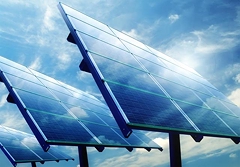
Less than a week before China’s premier visits Germany, tensions are rising between the European Commission, about to slap anti-dumping duties on Chinese solar panel producers, and Berlin, which prefers the path of negotiations lest Beijing retaliates against German exporters.
Berlin’s criticism of Karel De Gucht, trade commissioner, may seem paradoxical: German solar- panel producers are big losers from the steep price cuts caused by China’s promotion of renewable power equipment. A German company, Solar World, spearheaded the original complaints against alleged dumping and illegal subsidies.
But the dispute is a case study in the complexity of global manufacturing and the futility of protectionism. Anti-dumping duties will hurt not only their intended victims, Chinese solar-panel makers. Europeans too will suffer from the higher prices that will result. Mr De Gucht should listen to Berlin.
The most direct casualty will be those who buy photovoltaics to obtain cheaper or greener energy, and the fitting industry. Indirectly, all electricity users share the burden of tighter power supply if the policy shrinks generating capacity from what it would otherwise have been; though this will be marginal.
The most perverse harm will fall on suppliers of panel components, since higher prices mean fewer solar panels are bought. Some of these are western and indeed German companies that master advanced technologies such as production of ultra-pure polysilicon, a constituent of solar cells. And then, of course, Beijing may react in kind and cause difficulty for other European exporters into its market.
So the German position is one of self-interest. But it is enlightened, too. If Mr De Gucht imposes duties – which he must decide by June 6 and can then maintain for six months – the economic gain for industry sectors he protects will be outweighed by the costs to a much broader part of the European economy. That is before the environment is taken into account, where it should be obvious the planet needs cheap renewables more than European-manufactured ones.
Mr De Gucht is not unjustified in worrying that Beijing may consciously be undermining industries in Europe that it wants to develop in China. But here he has picked the wrong fight. If he goes ahead with duties, it will be hard for Germany to build a qualified majority of EU states to overrule him. All the more reason for Beijing and Berlin to come up with a face-saving compromise that Mr De Gucht can accept in the EU’s interest.
Berlin’s criticism of Karel De Gucht, trade commissioner, may seem paradoxical: German solar- panel producers are big losers from the steep price cuts caused by China’s promotion of renewable power equipment. A German company, Solar World, spearheaded the original complaints against alleged dumping and illegal subsidies.
But the dispute is a case study in the complexity of global manufacturing and the futility of protectionism. Anti-dumping duties will hurt not only their intended victims, Chinese solar-panel makers. Europeans too will suffer from the higher prices that will result. Mr De Gucht should listen to Berlin.
The most direct casualty will be those who buy photovoltaics to obtain cheaper or greener energy, and the fitting industry. Indirectly, all electricity users share the burden of tighter power supply if the policy shrinks generating capacity from what it would otherwise have been; though this will be marginal.
The most perverse harm will fall on suppliers of panel components, since higher prices mean fewer solar panels are bought. Some of these are western and indeed German companies that master advanced technologies such as production of ultra-pure polysilicon, a constituent of solar cells. And then, of course, Beijing may react in kind and cause difficulty for other European exporters into its market.
So the German position is one of self-interest. But it is enlightened, too. If Mr De Gucht imposes duties – which he must decide by June 6 and can then maintain for six months – the economic gain for industry sectors he protects will be outweighed by the costs to a much broader part of the European economy. That is before the environment is taken into account, where it should be obvious the planet needs cheap renewables more than European-manufactured ones.
Mr De Gucht is not unjustified in worrying that Beijing may consciously be undermining industries in Europe that it wants to develop in China. But here he has picked the wrong fight. If he goes ahead with duties, it will be hard for Germany to build a qualified majority of EU states to overrule him. All the more reason for Beijing and Berlin to come up with a face-saving compromise that Mr De Gucht can accept in the EU’s interest.
May 20, 2013 6:27 PM
Source: ft.com
Source: ft.com
Các tin khác
- Viet Nam's steel industry takes another step forward in the anti-dumping lawsuit against Chinese goods (17/06/2026)
- Türkiye launches anti-dumping probe into car tire imports (17/06/2026)
- TRA proposes extending anti-dumping measure on wire rod (17/06/2026)
- Ample room remains for Viet Nam–India logistics cooperation (17/06/2026)
- Local authorities to directly issue fragrant rice export certificates from July 2026 (17/06/2026)