Home
Home
 About Us



Six WTO members raise concern over India's anti-dumping cases
01/11/2016 12:00
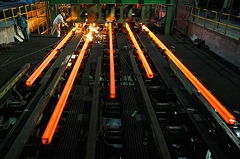
Six WTO members including China, have raised concerns over India's anti-dumping cases in the steel sector.
The issues were raised during the meeting of the Committee on Anti-dumping (AD) practices in Geneva.
China has stated that "it was concerned about recent Indian practices, noting that 18 AD investigations had been initiated against Chinese imports in 2016 alone," a Geneva- based trade official said.
"Six WTO members took the floor to question India about its recent anti-dumping actions," the official said.
Japan and Ukraine also questioned several aspects of India's investigation into Japanese cold-rolled steel which resulted in a preliminary determination of dumping last August and which they said were inconsistent with WTO rules.
While Qatar said India's ongoing AD investigation on benzene violated several procedural requirements and failed to demonstrate injury to domestic producers of benzene in India, the official said.
The EU said it had serious doubts about India's decision to launch an AD investigation on styrene butadiene rubber and urged it to wrap up the investigation without imposing any measure.
"India said it would pass on the concerns to its capital and respond later," the official said.
Countries initiate anti-dumping probes to determine if the domestic industry has been hurt by a surge in below-cost imports. As a counter-measure, they impose duties under the multilateral WTO regime.
Anti-dumping measures are taken to ensure fair trade and provide a level-playing field to the domestic industry. They are not a measure to restrict imports or cause an unjustified increase in cost of products.
India has initiated maximum anti-dumping cases against below-cost imports from China.
The issues were raised during the meeting of the Committee on Anti-dumping (AD) practices in Geneva.
China has stated that "it was concerned about recent Indian practices, noting that 18 AD investigations had been initiated against Chinese imports in 2016 alone," a Geneva- based trade official said.
"Six WTO members took the floor to question India about its recent anti-dumping actions," the official said.
Japan and Ukraine also questioned several aspects of India's investigation into Japanese cold-rolled steel which resulted in a preliminary determination of dumping last August and which they said were inconsistent with WTO rules.
While Qatar said India's ongoing AD investigation on benzene violated several procedural requirements and failed to demonstrate injury to domestic producers of benzene in India, the official said.
The EU said it had serious doubts about India's decision to launch an AD investigation on styrene butadiene rubber and urged it to wrap up the investigation without imposing any measure.
"India said it would pass on the concerns to its capital and respond later," the official said.
Countries initiate anti-dumping probes to determine if the domestic industry has been hurt by a surge in below-cost imports. As a counter-measure, they impose duties under the multilateral WTO regime.
Anti-dumping measures are taken to ensure fair trade and provide a level-playing field to the domestic industry. They are not a measure to restrict imports or cause an unjustified increase in cost of products.
India has initiated maximum anti-dumping cases against below-cost imports from China.
Source: Business-standard.com
Các tin khác
- New-generation FTAs open wider export opportunities to Middle East and South Asia (15/06/2026)
- Updated regulations on foreign trade management and import quotas (15/06/2026)
- Mandatory traceability for high-risk goods from July 1st: What should businesses prepare for? (15/06/2026)
- Tariff pressure is forcing businesses to restructure in order to adapt. (15/06/2026)
- Coffee Citizens model aims to lift Vietnamese value chain (15/06/2026)