Home
Home
 About Us



Seafood exports seek growth opportunities from new markets
18/03/2026 10:01
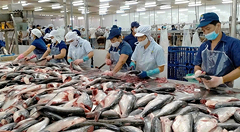
Viet Nam's seafood exports continue to grow but are facing pressure from logistics costs and trade barriers, forcing businesses to seek opportunities in new markets.
Increased logistics costs and trade barriers.
Viet Nam's seafood exports enter 2026 with a mix of opportunities and challenges. After a year of impressive results, the industry is facing increasingly complex fluctuations in global trade, from rising logistics costs and geopolitical risks to increasingly stringent trade barriers in importing markets.
Speaking at the first quarter 2026 trade promotion meeting with the system of Vietnamese trade offices abroad, Ms. Le Hang, Deputy General Secretary of the Viet Nam Association of Seafood Processing and Export (VASEP), said that in the context of a highly uncertain global market, timely information updates from management agencies and the system of trade offices have become particularly important for the business community.
According to VASEP, 2025 marks a significant milestone for the seafood industry , with export turnover reaching $11.3 billion, the highest level ever. Including some related product groups, the figure could reach approximately $11.6 billion.
Entering 2026, seafood exports are expected to maintain a certain growth momentum. In the first two months of the year, export value reached approximately US$1.7 billion, an increase of about 2% compared to the same period last year. According to Ms. Le Hang, this growth, in addition to market demand, is also influenced by several technical factors related to trade policy milestones in some major markets.
Besides positive signals regarding export value, the seafood industry is also facing many new pressures from the global supply chain. According to VASEP representatives, geopolitical conflicts in some regions, along with adjustments to shipping routes by international shipping companies, are causing longer shipping times and significantly increased logistics costs.
For the seafood industry, which relies heavily on cold chain and international shipping, rising logistics costs can directly impact product prices and the competitiveness of export businesses. Beyond transportation costs, many businesses also face pressure from trade barriers and protectionist measures in some major markets.
According to Ms. Le Hang, some key products such as shrimp and pangasius continue to face anti-dumping lawsuits in the US market. Although recent reviews have shown more positive signs than before, the tariffs applied to some businesses remain high, making export activities difficult. In addition, requirements related to sustainable exploitation, environmental protection, and traceability are becoming increasingly stringent in many importing markets.
Diversify markets to reduce export risks.
In the context of constantly fluctuating global trade, from geopolitical conflicts and logistics cost changes to increasingly complex trade barriers, representatives of the Viet Nam Association of Seafood Processing and Export (VASEP) believe that diversifying export markets is becoming a strategic requirement for the seafood industry.
According to Ms. Le Hang, for many years, Viet Nam's seafood exports have been heavily concentrated in a few key markets such as the United States, the European Union (EU), China, Japan, and South Korea. These are large markets with stable purchasing power, but they also pose many risks when trade policies change or consumer demand fluctuates. In this context, expanding into new markets would not only help diversify risks but also create more room for growth for the industry.
According to her, many countries in South America, the Middle East, and South Asia are experiencing increasing demand for seafood products, especially those with competitive prices and stable supply. These are considered potential markets for Vietnamese businesses to expand their export activities in the future.
Besides expanding markets, VASEP representatives also emphasized the role of specialized trade promotion programs in helping businesses reach new customers, stay updated on consumer trends, and build international partner networks.
According to Ms. Le Hang, over the years, the support of the Ministry of Industry and Trade , especially the Trade Promotion Department and the system of Vietnamese trade offices abroad, has played a significant role in providing market information, connecting partners, and supporting businesses in participating in trade promotion programs in many countries.
According to VASEP representatives, in the long term, to maintain its position in the international market, the seafood industry needs not only to expand its markets but also to enhance product value, diversify product types, and strengthen its ability to adapt to new standards of importing markets.
Close coordination between businesses, industry associations, and regulatory agencies, as well as overseas trade offices, is considered a key factor in helping Viet Nam's fisheries sector better utilize opportunities from international markets and effectively respond to fluctuations in global trade.
According to the Viet Nam Association of Seafood Processing and Export (VASEP), Viet Nam's seafood export turnover is expected to reach approximately US$11.3 billion in 2025, the highest level ever. Including related product groups, the figure could reach around US$11.6 billion.
Entering the first two months of 2026, seafood exports reached approximately $1.7 billion, an increase of about 2% compared to the same period last year, showing that the industry has maintained its growth momentum amidst volatile global trade.
Source: Industry and Trade Review
Các tin khác
- U.S. to Impose Duties on Mexican, Thai, Vietnamese Chassis (03/06/2026)
- Mexican sugar producers push to scrap U.S. import quotas (03/06/2026)
- Japan launched an anti-dumping investigation into flat steel imports from three countries (03/06/2026)
- Eurochem challenges anti-dumping duties in the EU (03/06/2026)
- Pangasius prices in Viet Nam surge due to high export demand (03/06/2026)