Home
Home
 About Us


Removing obstacles to seafood export procedures to the United States
04/02/2026 09:58
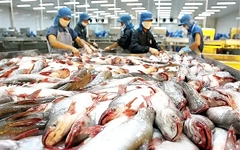
According to the Ministry of Agriculture and Environment, the issuance of Certificates of Analysis (COA) has been implemented in several localities.
According to the Viet Nam Association of Seafood Processing and Export (VASEP), since the beginning of 2026, the issuance of Certificates of Analysis (COA) for seafood products exported to the United States has faced numerous difficulties. As a result, many seafood shipments from Vietnamese businesses have been denied entry into this market.
After the Viet Nam Association of Seafood Processing and Export (VASEP) compiled feedback from businesses, the association held a quick meeting with the Department of Fisheries and Fisheries Inspection to report and make recommendations. On January 30, 2026, the Ministry of Agriculture and Environment sent a document to the People's Committees of provinces and centrally-administered cities regarding strengthening the implementation of Circular 74/2025/TT-BNNMT dated December 26, 2025, of the Ministry of Agriculture and Environment, which regulates the certification of seafood and seafood products exported to the US market.
According to the Ministry of Agriculture and Environment, the issuance of Certificates of Analysis (COA) has been implemented in several localities. However, the implementation process in these localities is not yet synchronized or unified, and the number of applications received and processed remains low compared to the demand.
Therefore, in order to promptly provide the necessary documents to organizations and individuals exporting seafood products to the United States, without disrupting or hindering export activities and in compliance with the regulations in Circular 74/2025/TT-BNNMT, the Ministry of Agriculture and Environment requests provinces and cities to pay attention and direct functional units to promptly publish administrative procedures, make them public at the agencies and units directly receiving and processing administrative procedures; and publish internal procedures for handling dossiers to ensure timely receipt and processing of dossiers. This should be completed before February 5, 2026.
Provinces and cities shall organize the receipt of applications through direct submission and public postal services (during the period when online public services are not yet available); strictly adhere to regulations regarding the required documents and application formats; not request additional unnecessary documents or files not stipulated in the regulations; and allocate sufficient personnel to promptly process applications within the prescribed timeframe.
Provinces and cities will continue to widely disseminate the regulations in Circular 74/2025/TT-BNNMT to agencies, organizations, and individuals operating in the fisheries sector; and implement the contents directed by the Ministry of Agriculture and Environment in document No. 11144/BNNMT-TSKN dated December 31, 2025.
According to VASEP, Circular No. 74/2025/TT-BNNMT allows businesses to choose one of three methods for submitting applications: in person, by mail, or online, in line with the policy of administrative procedure reform and digital transformation. However, in practice, applications for Certificates of Analysis (COA) are currently only accepted through a single method: submitting paper documents directly at the one-stop service counter of the local tax office. Therefore, businesses are forced to bring thick stacks of paper documents to submit in person, wasting time, manpower, and administrative costs, and going against the trend of administrative procedure reform and digital transformation.
Meanwhile, many customs branches only assign one officer to receive COA applications, even though the number of businesses submitting applications is large and each business often has to submit multiple sets of documents for different shipments.
In addition, some local tax offices require businesses to submit additional documents not stipulated in Circular 74/2025/TT-BNNMT, or apply inconsistent regulations across localities…
As a result, many shipments have arrived in the United States but their Certificates of Analysis (COA) are not up to par, leaving businesses in a passive position and completely without control over the customs clearance process.
Source: VTV
Các tin khác
- U.S. to Impose Duties on Mexican, Thai, Vietnamese Chassis (03/06/2026)
- Mexican sugar producers push to scrap U.S. import quotas (03/06/2026)
- Japan launched an anti-dumping investigation into flat steel imports from three countries (03/06/2026)
- Eurochem challenges anti-dumping duties in the EU (03/06/2026)
- Pangasius prices in Viet Nam surge due to high export demand (03/06/2026)