Home
Home
 About Us


Record import and export turnover of 930 billion USD: Expanding scale, deepening quality
26/01/2026 04:30
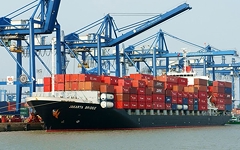
Viet Nam's import and export figures exceeding $930 billion not only mark an expansion in the scale of its trade but also demonstrate a shift from quantitative to qualitative growth.
Import and export turnover increased ninefold in less than two decades.
"Golden Harvest" is how farmers and businesses in the coffee industry describe the 2025 crop, when export revenue will for the first time reach nearly $9 billion, the highest ever, far exceeding the target of $6 billion.
Notably, the average export price of Vietnamese coffee in 2025 increased sharply, at many times exceeding 5,600 - 5,700 USD/ton, significantly higher than the price levels of previous years.
"We bring a lot of coffee products from Viet Nam to Europe, especially Blue Son La and various Robusta varieties. The company sells an average of nearly $200 million worth of coffee to the European market each year, a figure that has been maintained for the past 20 years," said Mr. Phan Minh Thong, General Director of Phuc Sinh Group.
Beyond agriculture , despite pressure from tariffs and "greening" requirements, Viet Nam's textile and garment exports are projected to reach $46 billion in 2025, an increase of approximately 5% compared to 2024, maintaining its position as one of the world's top 3. Vietnamese textile and garment products are currently present in 138 markets worldwide.
Agriculture, forestry, fisheries, and textiles are key highlights in the import-export landscape, with many record-breaking figures expected in 2025.
According to data from the General Statistics Office, total import and export turnover in 2025 exceeded 930 billion USD, an unprecedented high. Of this, exports reached over 475 billion USD, and imports 455 billion USD. The trade balance for goods showed a surplus of 20.03 billion USD.
For the first time since Viet Nam officially joined the World Trade Organization (WTO), its import and export volume reached $100 billion in 2007. Thus, in less than two decades, the scale of Viet Nam's import and export trade increased more than ninefold.
Viet Nam has now joined the group of the 25 largest economies in the world in terms of import and export value. According to the WTO, Viet Nam ranks 21st in exports and 20th in imports globally.
The trade balance for goods has been in surplus for 10 consecutive years, putting Viet Nam in a more stable position of export surplus, with a surplus exceeding $20 billion in the last three years, according to statistics from the Customs Department.
According to the Viet Nam Customs Department, Viet Nam has trade relations with more than 230 countries and territories, including 34 export markets and 24 import markets with trade turnover exceeding 1 billion USD. This demonstrates the increasing openness and coverage of Viet Nam's trade in the global value chain.
Deeper in substance
Not only expanding in "breadth," Viet Nam's import and export activities in 2025 also show clear progress in depth. According to Mr. Nguyen Anh Son, Director of the Import-Export Department (Ministry of Industry and Trade), the export structure continues to shift in a positive direction, reducing raw material exports and increasing the proportion of processed products. Many key commodities are recovering quickly and regaining growth momentum.
By 2025, Viet Nam aims to have 36 product categories with export turnover exceeding $1 billion, including 8 categories that surpass $10 billion.
In the coffee sector alone, for the first time, processed coffee products reached an export value of $1 billion, marking a strong shift from exporting quantity to exporting value. As a result, the profits of coffee growers have increased 2-3 times compared to previous years.
The fruit and vegetable sector also recorded many positive signs, with jackfruit being officially exported to China and pomelo to the Australian market. The Ben Tre Green Pomelo Cooperative has been granted 7 planting area codes, with an annual production of nearly 1,500 tons.
In the coming period, in addition to improving quality, perfecting the national agricultural product traceability platform is identified as a key focus to raise standards for export and domestic consumption.
Durian was selected as a pilot product, based on a traceability system that meets three criteria: centralized data, product journey tracking, and the application of anti-counterfeiting labels. After the pilot phase, from July 1, 2027, all agricultural products will be traceable through this system, and it will also be expanded to include imported goods. The system helps businesses, cooperatives, and growers access digital technology, increase market connectivity, and expand exports in 2026.
Conversely, import activities continue to focus on raw materials, fuels; machinery, equipment and technology for production and export. By 2025, imports of electronics, computers and components are expected to reach nearly $151 billion; and other machinery, equipment, tools and spare parts over $61 billion.
"The increase in imports of modern machinery, equipment, and technology is contributing to enhancing the production capacity, added value, and long-term competitiveness of Vietnamese goods," the Import-Export Department stated.
Tariff pressure and technical barriers
Despite continuously breaking records, Viet Nam's import and export activities still face many challenges.
According to Mr. Nguyen Anh Son, export growth still largely depends on the FDI sector, while domestic businesses have not yet deeply participated in high value-added stages of the global production and distribution chain.
Many industries still rely heavily on imported raw materials and components, making production and export activities vulnerable to external shocks and the risk of supply chain disruptions.
Besides anti-dumping lawsuits, businesses also face increasing technical barriers as major markets such as the US, EU, and Japan – accounting for over 70% of export turnover – simultaneously raise their standards. Costs for quality control, traceability, and inspection are rising; even a small mistake can reduce the effectiveness of an order by 10–15%.
A common characteristic of demanding markets is that the more exports there are, the higher the requirements. Businesses are forced to invest more heavily in clean production, quality control, and risk management.
Regarding solutions, the Ministry of Industry and Trade is implementing many programs to support businesses in becoming self-sufficient in raw materials, developing supporting industries, and enhancing their capacity to participate in global supply chains. The focus is on attracting investment in the production of raw materials and components, increasing linkages between domestic businesses, FDI companies, and export businesses, thereby increasing the localization rate and the ability to meet rules of origin.
Simultaneously, diversifying import markets, proactively developing alternative solutions, and strengthening research, forecasting, and early warning systems will help businesses closely monitor global economic and trade fluctuations.
"The Ministry of Industry and Trade will closely coordinate with other ministries and agencies to prioritize negotiations on trade agreements that are fair, balanced, and sustainable, including a framework for trade cooperation with the United States," said Mr. Nguyen Anh Son.
Source: VTV
Các tin khác
- U.S. to Impose Duties on Mexican, Thai, Vietnamese Chassis (03/06/2026)
- Mexican sugar producers push to scrap U.S. import quotas (03/06/2026)
- Japan launched an anti-dumping investigation into flat steel imports from three countries (03/06/2026)
- Eurochem challenges anti-dumping duties in the EU (03/06/2026)
- Pangasius prices in Viet Nam surge due to high export demand (03/06/2026)