Home
Home
 About Us



Poultry producers seek protection from EU dumping
06/11/2013 12:00
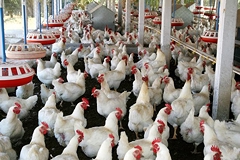
The poultry industry is asking the government to impose an anti-dumping duty of 91 percent on Germany and the Netherlands.
They want a similar duty of 58 percent on the UK as part of attempts to halt the dumping of frozen bone-in chicken portions in countries belonging to the Southern African Customs Union.
SA does not impose duties on members of the European Union (EU) because of a trade and co-operation agreement signed in 2001.
The push by the South African Poultry Association for anti-dumping duties on the three European countries comes after the September increase in import tariffs on five categories of imported chicken products, aimed mainly at imports from Brazil.
Following this tariff increase, announced by Trade and Industry Minister Rob Davies last month, importers from SA and exporters from Brazil and Argentina had predicted a shift towards EU chicken products.
Trade, competition and applied economics firm Econex said in its October research note that chicken imports from Germany had grown 487 percent from 2008 until last year.
Imports from the Netherlands had risen 397 percent and those from the UK had risen 401 percent in the same period.
Econex said of the five categories on which tariffs were increased, bone-in cuts constitutes the largest imported category, with the Netherlands being the largest exporter to SA in this category.
The International Trade Administration Commission announced last week that it would be investigating anti-dumping claims against the three trading partners since the South African Poultry Association presented it with information that indicates a prima facie case of harm to the local industry.
If the poultry industry succeeds with its application, this would go a long way in sealing the local market to chicken imports, XA International Trade Advisors director Donald MacKay said this week.
Econex said in its research note that the average annual increase in the production and consumption of chicken in SA was 6.2 percent and 7.1 percent respectively from 2001 to 2010.
Prior to the latest tariff increase, growth forecasts for the chicken industry from last year to 2021 had indicated an annual average production increase of 2.8 percent and a consumption increase of 4.5 percent.
Econex described the imposition of higher tariffs as “protectionist policies”, saying the costs to consumers were large and fell disproportionately on the poor.
The company’s research showed that the poorest 10 percent of South Africans spend 15 percent of their household income on chicken.
“A striking feature of the protectionist attitude adopted through the increase in tariffs is that it fails to address any of the debilitating characteristics (high raw material, high logistics costs, low labour productivity and high electricity cost) within the industry,” the Econex note read.November 1, 2013
Source: http://www.pressdisplay.com/
Các tin khác
- Viet Nam's steel industry takes another step forward in the anti-dumping lawsuit against Chinese goods (17/06/2026)
- Türkiye launches anti-dumping probe into car tire imports (17/06/2026)
- TRA proposes extending anti-dumping measure on wire rod (17/06/2026)
- Ample room remains for Viet Nam–India logistics cooperation (17/06/2026)
- Local authorities to directly issue fragrant rice export certificates from July 2026 (17/06/2026)