Home
Home
 About Us


Port businesses in Cai Mep - Thi Vai are concerned about the ripple effects from tensions in the Middle East
25/03/2026 03:26
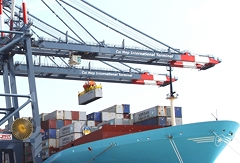
Tensions in the Middle East are not only disrupting major shipping routes but also risking increased logistics costs and container shortages. At ports, businesses have begun to respond to the ripple effects.
Risk of increased logistics costs and container shortages.
In early 2026, shipping companies had hoped that routes through the Suez Canal would stabilize again. However, the sudden outbreak of conflict in the Middle East disrupted all plans. The fact that many ships had to divert to the Cape of Good Hope (Africa) has prolonged container turnaround times, directly increasing the risk of empty container shortages at major Asian ports, including Viet Nam.
For deep-water port clusters operating at high capacity such as Cai Mep – Thi Vai (Ho Chi Minh City), any disruption in the supply chain can create negative chain effects, from cargo congestion at the yard to delays in the delivery process.
Mr. Nguyen Xuan Ky, Secretary General of the Viet Nam Port Association, analyzed: “The detour around Cape of Good Hope adds approximately 11 days to the journey. This will certainly lead to higher shipping costs and various surcharges. Furthermore, the number of spaces available for goods from Viet Nam may be reduced due to longer ship times. Export orders will have to be constantly adjusted because the transportation chain will be delayed by 1 to 3 weeks.”
Pressure to coordinate and disruption of exploitation schedules.
Although no significant decrease in cargo throughput has been recorded at present, coordination pressure at the Cai Mep - Thi Vai port area has increased noticeably. Shipping lines are constantly changing routes and schedules, forcing port operators to be as flexible as possible to cope.
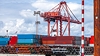
Container handling operations at SIST port continue at a rapid pace despite increasing pressure to coordinate vessel schedules due to the impact of the international situation.
Mr. Phan Hoang Vu, General Director of Saigon Port International Container Services Joint Venture Company Limited – SSA (SSIT), shared: “Although there are no direct routes to the Middle East, the general market shows that shipping lines have temporarily stopped accepting bookings to this region. Due to the change in itineraries, many ships tend to arrive at ports at the same time, causing significant disruption in operations. We are strengthening information exchange with neighboring ports such as Malaysia and Singapore to closely monitor schedules and arrange the most efficient operational plans.”
Domestic logistics companies are feeling the impact of rising fuel prices.
The most significant impact is currently falling on logistics businesses in the region. Rising fuel prices, coupled with the difficulty in adjusting shipping rates due to pre-existing contracts, are putting businesses in a difficult position.
At Cai Mep Logistics Joint Stock Company, a localized fuel shortage has emerged. Mr. Bui Do Anh Duc, Deputy General Director of the company, stated that the unit owns 22 tractor trucks and 48 trailers but is currently receiving fuel in very small quantities: "Each day we only supply about 100 liters to each truck to meet current orders. Vehicle allocation has become passive, forcing us to limit accepting long-distance routes to ensure sufficient reserves to last until the end of March."
In an increasingly interconnected world, disruptions from as far away as the Middle East can quickly spread to every port. The challenge facing Cai Mep-Thi Vai now is not just growth, but also the ability to adapt to the growing uncertainties of the global supply chain.
Currently, the impact on cargo throughput in this region is not yet clear. However, port businesses are closely monitoring the latest developments in the Middle East conflict in order to make appropriate plans.
Source: VIMC
Các tin khác
- U.S. to Impose Duties on Mexican, Thai, Vietnamese Chassis (03/06/2026)
- Mexican sugar producers push to scrap U.S. import quotas (03/06/2026)
- Japan launched an anti-dumping investigation into flat steel imports from three countries (03/06/2026)
- Eurochem challenges anti-dumping duties in the EU (03/06/2026)
- Pangasius prices in Viet Nam surge due to high export demand (03/06/2026)