Home
Home
 About Us



(Philippines) Safeguard petitions up significantly
26/10/2009 12:00
INDUSTRIES across the world have increasingly asked their governments to block imports, causing state probes into such requests to spike by nearly a third as of September from year-ago levels, a World Bank report released on Wednesday said.
"Overall, 2009 year-to-date industry requests are 30.3% higher than the same benchmark period in 2008, which itself was 36.4% higher than in 2007," the report’s summary stated.
For the third quarter alone, the number of industry requests for trade remedies against imports alleged to be entering at drastically low prices or those produced unfairly with state subsidies rose by 52.6% over the same quarter last year.
The report further noted that in terms of actual import restrictions imposed after investigations were completed, the number increased by 21.4% as of September.
It was not immediately clear whether the Philippines contributed, although local experts noted that industries here have been more active in clamoring for protection against imports.
India, Argentina, the United States and the European Union were behind the bulk — 56.8% — of the new investigations initiated in the third quarter, the World Bank said.
Thirteen other World Trade Organizations (WTO) members made up the rest, the report stated without elaborating.
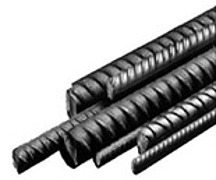
The Philippines initiated an anti-dumping investigation on imported steel bars, but this was conducted in April and thus may have not been recorded for the third quarter figure.
The country has also started an investigation on whether to renew a safeguard measure on glass panes in September, a month that falls under the report’s period of study.
These two investigations, although few, stand in stark contrast to the zero anti-dumping investigations conducted in 2008, according to data from the Tariff Commission Web site.
Local industries may cause that number to rise further as "they are now more serious [in pursuing cases], said Jose Salvador M. Rivera, Jr., a Philippine-based lawyer specializing in trade remedy cases.
More firms are being aided by his office in petitioning for import restrictions this year, Mr. Rivera said in a telephone interview. The massive influx of Chinese imports, he added, is usually the root of such requests for protection.
The World Bank report similarly found that "China’s exporters were the dominant target for these new investigations that may result in import restrictions, being named in over 60% of the new country-level investigations."
The increase may also be due to the pressure of impending tariff reductions in the Association of Southeast Asian Nations (ASEAN) Free Trade Area due in January 2010, said Mario Jose E. Sereno, head of the Federation of Philippine Industries’ international trade policy committee.
The uptrend could make 2009 "the second most prolific year of safeguard use" since the WTO was formed in 1995, the World Bank report stated.
Separate data from the WTO show that the number of anti-dumping investigations initiated by its members hit a record number of 366 in 2002.
The number stood at 208 last year when the global economic crisis broke out, up 27.6% from 2007.
"Overall, 2009 year-to-date industry requests are 30.3% higher than the same benchmark period in 2008, which itself was 36.4% higher than in 2007," the report’s summary stated.
For the third quarter alone, the number of industry requests for trade remedies against imports alleged to be entering at drastically low prices or those produced unfairly with state subsidies rose by 52.6% over the same quarter last year.
The report further noted that in terms of actual import restrictions imposed after investigations were completed, the number increased by 21.4% as of September.
It was not immediately clear whether the Philippines contributed, although local experts noted that industries here have been more active in clamoring for protection against imports.
India, Argentina, the United States and the European Union were behind the bulk — 56.8% — of the new investigations initiated in the third quarter, the World Bank said.
Thirteen other World Trade Organizations (WTO) members made up the rest, the report stated without elaborating.
The Philippines initiated an anti-dumping investigation on imported steel bars, but this was conducted in April and thus may have not been recorded for the third quarter figure.
The country has also started an investigation on whether to renew a safeguard measure on glass panes in September, a month that falls under the report’s period of study.
These two investigations, although few, stand in stark contrast to the zero anti-dumping investigations conducted in 2008, according to data from the Tariff Commission Web site.
Local industries may cause that number to rise further as "they are now more serious [in pursuing cases], said Jose Salvador M. Rivera, Jr., a Philippine-based lawyer specializing in trade remedy cases.
More firms are being aided by his office in petitioning for import restrictions this year, Mr. Rivera said in a telephone interview. The massive influx of Chinese imports, he added, is usually the root of such requests for protection.
The World Bank report similarly found that "China’s exporters were the dominant target for these new investigations that may result in import restrictions, being named in over 60% of the new country-level investigations."
The increase may also be due to the pressure of impending tariff reductions in the Association of Southeast Asian Nations (ASEAN) Free Trade Area due in January 2010, said Mario Jose E. Sereno, head of the Federation of Philippine Industries’ international trade policy committee.
The uptrend could make 2009 "the second most prolific year of safeguard use" since the WTO was formed in 1995, the World Bank report stated.
Separate data from the WTO show that the number of anti-dumping investigations initiated by its members hit a record number of 366 in 2002.
The number stood at 208 last year when the global economic crisis broke out, up 27.6% from 2007.
BY JESSICA ANNE D. HERMOSA, Reporter
Friday, October 23, 2009 | MANILA, PHILIPPINES
Source: www.bworldonline.com
Friday, October 23, 2009 | MANILA, PHILIPPINES
Source: www.bworldonline.com
Các tin khác
- Rising global shipping costs put pressure on Viet Nam’s seafood exporters (22/06/2026)
- India likely to retain anti-dumping duties on Bangladeshi jute products (22/06/2026)
- Japan slaps anti-dumping duties on Chinese, Taiwanese steel (22/06/2026)
- India initiates anti-dumping probe against a Chinese, Japanese chemical used in tyre, rubber items (22/06/2026)
- Reasons why the US continues to suspend customs clearance for Vietnamese trailers (22/06/2026)