Home
Home
 About Us



Philippines: Dumping duty won’t halt flour imports
12/06/2014 12:00
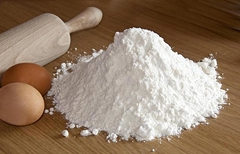
The imposition of the anti-dumping duty on Turkish flour is not going to deter flour imports as local traders continue to import from Turkish companies while supply from Indonesia, Vietnam and Australia are taking up whatever slack caused by the punitive import duty.
According to Simplicio Umali Jr., president of the country’s largest breadmaker Gardenia Philippines, said they are not affected because they are not using Turkish flour.
Umali, however, said they have been importing flour from Indonesia and Vietnam, which source their high-protein flour from the US and selling them at P15 cheaper per bag than locally-milled flour.
Gardenia is also importing flour from Australia. The flour imports from the three countries already account for 5 to 6 percent of the total flour market in the country. Ernesto Chua, president of the country’s largest Turkish flour importer Malabon Trading, said the company will continue to import Turkish flour because his suppliers were only slapped with 4 percent anti-dumping duty. The provisional anti-dumping duty took effect last June 2, Chua said. An average of 7-10 percent anti-dumping duty will take effect on imports arriving in July.
Despite the imposition of the anti-dumping duty, Chua said the imported Turkish flour would still end up P100 cheaper per bag than the local soft flour.
Turkish flour, which is 90 percent soft flour, is used for the production of noodles, biscuits, lumpia wrapper, and others, but not for loaf bread. Some neighborhood bakeshops are using Turkish flour for pandesal.
Prior to the imposition of the anti-dumping duty, Turkish flour accounts for 7 percent of the total flour supply in the country while the local flour millers, which rely their supply of high-protein wheat from the US, accounts for the majority or 90 percent of the total local market.
Turkish soft flour is being sold for only P720 per 25 kilogram bag against the locally milled hard flour of P850 to P920 per bag.
The DA order slapped an additional to 15 exporters but spared the 8. The 15 exporters account for 50 percent of total Turkish flour exports to the Philippines while the 8 others account for the remaining 50 percent.
The DA provisional anti-dumping duty ranges from 0 to 39.26 percent depending on the assessment per exporter or an average of 7-15 percent.
After the provisional anti-dumping order by the DA, it is now the duty of the Tariff Commission to determine whether there is a need to impose a definitive anti-dumping duty or not. The determination period is done within a period of 4 to 5 months.
Chua said that Turkish flour imports average 500,000 bags per month or 10,000 metric tons a month.
Source: mb.com.ph
Các tin khác
- Viet Nam's steel industry takes another step forward in the anti-dumping lawsuit against Chinese goods (17/06/2026)
- Türkiye launches anti-dumping probe into car tire imports (17/06/2026)
- TRA proposes extending anti-dumping measure on wire rod (17/06/2026)
- Ample room remains for Viet Nam–India logistics cooperation (17/06/2026)
- Local authorities to directly issue fragrant rice export certificates from July 2026 (17/06/2026)