Home
Home
 About Us



New Zealand to challenge Canada over dairy trade dispute, again
18/10/2024 05:43
Join the conversation and have your say in the comments below.
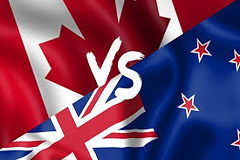
New Zealand is once again challenging Canada’s efforts to restrict Kiwi dairy imports by forcing Ottawa to the negotiating table.
Trade Minister Todd McClay announced on Friday morning the Government had notified Canada and all other members of the Comprehensive and Progressive Trans-Pacific Partnership (CPTPP) trade agreement that New Zealand was triggering mandatory negotiations over the dairy dispute.
“It's a matter of principle. New Zealand meets its obligations to others ... and we expect others to show us the same courtesy. Where they don't, we’ll stand up for New Zealand exporters,” McClay told The Post.
The Government now wants Canada to pay compensation to New Zealand exporters who have lost out under its restrictive quota settings, or make changes.
New Zealand won an early attempt to end the dispute against Canada’s restrictions on dairy imports in September 2023 when, in a first for the CPTPP, a panel ruled that Canada was wrong to use a system of tariffs and quotas to effectively restrict dairy imports from CPTPP countries – closing off hundreds of millions of dollars in potential trade for New Zealand exporters.
Despite the finding, Canada also claimed “victory” as the panel said the country could apply some discretion in its use of import tariff quotas. A deadline for amending its systems as per the ruling passed on May 1, after which McClay publicly complained Canada had not made needed changes and the Government was taking legal advice.
“New Zealand product under that quota doesn't move freely into that market because of the way they have arranged their quota system. They have a right to set up how they want to manage the quota system internally, but it can't be done in such a way that is a barrier to New Zealand being able to fill that quota, and that is the finding of the panel,” McClay said.
“They have arranged a pattern that gives them the ability to protect ... It is possible for countries to protect domestic industries within the rules. The problem we have here is the rules as agreed in the CPTPP ... say they cannot do this.”
After making the request, the negotiations between each government’s officials must begin within 15 days. There would be 30 days to reach agreement.
“It's a really clear message to Canada: they either should pay New Zealand exporters compensation for their loss, or they can make changes that would allow their regime to fall back within the quota system, so that they're within the rules of the agreement,” McClay said.
“We'll be working openly with them to try and reach that conclusion.”
McClay said the potential loss to New Zealand’s diary exporters was not a significant amount compared to the total, but it was estimated at “some hundreds of millions” over a number of years.
It was a matter of principle, he said.
Canada, a Five Eyes country, is a close partner of New Zealand’s. McClay said he had raised the dispute with his Canadian counterpart directly on a number of occasions, and he did not expect it would “ruin” the relationship.
Source: The Press
Các tin khác
- U.S. to Impose Duties on Mexican, Thai, Vietnamese Chassis (03/06/2026)
- Mexican sugar producers push to scrap U.S. import quotas (03/06/2026)
- Japan launched an anti-dumping investigation into flat steel imports from three countries (03/06/2026)
- Eurochem challenges anti-dumping duties in the EU (03/06/2026)
- Pangasius prices in Viet Nam surge due to high export demand (03/06/2026)