Home
Home
 About Us



Negotiations on rules – anti-dumping and subsidy disciplines (including fisheries subsidies) and regional trade agreements
11/12/2015 12:00
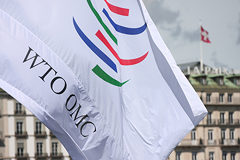
WTO members agreed at the 2001 Doha Ministerial Conference to launch negotiations in the area of “WTO rules”. These negotiations relate to the following: the Agreement on Implementation of Article VI of GATT 1994 (better known as the Anti-Dumping Agreement); the Agreement on Subsidies and Countervailing Measures and, in this context, WTO disciplines on fisheries subsidies; and WTO provisions applying to regional trade agreements.
The aim of the rules negotiations is to clarify and improve anti-dumping and subsidy disciplines while preserving the basic concepts and principles of these agreements, and taking into account the needs of developing and least-developed participants. Members also agreed to clarify WTO disciplines regarding fisheries subsidies and regional trade agreements (RTAs). There has been intensive work in all these areas of the negotiations over the years, with hundreds of proposals submitted, and a number of Chair texts, most recently in 2011.
As in most other areas of the Doha Development Agenda (DDA), work on rules paused in 2011 and did not resume in earnest until 2015, when the Negotiating Group on Rules (NGR) sought to develop a rules contribution to the work programme called for by ministers at the 2013 Bali Ministerial Conference.
After the 2015 summer break, some members identified transparency in the rules area as a possible deliverable for the Nairobi Ministerial Conference. The NGR has been actively considering proposals relating to transparency as well as proposals for other rules outcomes at Nairobi. Proposals have been submitted in relation to all four pillars of the rules negotiations. However, negotiations have been difficult, especially as some members maintain that any outcome on rules issues depends upon progress in other areas of the DDA negotiating agenda, most notably agriculture.
Anti-dumping (and countervailing measures)
Anti-dumping has been perhaps the most active area of the rules negotiations. Many of the proposals to date have come from the self-described "Friends of Antidumping Negotiations" (FANs), who are among the main proponents for reform. But many other members have also submitted proposals to amend the Anti-Dumping Agreement (ADA).
With respect to possible Nairobi outcomes, recent proposals have focused on transparency, but with a difference: some members, such as the European Union, would limit Nairobi outcomes to WTO transparency, and specifically to a proposed mechanism to review the anti-dumping practices of members, while the FANs have submitted a proposal, now followed-up by Japan individually, that would also seek to achieve increased transparency and due process in the specific investigations conducted by members. The Russian Federation has also submitted a proposal relating to the conduct of investigations, calling for the adoption of non-binding guidelines at Nairobi and a commitment to agree to specific anti-dumping due process and transparency issues after Nairobi.
Members' positions regarding possible Nairobi outcomes remain sharply divided. A number of delegations have expressed concerns that proposals for investigation due process and transparency are too ambitious given the "recalibrated" outcome being sought in Nairobi (i.e. a modest, manageable package), and more generally that it is too late to envision amendments to the ADA. Some of these delegations favour WTO transparency outcomes, if any outcomes are to be achieved. Other delegations, however, have cautioned that WTO transparency proposals could impose unacceptably burdensome obligations on developing countries, and are in any event unnecessary in light of existing tools. Others have been more supportive of the proposals, in whole or in part, saying they provide a positive step forward.
Finally, some members believe that any outcome on anti-dumping should also apply in the context of countervailing measures.
Fisheries subsidies
The elaborated negotiating mandate on fisheries subsidies contained in the 2005 Hong Kong Ministerial Declaration called for strengthened disciplines on fisheries subsidies, including the prohibition of certain forms of fisheries subsidies that contribute to overcapacity and overfishing, along with special and differential treatment provisions. The Hong Kong Ministerial Conference also mandated the Negotiating Group Chair to prepare a draft text that would serve as the basis for finalizing the negotiations. In 2007, the Chair circulated such a draft text. Subsequently, due to the absence of convergence around that text, in 2008 the Chair circulated a roadmap for discussions and finally, in April 2011, a Chair's report on the state of the negotiations.
While the Doha Round negotiations, including on fisheries subsidies, paused in 2011, activity resumed after the Bali Ministerial Conference in December 2013. In June 2015, as part of efforts to formulate the Work Programme called for by ministers in Bali, a group of delegations (Argentina, Iceland, New Zealand, Norway, Peru and Uruguay) put forward a paper proposing a "recalibrated outcome" on fisheries subsidies, for adoption by the Ministerial Conference.
Fisheries subsidies activity has continued this autumn during the 2015 lead-up to Nairobi, as a number of members submitted proposals for fisheries subsidies outcomes in an eventual Nairobi package. These proposals have variously focused on transparency alone (Australia, EU), and on transparency plus certain disciplines and special and differential treatment (African, Caribbean and Pacific (ACP) Group, Peru). The transparency elements relate to submission of fisheries-related information in the regular subsidy notifications to the WTO, and the discipline elements include proposed prohibitions on subsidies to illegal, unreported and unregulated (IUU) fishing and to fishing in respect of overfished stocks. All of the proponents have expressed the view that work on fisheries subsidies should continue post-Nairobi. Some members have voiced opposition to any decision on fisheries subsidies in Nairobi, and some have expressed caution about post-Nairobi activities.
Horizontal subsidies
In addition to proposed sector-specific disciplines on subsidies to fisheries, WTO members have been considering new disciplines that would apply across the board to all subsidies relating to goods. While these negotiations on "horizontal subsidies" issues have been less active than those on fisheries subsidies, a significant number of substantive proposals have been vigorously debated in the rules negotiations. That said, the only specific proposals for a subsidies outcome at Nairobi come from the European Union and relate to new mechanisms for the notification of and review of subsidies, and specifically to a form of counter-notification of subsidies by a member imposing countervailing measures on the alleged subsidized imports from another member. While certain members have supported the idea, some developing members have responded that the proposal would impose an unacceptable burden that would outweigh its limited value-added.
Regional trade agreements
Assessing whether RTAs meet WTO rules has been challenging as the interpretation of the rules remains open to debate. In 2001, members agreed in the Doha Declaration to negotiate a solution with the aim of “clarifying and improving disciplines and procedures under the existing WTO provisions applying to regional trade agreements". The 2006 General Council Decision that established the provisional transparency mechanism for RTAs was the first result from such negotiations. In December 2010, members agreed to start the review of the mechanism, with a view to making it permanent and discussions were held up to April 2011 in the Negotiating Group on Rules.
On clarifying and improving the disciplines on RTAs, proposals have mainly focused on how to quantify or define the phrase "substantially all the trade" in Article 24 of the General Agreement on Tariffs and Trade (GATT), which states that customs unions and free trade areas are permitted if they eliminate tariffs on substantially all the trade between the parties. Proposals have also focused on special and differential treatment for developing countries, which has received "sharply divergent" reactions. There have been proposals for a post-Doha work programme on all systemic issues but reactions to this have also been varied. Some delegations have deemed it premature to engage in such outcomes until there is greater clarity in other areas of work such as in agriculture and non-agricultural market access (NAMA). Talks on RTAs are handled by the NGR as well.
As for the Nairobi Ministerial Declaration, proposals have been made to reaffirm the need to ensure RTAs complement but do not substitute for the multilateral trading system, to make the transparency mechanism permanent, and to enhance the role of the Committee on Regional Trade Agreements.
The aim of the rules negotiations is to clarify and improve anti-dumping and subsidy disciplines while preserving the basic concepts and principles of these agreements, and taking into account the needs of developing and least-developed participants. Members also agreed to clarify WTO disciplines regarding fisheries subsidies and regional trade agreements (RTAs). There has been intensive work in all these areas of the negotiations over the years, with hundreds of proposals submitted, and a number of Chair texts, most recently in 2011.
As in most other areas of the Doha Development Agenda (DDA), work on rules paused in 2011 and did not resume in earnest until 2015, when the Negotiating Group on Rules (NGR) sought to develop a rules contribution to the work programme called for by ministers at the 2013 Bali Ministerial Conference.
After the 2015 summer break, some members identified transparency in the rules area as a possible deliverable for the Nairobi Ministerial Conference. The NGR has been actively considering proposals relating to transparency as well as proposals for other rules outcomes at Nairobi. Proposals have been submitted in relation to all four pillars of the rules negotiations. However, negotiations have been difficult, especially as some members maintain that any outcome on rules issues depends upon progress in other areas of the DDA negotiating agenda, most notably agriculture.
Anti-dumping (and countervailing measures)
Anti-dumping has been perhaps the most active area of the rules negotiations. Many of the proposals to date have come from the self-described "Friends of Antidumping Negotiations" (FANs), who are among the main proponents for reform. But many other members have also submitted proposals to amend the Anti-Dumping Agreement (ADA).
With respect to possible Nairobi outcomes, recent proposals have focused on transparency, but with a difference: some members, such as the European Union, would limit Nairobi outcomes to WTO transparency, and specifically to a proposed mechanism to review the anti-dumping practices of members, while the FANs have submitted a proposal, now followed-up by Japan individually, that would also seek to achieve increased transparency and due process in the specific investigations conducted by members. The Russian Federation has also submitted a proposal relating to the conduct of investigations, calling for the adoption of non-binding guidelines at Nairobi and a commitment to agree to specific anti-dumping due process and transparency issues after Nairobi.
Members' positions regarding possible Nairobi outcomes remain sharply divided. A number of delegations have expressed concerns that proposals for investigation due process and transparency are too ambitious given the "recalibrated" outcome being sought in Nairobi (i.e. a modest, manageable package), and more generally that it is too late to envision amendments to the ADA. Some of these delegations favour WTO transparency outcomes, if any outcomes are to be achieved. Other delegations, however, have cautioned that WTO transparency proposals could impose unacceptably burdensome obligations on developing countries, and are in any event unnecessary in light of existing tools. Others have been more supportive of the proposals, in whole or in part, saying they provide a positive step forward.
Finally, some members believe that any outcome on anti-dumping should also apply in the context of countervailing measures.
Fisheries subsidies
The elaborated negotiating mandate on fisheries subsidies contained in the 2005 Hong Kong Ministerial Declaration called for strengthened disciplines on fisheries subsidies, including the prohibition of certain forms of fisheries subsidies that contribute to overcapacity and overfishing, along with special and differential treatment provisions. The Hong Kong Ministerial Conference also mandated the Negotiating Group Chair to prepare a draft text that would serve as the basis for finalizing the negotiations. In 2007, the Chair circulated such a draft text. Subsequently, due to the absence of convergence around that text, in 2008 the Chair circulated a roadmap for discussions and finally, in April 2011, a Chair's report on the state of the negotiations.
While the Doha Round negotiations, including on fisheries subsidies, paused in 2011, activity resumed after the Bali Ministerial Conference in December 2013. In June 2015, as part of efforts to formulate the Work Programme called for by ministers in Bali, a group of delegations (Argentina, Iceland, New Zealand, Norway, Peru and Uruguay) put forward a paper proposing a "recalibrated outcome" on fisheries subsidies, for adoption by the Ministerial Conference.
Fisheries subsidies activity has continued this autumn during the 2015 lead-up to Nairobi, as a number of members submitted proposals for fisheries subsidies outcomes in an eventual Nairobi package. These proposals have variously focused on transparency alone (Australia, EU), and on transparency plus certain disciplines and special and differential treatment (African, Caribbean and Pacific (ACP) Group, Peru). The transparency elements relate to submission of fisheries-related information in the regular subsidy notifications to the WTO, and the discipline elements include proposed prohibitions on subsidies to illegal, unreported and unregulated (IUU) fishing and to fishing in respect of overfished stocks. All of the proponents have expressed the view that work on fisheries subsidies should continue post-Nairobi. Some members have voiced opposition to any decision on fisheries subsidies in Nairobi, and some have expressed caution about post-Nairobi activities.
Horizontal subsidies
In addition to proposed sector-specific disciplines on subsidies to fisheries, WTO members have been considering new disciplines that would apply across the board to all subsidies relating to goods. While these negotiations on "horizontal subsidies" issues have been less active than those on fisheries subsidies, a significant number of substantive proposals have been vigorously debated in the rules negotiations. That said, the only specific proposals for a subsidies outcome at Nairobi come from the European Union and relate to new mechanisms for the notification of and review of subsidies, and specifically to a form of counter-notification of subsidies by a member imposing countervailing measures on the alleged subsidized imports from another member. While certain members have supported the idea, some developing members have responded that the proposal would impose an unacceptable burden that would outweigh its limited value-added.
Regional trade agreements
Assessing whether RTAs meet WTO rules has been challenging as the interpretation of the rules remains open to debate. In 2001, members agreed in the Doha Declaration to negotiate a solution with the aim of “clarifying and improving disciplines and procedures under the existing WTO provisions applying to regional trade agreements". The 2006 General Council Decision that established the provisional transparency mechanism for RTAs was the first result from such negotiations. In December 2010, members agreed to start the review of the mechanism, with a view to making it permanent and discussions were held up to April 2011 in the Negotiating Group on Rules.
On clarifying and improving the disciplines on RTAs, proposals have mainly focused on how to quantify or define the phrase "substantially all the trade" in Article 24 of the General Agreement on Tariffs and Trade (GATT), which states that customs unions and free trade areas are permitted if they eliminate tariffs on substantially all the trade between the parties. Proposals have also focused on special and differential treatment for developing countries, which has received "sharply divergent" reactions. There have been proposals for a post-Doha work programme on all systemic issues but reactions to this have also been varied. Some delegations have deemed it premature to engage in such outcomes until there is greater clarity in other areas of work such as in agriculture and non-agricultural market access (NAMA). Talks on RTAs are handled by the NGR as well.
As for the Nairobi Ministerial Declaration, proposals have been made to reaffirm the need to ensure RTAs complement but do not substitute for the multilateral trading system, to make the transparency mechanism permanent, and to enhance the role of the Committee on Regional Trade Agreements.
Source: WTO
Các tin khác
- New-generation FTAs open wider export opportunities to Middle East and South Asia (15/06/2026)
- Updated regulations on foreign trade management and import quotas (15/06/2026)
- Mandatory traceability for high-risk goods from July 1st: What should businesses prepare for? (15/06/2026)
- Tariff pressure is forcing businesses to restructure in order to adapt. (15/06/2026)
- Coffee Citizens model aims to lift Vietnamese value chain (15/06/2026)