Home
Home
 About Us



Letter: The west’s steel tariffs have a material cost
05/07/2023 04:37
Clyde Prestowitz writes that Chinese solar panels dominate the global market due to Chinese government intervention in the form of production subsidy and import protection (“The west should reflect on China’s example on solar”, Letters, June 3). No evidence is given, but it makes for a nice soundbite on jobs and growth in the west.
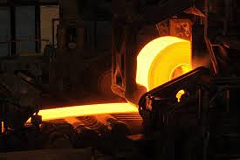
Solar panels, and indeed wind farms, are massively dependent on steel, where China again is the dominant producer. But it was not always thus. Chinese growth supported the global steel industry for many years. Only in this millennium has China moved to be a net exporter, exporting less than 10 per cent of its production.
The reaction of the west has of course been to introduce trade barriers. In the EU the justification for the first import tariffs was that the cost of production in China was impossible to measure as it is not a free-market economy, and ridiculously Canada was chosen as the geographically appropriate free market to use to assess China’s cost of production. Similar tariffs were initially introduced in the US.
Now the US and the EU have introduced further protectionist measures for steel — section 232 of the Trade Expansion Act of 1962 in the US and safeguard measures in the EU — both imposing 25 per cent tariffs on selected imports. As a result EU steel prices are about 50 per cent above global prices, and the US close to 100 per cent higher. And the consumer ultimately pays.
I have worked for more than 45 years in the steel market, trading steel products and steelmaking raw materials across the globe. What I have learnt is that the Chinese price of steel is more than anywhere else closely linked to the cost of its raw materials, generally with a tight but adequate margin to cover the cost of production. In the west, we intervene to support our old and often inefficient production. So much for our free market economies.
Source: Financial Times
Các tin khác
- Viet Nam extends anti-dumping duties on some Thai sugar products to 2031 (05/06/2026)
- Hong Kong: Ministry of Commerce Rules on Inheritance of Anti-dumping Duty Rates for Copolymer Polyoxymethylene Imports Originating from S Korea, Thailand and Malaysia (05/06/2026)
- Early-season Vietnamese lychees conquer US consumers (05/06/2026)
- Global rubber prices surge, raising hopes for Vietnamese exporters (05/06/2026)
- Modern logistics creates new growth opportunities for Lang Son’s border-gate economy (05/06/2026)