Home
Home
 About Us



ITC Judge Suspends U.S. Steel's 337 Case Against Chinese Companies
14/07/2016 12:00
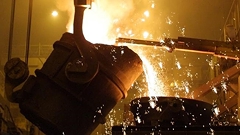
The U.S. International Trade Commission has temporarily suspended a U.S. Steel Corporation 337 case seeking to block Chinese steel from entering the U.S. market on the grounds at least two issues it raises fall under the purview of the Commerce Department.
Specifically, Administrative Law Judge Dee Lord said U.S. Steel's complaint that Chinese steel companies engaged in price fixing and transhipment falls under the purview of antidumping and countervailing duty laws respectively, which are handled by the Commerce Department.
The suspension means all discovery and motions are stayed, according to the order. The order sets the target date for the investigation for Oct. 2, 2017.
U.S. Steel now has the option to petition the ITC to review the suspension decision, according to the order.
The decision notes that "there is no evidence in the record" that Commerce has been notified of this investigation as required by law. Therefore, the administrative law judge ruled the investigation is suspended to allow the ITC to provide that statutorily required notice to Commerce.
The false designation of origin claims are based on respondents' alleged evasion of antidumping and countervailing duty orders issued by the Commerce Department, which has several ongoing investigations. The record therefore shows that the false designation at least "in part" falls within the purview of antidumping and countervailing duty laws. This requires the ITC to notify the Secretary of Commerce under section 337 (b)(3), according to the order.
The decision holds open the possibility that the ITC could seek more input from the Justice Department on the trade secret theft allegations. The ITC "may also find it appropriate to notify the Criminal Division of the Department of Justice pursuant to Section 337 (b)(2)” because the U.S. Steel complaint refers to a criminal trade secret prosecution in relation to the misappropriation and use of trade secrets. The decision notes that such a notification would not be required by law.
The trade secret theft allegations mark the third element of the complaint in addition to the conspiracy to fix prices and control output and export volumes, and the false designation of origin.
The order says any response received from notified agencies will help the judge to develop the record of the investigation.
U.S. Steel is seeking a general exclusion order blocking all Chinese carbon and alloy steel products from the U.S. market, a limited exclusion order blocking imports from the 40 listed steel companies, and a cease and desist order for their alleged illegal practices.
A source close to the case said the suspension is temporary.
Experts had previously told Inside U.S. Trade that the complaint could fall under the purview of Commerce with respect to the allegations that Chinese companies sold steel at artificially low prices due to price fixing. If the ITC found that, it could opt to dismiss that part of the petition and let the Commerce Department handle these allegations in accordance with the statute.
Those sources said this is possible under the section 337 law, which in part says the ITC shall notify the Commerce Department if a petition involves dumping or subsidization of imports so it can take action. If the ITC determines a petition solely involves dumping or subsidization, the commission shall either terminate or not conduct its investigation, according to the law.
A source close to the investigation said there is no legal precedent for the 337 petition that is as broad as the one filed by U.S. Steel, making it difficult to predict how the case will unfold.
Specifically, Administrative Law Judge Dee Lord said U.S. Steel's complaint that Chinese steel companies engaged in price fixing and transhipment falls under the purview of antidumping and countervailing duty laws respectively, which are handled by the Commerce Department.
The suspension means all discovery and motions are stayed, according to the order. The order sets the target date for the investigation for Oct. 2, 2017.
U.S. Steel now has the option to petition the ITC to review the suspension decision, according to the order.
The decision notes that "there is no evidence in the record" that Commerce has been notified of this investigation as required by law. Therefore, the administrative law judge ruled the investigation is suspended to allow the ITC to provide that statutorily required notice to Commerce.
The false designation of origin claims are based on respondents' alleged evasion of antidumping and countervailing duty orders issued by the Commerce Department, which has several ongoing investigations. The record therefore shows that the false designation at least "in part" falls within the purview of antidumping and countervailing duty laws. This requires the ITC to notify the Secretary of Commerce under section 337 (b)(3), according to the order.
The decision holds open the possibility that the ITC could seek more input from the Justice Department on the trade secret theft allegations. The ITC "may also find it appropriate to notify the Criminal Division of the Department of Justice pursuant to Section 337 (b)(2)” because the U.S. Steel complaint refers to a criminal trade secret prosecution in relation to the misappropriation and use of trade secrets. The decision notes that such a notification would not be required by law.
The trade secret theft allegations mark the third element of the complaint in addition to the conspiracy to fix prices and control output and export volumes, and the false designation of origin.
The order says any response received from notified agencies will help the judge to develop the record of the investigation.
U.S. Steel is seeking a general exclusion order blocking all Chinese carbon and alloy steel products from the U.S. market, a limited exclusion order blocking imports from the 40 listed steel companies, and a cease and desist order for their alleged illegal practices.
A source close to the case said the suspension is temporary.
Experts had previously told Inside U.S. Trade that the complaint could fall under the purview of Commerce with respect to the allegations that Chinese companies sold steel at artificially low prices due to price fixing. If the ITC found that, it could opt to dismiss that part of the petition and let the Commerce Department handle these allegations in accordance with the statute.
Those sources said this is possible under the section 337 law, which in part says the ITC shall notify the Commerce Department if a petition involves dumping or subsidization of imports so it can take action. If the ITC determines a petition solely involves dumping or subsidization, the commission shall either terminate or not conduct its investigation, according to the law.
A source close to the investigation said there is no legal precedent for the 337 petition that is as broad as the one filed by U.S. Steel, making it difficult to predict how the case will unfold.
Source: Insidetrade
Các tin khác
- New-generation FTAs open wider export opportunities to Middle East and South Asia (15/06/2026)
- Updated regulations on foreign trade management and import quotas (15/06/2026)
- Mandatory traceability for high-risk goods from July 1st: What should businesses prepare for? (15/06/2026)
- Tariff pressure is forcing businesses to restructure in order to adapt. (15/06/2026)
- Coffee Citizens model aims to lift Vietnamese value chain (15/06/2026)