Home
Home
 About Us



Industry opposes review of laws on 'dumped' imports
24/03/2009 12:00
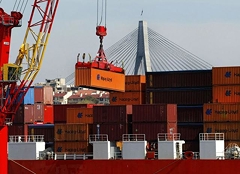
THE Rudd Government has demonstrated its free-trade credentials in advance of next month's G20 summit by asking the Productivity Commission to review Australia's laws to protect against "dumped" imports.
The review threatens to pit the Government against the manufacturing industry, which regards the ability to block goods being sold in Australia for less than they cost to make as a vital defence at a time of world recession.
Kevin Rudd tagged the rise of anti-dumping actions as part of a "worrying early foray into protectionism" in an article published in the Financial Times in London earlier this year, claiming the number of actions worldwide jumped 40 per cent in the first half of last year.
The idea of a Productivity Commission review was raised by the Council of Australian Governments last July. Trade analysts believed the absence of any action since then meant it had been stymied by Industry Minister Kim Carr.
However, Assistant Treasurer Chris Bowen and Home Affairs Minister Bob Debus said yesterday the review would not be limited to considering the effect of dumping on individual industries but would also review "the economy-wide costs and benefits of Australia's anti-dumping system including its impact on Australian industry, consumers and the broader community".
Australian Industry Group chief executive Heather Ridout expressed deep reservations about the review.
"Global economic circumstances make it more likely that dumping will attempted in the Australian market which is already under pressure as a result of weakening economic demand," she said. "Any watering down of our anti-dumping system will only add to this pressure on Australian industry.
"It is critical that Australia still retains the core principle that anti-dumping cases be determined only on the evidence provided by the specific parties involved."
One of the industry's concerns is that the Productivity Commission will recommend that the community and broader economic interest should also be considered when adjudicating anti-dumping actions.
The last review of the anti-dumping policy, in 1986, concluded that although it acted like tariffs to protect industry, the benefits outweighed the costs "to the extent that so-called fairness in trade is the glue that holds the system together and builds consensus for some arguably more important trade reforms".
David Uren, Economics correspondent |March 24, 2009
Article from: The Australian
Source: www.theaustralian.news.com.au
Các tin khác
- Rising global shipping costs put pressure on Viet Nam’s seafood exporters (22/06/2026)
- India likely to retain anti-dumping duties on Bangladeshi jute products (22/06/2026)
- Japan slaps anti-dumping duties on Chinese, Taiwanese steel (22/06/2026)
- India initiates anti-dumping probe against a Chinese, Japanese chemical used in tyre, rubber items (22/06/2026)
- Reasons why the US continues to suspend customs clearance for Vietnamese trailers (22/06/2026)