Home
Home
 About Us



Indonesia shifts its policy focus to coal and rice; Ministry of Industry and Trade issues recommendations.
23/01/2026 04:35
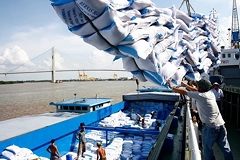
In response to the tightening energy supply trend and Indonesia's ambition to become a rice exporting nation, on January 21, the Ministry of Industry and Trade issued recommendations to help domestic businesses proactively adapt and minimize risks.
Citing sources from the Indonesian Ministry of Energy and Mineral Resources, the Foreign Market Development Department of the Ministry of Industry and Trade of Viet Nam stated that Indonesia is considering a significant reduction in coal production in 2026 to approximately 600 million tons, a decrease of up to 24% compared to the 790 million tons produced in 2025.
Previously, on December 31, 2025, the Indonesian Ministry of Finance also announced that it was discussing the application of an export tax on coal with an expected tax rate of 5-11%, depending on the fluctuations of coal prices in the international market. This move aims to curb oversupply, boost export coal prices, and increase government revenue, in the context of declining world coal prices in 2025.
Indonesia currently supplies approximately 43% of the total global coal trade. Therefore, adjusting this policy has the potential to have ripple effects on the international coal market, impacting production costs and business performance.
Meanwhile, Indonesia is also sending noteworthy signals in the rice sector.
Following its achievements in food self-sufficiency by 2025, Indonesia is shifting from a "buyer" to a "seller" on the regional rice map.
Specifically, the Indonesian Food Coordination Ministry stated that it will not issue rice import quotas in 2026. The export market focus that the country is currently researching is in Southeast Asia.
The National Logistics Agency (Bulog) has confirmed it has been tasked with preparing approximately 1 million tons of high-quality rice for export in 2026, as soon as it receives official presidential approval.
Indonesia aims for a national rice production target of 34.7 million tons in 2026, with estimated rice stocks reaching 16.194 million tons by the end of 2026. The Food and Agriculture Organization (FAO) forecasts that Indonesia's rice production in 2026 could reach 36 million tons.
According to the Foreign Market Development Department's assessment, although Indonesia's rice export plan is currently only a stated direction and depends on many factors (actual production, cost, competitiveness), in the medium term, the country could emerge as a new competitor in the ASEAN market, especially in the high-quality rice segment.
In this context, Vietnamese businesses need to proactively update market information, coordinate closely with industry associations and management agencies to promptly adjust production and business plans.
For coal importing businesses, it is necessary to closely monitor official Indonesian policy information, especially the timing of the final decision on coal production and export taxes. In addition, they should proactively reassess their supply strategy, diversify coal import markets, and strengthen negotiations for long-term contracts to minimize the risk of price fluctuations.
For rice exporting businesses, it is necessary to closely monitor Indonesia's export activities, while continuing to improve quality, control costs, and build brand awareness to maintain a competitive advantage in the ASEAN market.
Source: The People's Deputy News
Các tin khác
- U.S. to Impose Duties on Mexican, Thai, Vietnamese Chassis (03/06/2026)
- Mexican sugar producers push to scrap U.S. import quotas (03/06/2026)
- Japan launched an anti-dumping investigation into flat steel imports from three countries (03/06/2026)
- Eurochem challenges anti-dumping duties in the EU (03/06/2026)
- Pangasius prices in Viet Nam surge due to high export demand (03/06/2026)