Home
Home
 About Us



India set to block WTO trade deal over food security dispute
14/07/2014 12:00
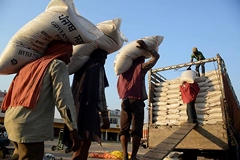
The Indian government is threatening to block the implementation of a deal struck in Bali last year by trade ministers from around the world, in a move that could halt efforts to revive multilateral trade talks and further damage the reputation of the World Trade Organisation.The agreement by the WTO’s 160 members last December saw them commit to streamline the flow of goods through borders worldwide. More importantly, it marked the first time in the body’s two-decade history that ministers concluded a deal and came as key WTO members are prioritising regional negotiations instead.The “trade facilitation agreement” faces its first implementation deadline on July 31 when WTO members, who make decisions by consensus, must approve a one-paragraph “accession protocol”.But in an interview with the Financial Times, Nirmala Sitharaman, India’s commerce minister, said New Delhi would not back that protocol because it was unhappy with the progress of talks on food security that ministers also committed to in Bali. Those, she said, had been cast aside.India wants immediate and intensive negotiations over the unresolved issue of its vast grain stockpiling and food subsidy programmes, she said. It did not want to wait until 2017, the deadline set in Bali for a “permanent solution” on how to treat its members’ food security programmes.India’s grain stockpiles are a highly sensitive issue in the country of 1.2bn people, where more than 40 per cent of children under five years old are malnourished. How to treat such schemes under WTO rules remains an area of contention that ministers in Bali agreed to tackle by 2017.India gives farmers a minimum support price for cultivating wheat and other cereals, then distributes the grain to the poor at a subsidised price. Some countries say such schemes distort global markets, while others say they are necessary in a world of rising food prices.“You’ve given yourself until 2017, but that doesn’t mean you have to wait to start,” Ms Sitharaman told the FT. “We want you to start immediately .?.?.?We want some very quick, substantive movement on this.”India stunned fellow WTO members this month when it unexpectedly announced it would not support proceeding with the trade facilitation deal. But it has been unclear since, senior officials in Geneva say, exactly what India wants in return for its vote.This is a big moment for the WTO. Bali gave us the first puff of wind in our sails in 20 years. If Bali falls apart .?.?.? there’s no question it will deal a major blow to the credibility of the institutionSouth Africa is backing India, and other African members of the WTO have raised concerns over whether the financial aid they were promised to help revamp customs procedures will materialise. To help assuage those concerns, Roberto Azevêdo, the WTO’s director-general, is expected next week to announce a fund to help developing members meet the terms of the Bali deal.The tussle in the WTO will be a big topic of discussion when G20 trade ministers and Mr Azevêdo gather in Sydney this week.It has also brought back existential questions about whether multilateral negotiations can deliver trade liberalisation and justify the WTO’s place in the global economy. The Doha Round of talks has been stalled for years, with leading members such as the US and EU now prioritising regional and sectoral agreements being negotiated outside the WTO.The deal in Bali engendered optimism, and in recent months Mr Azevêdo has been working to draft a credible plan to reinvigorate the Doha negotiations. But if the WTO cannot deliver what its members have already agreed to, senior officials in Geneva say, there are serious doubts over its ability to negotiate anything else.“This is a big moment for the WTO. Bali gave us the first puff of wind in our sails in 20 years. If Bali falls apart .?.?.? there’s no question it will deal a major blow to the credibility of the institution,” Michael Punke, the US ambassador to the WTO, told the FT.India has a long history of being a tough negotiator in the WTO, and one of the key questions is how Narendra Modi’s new government will approach the talks in Geneva as it tries to restore economic growth at home.Mr Modi wants to attract foreign investment to help rekindle the Indian economy. In its first budget last week, the government announced it was raising caps on foreign ownership in insurance and defence industries. His administration is also eager to more than double India’s merchandise exports as a share of world trade, from 1.7 per cent to 4 per cent within the next five years.Ms Sitharaman said India remained committed to the WTO system and fulfilling its commitments, including on trade facilitation. But India worries that its concerns are often being sidelined, she said.“We want to move along with the world, open our economy and have open fair trade practices, but this is not the way to do it,” she told the FT. “We want [the WTO] to succeed. [But] “our cause is never heard .?.?. Our co-operation over and over again just makes us look as if we are not being assertive enough.”
July 13, 2014
Source: ft.com
Các tin khác
- Viet Nam's steel industry takes another step forward in the anti-dumping lawsuit against Chinese goods (17/06/2026)
- Türkiye launches anti-dumping probe into car tire imports (17/06/2026)
- TRA proposes extending anti-dumping measure on wire rod (17/06/2026)
- Ample room remains for Viet Nam–India logistics cooperation (17/06/2026)
- Local authorities to directly issue fragrant rice export certificates from July 2026 (17/06/2026)