Home
Home
 About Us



India: Overhauling of Import and Export Policy
12/08/2015 12:00
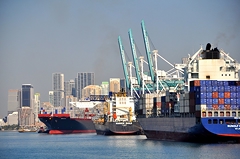
In order to give a boost to India's exports and for diversification of Indian export markets and products, the Government has recently announced its Foreign Trade Policy (FTP) 2015-20, on 1.4.2015. The FTP 2015-20 also includes several measures to encourage domestic manufacturing under 'Make in India' mission of the government e.g. (i) Reduction in Export Obligation under EPCG scheme, in case capital goods are procured from indigenous manufacturers (from 90% earlier to 75% now), (ii) Higher level of rewards under Merchandise Exports from India Scheme (MEIS) for export items having high domestic content and value addition.
The Government policy is to encourage free trade i.e. exports as well as imports. As per the present import policy, only 59 EXIM Codes are in prohibited category (0.5%), while 437 EXIM Codes are in restricted category (3.8%) and the remaining EXIM Codes (95.7%) are free for import. Some of the imported products are essential for the economy of the country, as well as for export of value added products. However, Government performs periodic import appraisal to evaluate the quantum of imports and takes steps, as and when necessary, for regulating the import e.g. (i) increase/decrease in custom duty, (ii) imposition of safe-guard duty, (iii) imposition of anti-dumping duty, (iv) imposition of minimum import price, (v) quantity restrictions, (vi) port restrictions, (vii) registration requirement and (viii) imposition of quality standards etc.
The Government policy is to encourage free trade i.e. exports as well as imports. As per the present import policy, only 59 EXIM Codes are in prohibited category (0.5%), while 437 EXIM Codes are in restricted category (3.8%) and the remaining EXIM Codes (95.7%) are free for import. Some of the imported products are essential for the economy of the country, as well as for export of value added products. However, Government performs periodic import appraisal to evaluate the quantum of imports and takes steps, as and when necessary, for regulating the import e.g. (i) increase/decrease in custom duty, (ii) imposition of safe-guard duty, (iii) imposition of anti-dumping duty, (iv) imposition of minimum import price, (v) quantity restrictions, (vi) port restrictions, (vii) registration requirement and (viii) imposition of quality standards etc.
Aug 5, 2015
Source: business-standard.com
Source: business-standard.com
| Tải tài liệu | |
|---|---|
| 150805 Overhauling of Import and Export Policy | |
Các tin khác
- New-generation FTAs open wider export opportunities to Middle East and South Asia (15/06/2026)
- Updated regulations on foreign trade management and import quotas (15/06/2026)
- Mandatory traceability for high-risk goods from July 1st: What should businesses prepare for? (15/06/2026)
- Tariff pressure is forcing businesses to restructure in order to adapt. (15/06/2026)
- Coffee Citizens model aims to lift Vietnamese value chain (15/06/2026)