Home
Home
 About Us


"Green ports" and "green fleets" are inevitable trends
25/03/2026 03:00
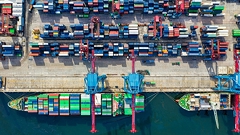
Viet Nam possesses numerous advantages for developing its maritime economy, with its readily available potential stemming from its coastline of over 3,260 km. However, for sustainable development, Viet Nam needs more "green ports" and "green fleets," aligning with international trends and commitments.
Green transition is a key factor in determining competitiveness.
According to Resolution 36-NQ/TW dated October 22, 2018, of the Central Committee of the Communist Party of Viet Nam (12th term), on the strategy for developing Viet Nam's marine economy until 2030, with a vision to 2045, by 2030, successful and breakthrough development of marine economic sectors will be prioritized in the following order: Marine tourism and services; Maritime economy; Oil and gas exploration and other marine mineral resources; Aquaculture and seafood exploitation; Coastal industries; Renewable energy and new marine economic sectors. Resolution 36 sets specific targets for 2030, aiming for purely marine economic sectors to contribute 10% of the national GDP; and for the economies of coastal provinces and cities to contribute an estimated 65-70% of the national GDP…
Currently, Viet Nam's maritime industry is facing significant pressure to transform itself to meet the International Maritime Organization's strategy for reducing greenhouse gas emissions from ships and to align with the goal of net-zero emissions by 2050 as committed at COP26. In the context of sustainable development and a green economy becoming increasingly mandatory criteria in international trade, the green transition is not only an environmental requirement but also a key factor determining the competitiveness of Vietnam's maritime industry.
With over 3,260 km of coastline and a strategic location on international shipping routes, Viet Nam has a significant advantage in becoming a transshipment hub for goods in the Asia-Pacific region. However, to capitalize on this opportunity, Viet Nam must accelerate its green transition, in line with its commitment to net-zero emissions by 2050 at COP26. The government has issued several important policies, such as Decision No. 876/QD-TTg dated July 22, 2022, on green energy transition and reduction of carbon and methane emissions in the transport sector, and the Ministry of Transport (now the Ministry of Construction) has issued Decision 2027/QD-BGTVT approving the plan for developing green ports in Viet Nam.
In implementing Resolution 45-NQ/TW of the Politburo , which aims to make Hai Phong a key maritime economic hub of the country, Hai Phong Port Joint Stock Company is witnessing a historic transformation. From focusing all efforts on bringing Berths 3 and 4 of Lach Huyen into operation to receive mother ships sailing directly to Europe and America, to the determination to achieve a "dual objective" in relocating Hoang Dieu Port and a comprehensive digitalization strategy.
In addition to expanding its development space into the open sea, the city's key port enterprises are also proactively restructuring, undergoing digital transformation, and embracing green transformation, aiming for a modern, smart port model and gradually approaching the Net Zero goal.
In Hai Phong, the Lach Huyen port complex is planned as a deep-water seaport, a special national seaport, along with the Ba Ria - Vung Tau port complex, playing the role of Vietnam's international maritime gateway. Previously, on international shipping routes, Hai Phong Port mainly served as a consolidation port, where export goods had to be transshipped through deep-water ports such as Singapore or Hong Kong. Now, that role has completely changed.
The commissioning of Berths No. 3 and No. 4 at Lach Huyen is not merely an infrastructure expansion, but a qualitative leap in competitiveness. With berths approximately 750 meters long and considerable depth, these berths are built to international standards, allowing them to directly accommodate container ships up to 165,000 DWT. This transforms Hai Phong Port into a gateway for Vietnamese goods to reach European and American markets directly without transshipment.
Beyond simply expanding its scale, Lach Huyen is also being oriented towards developing as a green and smart port, becoming a driving force for the logistics ecosystem in the Hai Phong area and the entire Northern key economic region.
In the context of new-generation free trade agreements such as EVFTA and CPTPP, which place increasingly stringent demands on carbon emission reduction, Hai Phong Port Joint Stock Company clearly recognizes that digital transformation and green transformation are no longer slogans, but essential requirements and a passport to participate deeply in the global supply chain.
Building upon approved digital transformation strategies, Hai Phong Port is implementing a comprehensive range of solutions: the Smart Gate system with automatic container code and vehicle license plate recognition capabilities, and the e-Port system, along with centralized management platforms, customer care, and intelligent operational control, providing superior convenience for customers. The company is continuing to build a centralized data warehouse, applying Big Data and AI to forecast throughput, optimize yard space allocation, and coordinate equipment, gradually forming a smart port model with a Digital Twin 3D model.
Along with digitalization is the roadmap for developing green ports. The leadership of Hai Phong Port Joint Stock Company has issued a Green Port Development Plan for the period 2025-2030, in line with the Master Plan for the Development of Viet Nam's Seaport System. This plan focuses on five key breakthroughs, closely intertwined: a strategy for investing in in-depth infrastructure; a strong shift from a purely port operation model to the development of a comprehensive logistics ecosystem; digital transformation and green growth; and providing onshore power at Pier 1 of Tan Vu Port, creating a foundation for the strong conversion of forklifts and trailers to electric or hybrid engines in the period 2026-2030, as well as researching the application of green hydrogen fuel.
Developing a "green fleet"
According to the Vietnam Maritime Administration, by the end of 2025, the Vietnamese maritime fleet will have nearly 1,500 vessels with a total deadweight tonnage of 11.3 million DWT. Of these, the cargo fleet will comprise 930 vessels, with an average deadweight tonnage of 8,900 DWT per vessel. However, despite ranking 22nd in the world, the Vietnamese fleet actually accounts for less than 1% of the global total deadweight tonnage. Its current transport capacity only handles about 8% of import and export cargo volume, mainly operating on short international routes. While maritime transport handles over 80% of global cargo volume, the Vietnamese fleet is facing intense competition from global trends: increasing vessel size and transitioning to green energy.
In terms of scale, the global shipping fleet is shifting strongly towards larger vessels such as 23,000-24,000 TEU container ships, bulk carriers over 400,000 DWT, or crude oil tankers over 300,000 DWT. Conversely, the structure of Vietnam's fleet remains primarily small and medium-sized vessels, with slow growth rates.
Meanwhile, in terms of technology, during the period 2024-2025, approximately 50% of the total tonnage of new shipbuilding orders globally will be vessels using or ready to use alternative (green) fuels. In Vietnam, the number of newly built vessels using clean fuels is still limited, and the replacement rate is almost negligible.
Without proper investment and transformation solutions, the gap between Vietnam's fleet and the rest of the world will continue to widen. The Vietnamese fleet risks restricted market access, increased costs, and reduced competitiveness in the long term. The pressure for transformation is becoming even more apparent as the global shipping market shows signs of oversupply, particularly in the container segment. With an increasing supply of large and modern vessels, fleets that are slow to modernize will struggle to maintain market share. Stricter emission standards are reshaping the shipping market. The delay in investing in green vessels puts Vietnamese businesses at risk of losing market share on key import and export routes.
According to the Vietnam Register, the domestic maritime industry is facing a series of challenges: an aging fleet, a lack of advanced emission control technology, a absence of financial support mechanisms, and especially a lack of infrastructure for alternative fuels. Shipowners are advised to develop a transition roadmap as soon as possible, from assessing the feasibility of using methanol, ammonia, and hydrogen to calculating long-term investment and operating costs.
Besides fuel changes, measures to optimize voyages, maintain hull and propellers, and apply energy-saving technologies are also considered "short-term" solutions to reduce emissions immediately.
However, the green transition wave also opens up opportunities for the domestic shipbuilding and maritime services industry. Adopting technologies for building new ships using clean fuels, high-energy efficiency vessels, or emission reduction systems such as SCR and OCCS can help Vietnamese businesses participate more deeply in the global value chain.
VOSCO's Fortune Freighter
Contributing to the draft of the new Vietnamese Maritime Code (expected to be submitted to the National Assembly in October 2026), a representative from the Shipbuilding Industry Corporation (SBIC) stated that Viet Nam has set the goal of becoming a strong maritime nation, prospering from the sea, through Resolution 36-NQ/TW dated October 22, 2018, in which the maritime industry is one of the six key maritime economic sectors. This strategy creates a strong impetus to promote investment in maritime infrastructure, legislation, and logistics.
The maritime industry currently faces numerous challenges, ranging from economic and political to environmental, while also adapting to revisions and updates to important international conventions to which Vietnam is a signatory, such as the SOLAS Convention on Maritime Safety and the STCW Convention on Standards of Seafarer Training. In particular, the International Maritime Organization (IMO) is considering amending Annex VI of the MARPOL Convention to specify a Net Zero Emission Framework.
Major countries and regions such as the EU, the US, Japan, and South Korea are implementing a range of green trade standards and barriers, most notably the Emissions Trading System (ETS). This creates significant competitive pressure on Vietnam's maritime industry. Failure to comply with international emission regulations will result in restricted operations or exclusion from the market, posing a major challenge, especially for aging fleets.
Based on that, SBIC representatives put forward several policy proposals and recommendations for the drafting of the new Vietnamese Maritime Code to develop a "green fleet" in the new era. These include, firstly, perfecting the legal framework for the "green fleet," by further improving national institutions, policies, and technical standards for ships using clean fuels (LNG, methanol, hydrogen, electricity) in line with IMO recommendations; developing a roadmap for inspection, registration, and licensing of ships using new technologies; and perfecting regulations on the purchase, sale, and construction of ships, clearly specifying mandatory indicators and percentages for the use of green fuels, and encouraging the use of LNG and clean fuels.
The goals include: 30% of new vessels using LNG, hydrogen, or hybrid fuel; finalizing legal regulations on green refueling at ports, safe operation of green vessels, along with tax and fee incentives and credit support for investment in green vessel construction; simplifying registration procedures and standards for materials, machinery, and equipment in shipbuilding and repair.
Next, fulfill environmental commitments by applying advanced technologies and reducing greenhouse gas emissions according to a roadmap consistent with Decision 876/QD-TTg; Enhance the capacity for collecting wastewater and solid waste at shipbuilding and repair facilities to achieve net emissions of "zero" by 2050 (COP26).
One of the biggest challenges to the green transformation in Viet Nam's maritime industry today is the lack of a comprehensive and synchronized legal framework. The existing maritime legal regulations lack specific provisions on the development of green ports, smart ports, green vessels, sustainable fuel use for ships, as well as standards, regulations, and sufficiently strong incentive mechanisms to encourage maritime businesses to invest in new technologies and green transformation.
Regarding technical infrastructure, the conditions for serving clean fuels are almost non-existent, and the human resources knowledgeable in green technology are very limited, especially the team of engineers specializing in the operation of onshore power equipment and sustainable fuel receiving systems. Training institutions have proactively developed and adjusted training programs to integrate content on green transition, but there is still a lack of synchronization and uniformity.
Meanwhile, the cost of investing in green equipment and vehicles remains high, the payback period is long, while supporting policies such as green credit and tax incentives are lacking and not attractive enough. In addition, many businesses still have limited awareness of the importance and long-term benefits of green transformation, leading to a lack of strategic plans and specific implementation roadmaps.
Green transformation at Vietnamese seaports has yielded encouraging results. Many ports have met or are close to meeting green port criteria, notably those belonging to Saigon Newport Corporation, Hai Phong Port, Da Nang Port, Cai Mep - Thi Vai, Gemalink, etc. Major ports have also invested in modern, automated loading and unloading equipment using electricity instead of fossil fuels, reducing labor costs, increasing loading and unloading productivity, and contributing to the reduction of greenhouse gas emissions.
In addition, many port businesses have installed rooftop solar power systems, implemented solutions to provide onshore electricity to ships, and researched the use of environmentally friendly or recyclable construction materials. Some businesses are researching the transition to electric vehicles to replace those using fossil fuels. Regarding the application of information technology, many Vietnamese seaports have implemented IT applications in their port operations to reduce greenhouse gas emissions.
International experience shows that leading countries in the region have proactively developed comprehensive green transition strategies to capitalize on the opportunities presented by the low-emission shipping trend. Investing in integrated infrastructure for clean fuel supply, initially LNG, and gradually preparing for methanol and ammonia in the 2025-2030 period, is considered a key factor in attracting international green shipping routes and maintaining a position in the global supply chain. Simultaneously, pilot green port models, implemented before scaling up, combined with the mandatory adoption of onshore power generation systems, have proven effective in reducing greenhouse gas emissions and improving port service standards.
From regional experience, several key policy lessons can be drawn for Viet Nam: Firstly, the legal framework needs to be finalized soon, including the revised Maritime Code which stipulates criteria for green ports, smart ports, green ships, sustainable maritime fuels, and mechanisms to encourage ports and ships to use sustainable fuels. Secondly, priority should be given to targeted investment in clean fuel infrastructure at deep-water ports and international transshipment ports to gradually participate in green shipping routes. Thirdly, the green port model should be implemented at a few major ports before being mandatory nationwide, ensuring its suitability to domestic economic and technical conditions. Finally, linking green transformation with preferential financial policies and international cooperation will be key to accelerating this process, helping Vietnam avoid falling behind in the global green logistics trend.
Source: VIMC
Các tin khác
- U.S. to Impose Duties on Mexican, Thai, Vietnamese Chassis (03/06/2026)
- Mexican sugar producers push to scrap U.S. import quotas (03/06/2026)
- Japan launched an anti-dumping investigation into flat steel imports from three countries (03/06/2026)
- Eurochem challenges anti-dumping duties in the EU (03/06/2026)
- Pangasius prices in Viet Nam surge due to high export demand (03/06/2026)