Home
Home
 About Us



Global Trade Talks Suffer Another Setback
05/08/2014 12:00
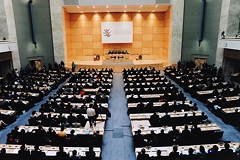
The collapse last week of a global trade agreement on simplifying customs rules will make it much harder for the World Trade Organization to finish its much-delayed Doha round of negotiations, which has a much broader agenda to lower tariffs and reduce barriers to trade.
Last year at a meeting on the Indonesian island of Bali, the W.T.O.’s 160 members agreed to improve customs procedures by reducing red tape — a deal that some analysts estimated could add $1 trillion to the global economy by increasing trade. The W.T.O. had set a July 31 deadline to finalize that agreement. At the Bali meeting, the countries also agreed to renegotiate existing rules on agricultural subsidies by the end of 2017 to address India’s concerns that those regulations were too restrictive and could hurt the nation’s ability to stockpile grains to ensure food security.
But last week, India vetoed the final agreement on customs rules. In recent weeks, it had insisted that the W.T.O. move up negotiations over agricultural subsidies to this year. Under W.T.O. rules, agreements must be adopted unanimously before they can be sent to the legislature of each country for ratification; two-thirds of the countries have to ratify trade deals for them to become effective.
Last year, India vastly expanded its food subsidy program, under which the government buys wheat and rice from farmers at above-market prices, stockpiles the grain and sells some of it to consumers at much lower prices. Other countries like the United States and Pakistan have complained that the program distorts trade. One of their concerns is that India is accumulating so much grain — with millions of tons rotting for lack of storage space — that the country will inevitably end up dumping some of it onto the world market, which would depress global prices and hurt farmers in other countries. India should, of course, have the ability to help its struggling farmers and protect the poor. But it could achieve those goals in a more constructive way.
The Bali pact, which India’s previous government supported, included an agreement by the United States, the European Union and other nations not to challenge the food policies of India and other developing nations while the food subsidy rules were renegotiated. It is disappointing that the government of Prime Minister Narendra Modi, which was elected in part because it promised to revive India’s economy, did not give the agreements reached in Bali a chance.
Indian officials have played down their veto, saying that the July 31 deadline was an arbitrary date and arguing that trade negotiators can sign the agreement in September. But W.T.O. members have a poor record of concluding trade deals — the current Doha round of talks, of which the Bali agreements are a part, has not resulted in a completed agreement since it began in 2001.
This latest failure will further erode confidence in the global trading system, and it will encourage officials in the United States, the European Union, China and Japan to pursue more regional and industry-specific trade deals. Sadly, those deals often leave out the smallest and poorest nations, as Roberto Carvalho de Azevêdo, the director general of the W.T.O., noted last week.
Trade negotiators might still be able to revive the Doha negotiations, but don’t count on it.
Source: NY Times
Các tin khác
- Viet Nam's steel industry takes another step forward in the anti-dumping lawsuit against Chinese goods (17/06/2026)
- Türkiye launches anti-dumping probe into car tire imports (17/06/2026)
- TRA proposes extending anti-dumping measure on wire rod (17/06/2026)
- Ample room remains for Viet Nam–India logistics cooperation (17/06/2026)
- Local authorities to directly issue fragrant rice export certificates from July 2026 (17/06/2026)