Home
Home
 About Us



Gia Lai develops its agricultural sector by linking it to export value chains
25/05/2026 02:17
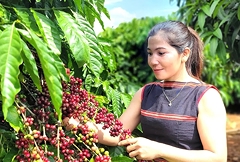
After years of restructuring its agricultural sector, Gia Lai is gradually asserting its role as a major producer of agricultural commodities in the Central Highlands and the entire country.
The People's Committee of Gia Lai province has just issued a plan for the development of crop production in the province for the period 2026-2030, with a vision to 2035. The plan is expected to create momentum for the agricultural sector to develop in a modern, green, and sustainable direction.
Establishing concentrated raw material areas
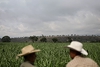
Over the years, Gia Lai's agricultural sector has maintained stable growth, gradually shifting from small-scale production to concentrated commodity development linked to processing and export. With the advantage of nearly 977,000 hectares of agricultural land, mostly fertile basaltic red soil, the province has developed many specialized areas for key crops such as coffee, pepper, rubber, durian, banana, and passion fruit.
During the 2021-2025 period, the province established 9 raw material zones for key crops, while maintaining and expanding 217 production and consumption linkages for agricultural products. Many large enterprises participated in production linkages, invested in preliminary processing and manufacturing, and expanded export markets, creating momentum to promote sustainable production development.
Several agricultural products from Gia Lai are gradually making their mark on the international market. The first shipment of passion fruit exported to Europe under the EVFTA agreement originated from Gia Lai; LOPANG BANANA bananas are distributed in 81 supermarkets in South Korea; coffee, pepper, and durian have accessed many demanding markets such as the EU, the United States, Japan, and South Korea.
According to Mr. Tran Xuan Khai, Head of the Gia Lai Department of Crop Production and Plant Protection, many of the province's key crops continue to maintain large-scale cultivation, such as coffee at nearly 109,000 hectares, rubber at over 86,000 hectares, cassava at over 83,000 hectares, and sugarcane at nearly 52,000 hectares. Meanwhile, fruit trees such as durian, banana, and passion fruit are developing strongly, creating a stable source of raw materials for processing and export.
In addition, efforts to issue planting area codes and traceability systems have been intensified. Currently, many durian, banana, and passion fruit growing areas have been granted codes to facilitate official export, creating conditions to enhance the competitiveness of Gia Lai's agricultural products in the international market.
However, according to Mr. Khai, the province's agricultural sector still faces many challenges such as fragmented production, a lack of truly sustainable supply chain linkages, and a low rate of deep processing. Specifically, currently about 60% of coffee is still exported in raw form, while pepper is mainly exported as whole grains, and the value generated is not commensurate with its potential.
Towards modern and high-value agriculture.
By 2030, Gia Lai aims to develop its agricultural sector towards a modern, green, and high-value direction. Accordingly, the average annual growth rate of agricultural production value is projected to reach 2.2-2.5%; and the growth rate of value added in the processing industry of agricultural products is expected to exceed 10% per year. The total production value of the entire sector is estimated to reach over 40,200 billion VND.
The province will also promote production restructuring by converting approximately 26,710 hectares of low-yield crops to higher - value crops that are adaptable to climate change and market demands. This conversion includes 3,790 hectares of rice, 7,660 hectares of sugarcane, 7,745 hectares of cassava, 4,020 hectares of cashew nuts, and 3,495 hectares of other crops.
One of the major focuses is the development of 3-5 large-scale raw material areas linked to the enterprise's supply chain and deep processing. Specifically, the planned linked coffee area is expected to reach over 81,000 hectares out of a total area of 110,000 hectares; durian 8,600 hectares out of a total area of 10,000 hectares; and passion fruit nearly 5,000 hectares out of a total area of 10,000 hectares.
A notable new feature in Gia Lai's agricultural development plan for the 2026-2030 period is the clear identification of the "leading role" of each enterprise in building raw material areas and developing agricultural value chains. Instead of widespread linkages, the province proactively "selects the right partners," assigning specific targets to enterprises with strong financial capacity, market access, and deep processing capabilities.
Accordingly, Vinh Hiep Co., Ltd. is oriented towards developing approximately 24,000 hectares of linked coffee plantations; Nafoods Tay Nguyen Joint Stock Company is responsible for approximately 10,000 hectares of coffee, while also developing an additional 1,500 hectares of durian and 200 hectares of passion fruit. THAGRICO Cao Nguyen Fruit Company Limited is tasked with developing approximately 1,000 hectares of linked durian plantations, along with many other businesses participating in developing export-standard raw material areas.
Beyond simply purchasing agricultural products, businesses participating in the supply chain must commit to investing in processing plants, cold storage, logistics systems, traceability, and ensuring stable product sales for farmers.
According to Mr. Duong Mah Tiep, Vice Chairman of the Gia Lai Provincial People's Committee, by 2035, Gia Lai's agricultural sector will be among the leading sectors in the Central Highlands, the South Central Coast, and the entire country. Agricultural products will be produced according to international standards, utilizing high-tech and organic farming methods, ensuring food safety and environmental friendliness.
Source: Vietnam.vn
Các tin khác
- U.S. to Impose Duties on Mexican, Thai, Vietnamese Chassis (03/06/2026)
- Mexican sugar producers push to scrap U.S. import quotas (03/06/2026)
- Japan launched an anti-dumping investigation into flat steel imports from three countries (03/06/2026)
- Eurochem challenges anti-dumping duties in the EU (03/06/2026)
- Pangasius prices in Viet Nam surge due to high export demand (03/06/2026)