Home
Home
 About Us



Footwear businesses adapt to COVID-19 pandemic
26/08/2020 12:00
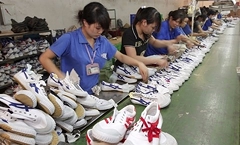
70% of raw materials for domestic leather and footwear production are imported from China, according to Phan Thi Thanh Xuan, general secretary of the Vietnam Leather, Footwear and Handbag Association (Lefaso).
Therefore, the pandemic has caused difficulties for domestic leather and footwear enterprises.
Many businesses have sought material sources from other markets such as India, Europe, Singapore, and Japan to maintain production.
Along with the diversification of raw material sources, leather and footwear companies have been more active in finding partners.
Many businesses shared that some markets in Europe and Japan had shown signs of recovery with the disease better controlled.
The Vietnam - EU free trade agreement (EVFTA), which took effect from the beginning of this month, also helped leather and footwear businesses expand markets and get more orders, said Xuan.
The pandemic was still complicated, but if enterprises worked hard to find partners and improved their competitiveness, the opportunities would still be great, said experts.
Businesses and experts said that trade promotion activities, as well as support from management agencies, should be further promoted.
The Lefaso general secretary said the leather and footwear industry needed to overcome weaknesses in chain linkage.
She also recommended a separate decree for the leather, footwear, textile and garment industry to develop the fashion industry in the country.
The report on industrial production and trade activities in the first seven months of this year of the Ministry of Industry and Trade found the production of leather and related products increased by 7.6% last month compared to the previous month but was down 4.4% over the same period last year.
It decreased by 4.2% in the first seven months of the year compared to the same period last year.
Footwear export turnover of all kinds was estimated at US$9.53 billion in the seven months, a year-on-year drop of nearly 8%.
Imports of raw materials for the industry also reduced by 14.1% in the first six months.
Therefore, the pandemic has caused difficulties for domestic leather and footwear enterprises.
Many businesses have sought material sources from other markets such as India, Europe, Singapore, and Japan to maintain production.
Along with the diversification of raw material sources, leather and footwear companies have been more active in finding partners.
Many businesses shared that some markets in Europe and Japan had shown signs of recovery with the disease better controlled.
The Vietnam - EU free trade agreement (EVFTA), which took effect from the beginning of this month, also helped leather and footwear businesses expand markets and get more orders, said Xuan.
The pandemic was still complicated, but if enterprises worked hard to find partners and improved their competitiveness, the opportunities would still be great, said experts.
Businesses and experts said that trade promotion activities, as well as support from management agencies, should be further promoted.
The Lefaso general secretary said the leather and footwear industry needed to overcome weaknesses in chain linkage.
She also recommended a separate decree for the leather, footwear, textile and garment industry to develop the fashion industry in the country.
The report on industrial production and trade activities in the first seven months of this year of the Ministry of Industry and Trade found the production of leather and related products increased by 7.6% last month compared to the previous month but was down 4.4% over the same period last year.
It decreased by 4.2% in the first seven months of the year compared to the same period last year.
Footwear export turnover of all kinds was estimated at US$9.53 billion in the seven months, a year-on-year drop of nearly 8%.
Imports of raw materials for the industry also reduced by 14.1% in the first six months.
Source: VOV
Các tin khác
- Anti-dumping measures on steel remained a common tool in 2025 – OECD (08/06/2026)
- Exporters urged to enhance traceability in response to proposed US tariffs (08/06/2026)
- Viet Nam’s early-season fresh lychees win over the US market (08/06/2026)
- New challenges for export businesses (08/06/2026)
- Tariff risks push Viet Nam to post record deficit (08/06/2026)