Home
Home
 About Us



European Union launches WTO case against Chinese tariffs on brandy exports
27/11/2024 04:42
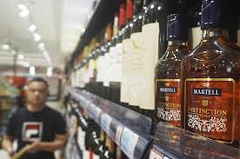
China has 10 days to respond after request for consultation formally lodged at the World Trade Organization on Monday
The European Union has launched a World Trade Organization case against Chinese tariffs on the bloc’s exports of brandy in the latest gambit in an increasingly tense trade dispute.
Last month, China’s Ministry of Commerce announced it would start collecting provisional anti-dumping duties ranging from 30.6 per cent to 39 per cent on liquors, mainly on cognac shipments from France.
The move was broadly seen as retaliation against the European Commission’s anti-subsidy investigation and subsequent countervailing duties of up to 35.3 per cent on Chinese-made electric vehicles.
A request for consultation was formally lodged at the Geneva body on Monday. It is the first step in a dispute settlement process, to which China has 10 days to respond. If the dispute is not resolved through consultations, it will proceed to a disputes panel that could – if appealed – take years to finalise.
While the WTO’s Appellate Court has been sidelined because the United States has blocked new judges, both China and the EU are signatories to the alternative Multi-Party Interim Appeal Arbitration Arrangement, meaning the case can be heard to its conclusion.
In a statement, the European Commission said “China’s provisional measures on EU brandy are not based on facts, and thus are not in line with WTO rules”.
“The EU takes very seriously any unfair or questionable use of trade defence instruments against any sector of our economy,” said Valdis Dombrovskis, the bloc’s outgoing trade commissioner.
“By requesting consultations with China over its provisional anti-dumping measures on EU brandy, the commission is following through on its commitment to protect our industry from unfounded accusations and misuse of trade defence measures,” he added.
China’s commerce ministry said it had “received the EU’s request for consultations and will handle it in accordance with relevant WTO rules”.
In a statement on Monday, a spokesperson said the measures were “legitimate … in accordance with Chinese law and in response to applications from domestic industries after fair and impartial investigations”.
In retaliation for the high-profile EV duties, China has also launched investigations into dumping by the EU’s pork and dairy sectors. Brussels has already launched a WTO challenge against the dairy inquiry at the nascent investigatory stage, the first time it has appealed on a case at such an early stage.
China’s commerce ministry said it had “received the EU’s request for consultations and will handle it in accordance with relevant WTO rules”.
A spokesperson said on Monday China’s measures were “legitimate … in accordance with Chinese law and in response to applications from domestic industries after fair and impartial investigations”.
The brandy dispute has led to farmers’ protests in France, with the industry complaining it is “collateral damage” in a trade war not of its making. Last week, staff at brandy-producer Hennessy went on strike over a decision to bottle cognac in China in a bid to circumvent the Chinese duties.
The issue has been high on the political agenda too. During a meeting on the sidelines of the G20 summit in Rio de Janeiro last week, French President Emmanuel Macron urged Chinese counterpart Xi Jinping to drop the tariffs.
The Chinese market has been big business for Europe’s cognac makers, although in recent months it looked as though political factors were bleeding into commerce.
In October, exports of the French liquor to China fell 39.5 per cent to US$115 million from a year earlier, according to Chinese customs figures.
For the first 10 months of 2024, it dropped 26.4 per cent in value terms to just over US$1 billion.
Meanwhile, negotiations are continuing between the EU and China to reach a deal that would soften the impact of EV tariffs. The sides are at loggerheads over the structure of a price undertaking arrangement that would see a minimum price placed on vehicle imports to the union, according to sources.
Over the weekend, German lawmaker Bernd Lange – the head of the European Parliament’s trade committee – suggested a deal was close.
“We are close to an agreement: China could commit to offering e-cars in the EU at a minimum price,” Lange told German broadcaster n-tv.
“This would eliminate the distortion of competition through unfair subsidies, which is why the tariffs were originally introduced.”
However, EU sources denied that any deal was imminent. They said marginal progress had been made on some technical points during multiple rounds of talks, but the parties remained divided on some of the “fundamental elements” of price undertaking, including how the minimum price would be calculated.
Source: South China Morning Post
Các tin khác
- U.S. to Impose Duties on Mexican, Thai, Vietnamese Chassis (03/06/2026)
- Mexican sugar producers push to scrap U.S. import quotas (03/06/2026)
- Japan launched an anti-dumping investigation into flat steel imports from three countries (03/06/2026)
- Eurochem challenges anti-dumping duties in the EU (03/06/2026)
- Pangasius prices in Viet Nam surge due to high export demand (03/06/2026)