Home
Home
 About Us



EU tightens regulations on frozen tuna; businesses need to proactively adapt
26/01/2026 05:00
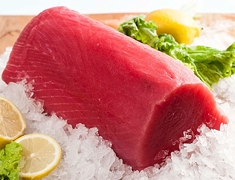
From January 27, 2026, the European Union (EU) will implement new regulations requiring tuna intended for direct consumption to be frozen to a core temperature of -18°C or lower, even when frozen in brine on board; this regulation increases technical, monitoring, and traceability requirements, forcing Vietnamese export businesses to promptly review their processes, clearly classify the intended use, and coordinate closely with EU partners to avoid export disruptions.
The EU standardizes freezing thresholds for tuna, enhancing food safety.
Recently, the EU issued Delegated Regulation (EU) 2025/1449, amending Annex III of Regulation (EC) No. 853/2004, to tighten the conditions for freezing tuna intended for direct human consumption.
New EU regulations require that tuna intended for direct human consumption (e.g., sashimi, steak, loin) must be frozen to a core temperature of -18°C or lower, including brine freezing on board. Only vessels with certified brine freezing systems that meet all technical requirements are permitted to bring this type of tuna into the EU market. Temperatures must be monitored, recorded, and data stored for official inspection by EU authorities.
Furthermore, the entire freezing control process must be monitored, documented, and fully data-stored to facilitate official inspections by EU regulatory authorities. This is considered a significant upgrade in terms of traceability, transparency, and technical compliance requirements within the tuna supply chain.
The regulations will take effect from January 27, 2026. After this date, tuna that does not meet the -18°C freezing requirement will not be permitted to be imported into the EU as products intended for direct human consumption.
The reasons for the new regulation are also clearly stated in official EU inspection reports. According to these reports, some ships were freezing tuna in brine at around -9°C, then marketing it as fresh or unprocessed tuna. This practice was identified by the EU as trade fraud and posed a potential food safety risk, particularly the risk of histamine buildup, which can cause scombroid poisoning in consumers; therefore, the EU standardized the threshold to -18°C to ensure food safety and market transparency.
Review processes and classify products to avoid export risks.
The new regulations reflect the EU's continued trend of raising "technical barriers" to imported seafood, thereby imposing increasingly stringent requirements on exporting countries, including Viet Nam.
However, the Viet Nam Association of Seafood Processing and Export (VASEP) notes that this regulation does not apply generally to all tuna but focuses on tuna intended for direct consumption. Shipments of tuna frozen only at temperatures above -18°C risk being denied customs clearance or being forced to change their intended use, for example, as raw materials for further processing, depending on the assessment of the EU authorities.
Therefore, businesses need to review their raw material sources and onboard freezing methods, work with operating partners and fleet managers to ensure equipment and processes meet new requirements; and prepare early to avoid export disruptions from 2026 onwards.
Tuna products considered for direct consumption typically include: fresh or frozen tuna for sashimi, sushi, tuna steaks, frozen tuna loin or fillets; frozen tuna thawed and sold as “fresh” in the EU; and frozen tuna that has undergone only minor processing such as cutting, cleaning, sizing, or repackaging. For these products, it is mandatory to be frozen to -18°C at the core, even when using brine freezing.
Cases not considered direct consumption and not subject to the stricter regulations include: tuna used as raw material for industrial processing; such as canned tuna, steamed or cooked tuna, sterilized tuna, cooked tuna, smoked tuna, or tuna that has undergone deep heat treatment. Additionally, tuna imported into the EU for further processing before being marketed to consumers is also not considered direct consumption.
In these cases, the freezing requirements are not tightened under the new regulations for tuna intended for direct consumption; however, other general EU food safety regulations must still be followed.
VASEP argues that the EU's emphasis on the concept of direct consumption over industrial processing is due to the fact that tuna intended for direct consumption has a higher risk of histamine accumulation if the freezing process is not deep enough and there is a potential for commercial fraud; for example, freezing at -9°C but selling as fresh fish. Meanwhile, tuna used for heat processing or pasteurization undergoes processing that reduces food safety risks and therefore poses less risk to the end consumer.
Given this situation, VASEP recommends that Vietnamese businesses clearly classify shipments intended for direct consumption and those intended for industrial processing from the outset; and clearly state the intended use in technical documents, contracts, and export documents.
Businesses also need to work closely with EU partners to agree on the final intended use, thereby avoiding the risk of customs rejection or being forced to change the intended use when goods enter the EU.
Source: People's Deputies News
Các tin khác
- U.S. to Impose Duties on Mexican, Thai, Vietnamese Chassis (03/06/2026)
- Mexican sugar producers push to scrap U.S. import quotas (03/06/2026)
- Japan launched an anti-dumping investigation into flat steel imports from three countries (03/06/2026)
- Eurochem challenges anti-dumping duties in the EU (03/06/2026)
- Pangasius prices in Viet Nam surge due to high export demand (03/06/2026)