Home
Home
 About Us



EU Imposes Steep Duties On Strategic Raw Material Imports From China
19/01/2026 04:57
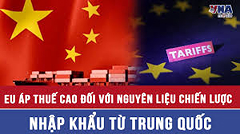
High Anti-Dumping Tariffs Target Strategic Input
On January 16 in Brussels, the European Commission announced the imposition of anti-dumping duties ranging from 88.7% to 110.6% on fused corundum imported from China. Alongside these tariffs, the EU introduced a limited duty-free import quota, allowing a capped volume of Chinese fused corundum to enter the bloc without additional levies.
The decision follows an assessment that imports of the material were being sold at unfairly low prices, placing sustained pressure on European producers. By setting tariffs at such elevated levels, the Commission signaled an intention to materially alter trade incentives rather than merely adjust market behavior at the margin.
Why Fused Corundum Matters To Europe
Fused corundum, also known as fused alumina, is a critical industrial input used in steelmaking, glass production, ceramics, and advanced abrasives. Its importance extends beyond civilian manufacturing into defense-related applications, where material performance and supply reliability are essential.
The Commission emphasized that disruption or overconcentration in the supply of this material could generate systemic risks for Europe’s industrial ecosystem. In this context, trade measures are framed as a tool to stabilize downstream industries rather than a reaction to isolated pricing practices.
Industrial Independence And Supply Security
In its statement, the Commission stressed that the measures aim to counter injurious dumping while preventing structural vulnerabilities from forming across strategic value chains. European Commission President Ursula von der Leyen underlined that the policy is designed not only to protect domestic producers, but also to ensure secure access to inputs for downstream manufacturers.
The logic linking tariffs to industrial resilience is based on reducing exposure to single-country supply dominance. By raising the effective cost of Chinese imports while maintaining a limited duty-free quota, the EU seeks to rebalance sourcing patterns without triggering an abrupt supply shock.
A Shift In EU Trade Strategy
The decision reflects a wider evolution in EU trade policy, where strategic autonomy and supply chain security increasingly guide intervention. Rather than focusing solely on price competition, Brussels is treating certain raw materials as foundational assets for industrial and defense capacity.
This approach suggests a correlation between heightened geopolitical risk and the EU’s willingness to deploy aggressive trade instruments. As materials with dual-use or defense relevance gain prominence, similar measures could become more frequent, reshaping Europe’s trade relationship with key suppliers such as China over the medium term.
Source: Fast Bull
Các tin khác
- U.S. to Impose Duties on Mexican, Thai, Vietnamese Chassis (03/06/2026)
- Mexican sugar producers push to scrap U.S. import quotas (03/06/2026)
- Japan launched an anti-dumping investigation into flat steel imports from three countries (03/06/2026)
- Eurochem challenges anti-dumping duties in the EU (03/06/2026)
- Pangasius prices in Viet Nam surge due to high export demand (03/06/2026)