Home
Home
 About Us



EU could lose 3.5 million jobs if cuts trade defenses against China
24/09/2015 12:00
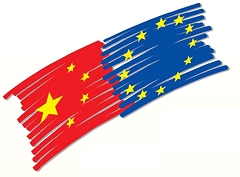
The European Union could lose up to 3.5 million jobs if it removes its trade defenses against China as Beijing expects it to do by the end of 2016, according to a study for a group of 25 European manufacturing federations published on Friday.
The report, presented to senior EU officials and lawmakers this week, forecasts that EU imports of manufactured goods would rise by between 25 and 50 percent over the next three years.
"That's another 5 to 10 percent a year on top of trend growth and I would argue the study is conservative. China is capable of exporting much more given its excess capacity," co-author Robert Scott, director of the Economic Policy Institute, told Reuters ahead of the report's publication.
The European Union, along with other World Trade Organization (WTO) members, needs to determine whether to accord China "market economy status" (MES) at the end of 2016.
The WTO recognized when Communist China joined the trade body in 2001 that local prices were not set by market forces but expected that 15 years later Beijing would play less of a role in directing the economy.
MES status is important because, if granted, it reduces the EU's ability to impose anti-dumping tariffs on Chinese imports. This could only happen if Chinese export prices were beneath already low domestic prices.
Opponents, such as Aegis Europe, a grouping of 25 European industry federations from steel to ceramics, say that Chinese prices are not the result of normal market forces but are artificially depressed.
Scott says lower import tariffs and the reduced threat of anti-dumping procedures would lead Chinese companies to reduce the price of their exports goods by almost 30 percent.
A consequent loss of EU production would strip 1 to 2 percentage points from the bloc's gross domestic product, resulting in the loss of between 1.7 and 3.5 million jobs.
The report says that the sectors hardest hit would be automotive parts, paper and paper products, steel, ceramics, glass, aluminum and bicycles, which collectively employ 2.7 million people in the EU.
"You're not going to lose every job overnight. Some sectors are certainly more vulnerable, such as steel and bicycles," Scott said, adding that for each direct job loss, two further jobs would be lost.
"Three or even four, five million jobs could be at risk due to a potential climbdown on MES. Even if Europe decides to grant market economy status to China, it doesn't change the fact that China is not a market economy."
The report, presented to senior EU officials and lawmakers this week, forecasts that EU imports of manufactured goods would rise by between 25 and 50 percent over the next three years.
"That's another 5 to 10 percent a year on top of trend growth and I would argue the study is conservative. China is capable of exporting much more given its excess capacity," co-author Robert Scott, director of the Economic Policy Institute, told Reuters ahead of the report's publication.
The European Union, along with other World Trade Organization (WTO) members, needs to determine whether to accord China "market economy status" (MES) at the end of 2016.
The WTO recognized when Communist China joined the trade body in 2001 that local prices were not set by market forces but expected that 15 years later Beijing would play less of a role in directing the economy.
MES status is important because, if granted, it reduces the EU's ability to impose anti-dumping tariffs on Chinese imports. This could only happen if Chinese export prices were beneath already low domestic prices.
Opponents, such as Aegis Europe, a grouping of 25 European industry federations from steel to ceramics, say that Chinese prices are not the result of normal market forces but are artificially depressed.
Scott says lower import tariffs and the reduced threat of anti-dumping procedures would lead Chinese companies to reduce the price of their exports goods by almost 30 percent.
A consequent loss of EU production would strip 1 to 2 percentage points from the bloc's gross domestic product, resulting in the loss of between 1.7 and 3.5 million jobs.
The report says that the sectors hardest hit would be automotive parts, paper and paper products, steel, ceramics, glass, aluminum and bicycles, which collectively employ 2.7 million people in the EU.
"You're not going to lose every job overnight. Some sectors are certainly more vulnerable, such as steel and bicycles," Scott said, adding that for each direct job loss, two further jobs would be lost.
"Three or even four, five million jobs could be at risk due to a potential climbdown on MES. Even if Europe decides to grant market economy status to China, it doesn't change the fact that China is not a market economy."
Sep 18, 2015
Source: Reuters
Source: Reuters
Các tin khác
- New-generation FTAs open wider export opportunities to Middle East and South Asia (15/06/2026)
- Updated regulations on foreign trade management and import quotas (15/06/2026)
- Mandatory traceability for high-risk goods from July 1st: What should businesses prepare for? (15/06/2026)
- Tariff pressure is forcing businesses to restructure in order to adapt. (15/06/2026)
- Coffee Citizens model aims to lift Vietnamese value chain (15/06/2026)