Home
Home
 About Us



EU Appeals to WTO Over Russia Recycling Fee
11/10/2013 12:00
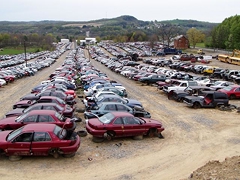
BRUSSELS—The European Union on Thursday asked the World Trade Organization to rule that a recycling fee Russia places on imported cars violates international trade rules, in the first complaint against Russia since Moscow joined the Geneva-based arbiter of trade disputes in August 2012.
Tensions between Russia and the 28-nation EU, as a bloc Russia's largest trading partner, are shaping up as an important test for whether the WTO can restrain the trade polices of a major economic power.
Russia instituted the recycling fee on Sept. 1, 2012, a week after it lowered import tariffs on cars and other goods as part of its agreement to join the WTO.
The European Commission, the EU's executive arm, views the fee as a hidden import tariff aimed at encouraging auto makers to invest in Russia.
"After more than one year of Russia's WTO membership, the EU remains concerned as to Russia's willingness to fully implement its WTO commitments," said John Clancy, a commission spokesman.
The commission over the summer asked for negotiations at the WTO over the recycling fee. Russia said it was pushing legislation through its parliament to abolish the fee, but the law has yet to pass, prompting exasperation from the EU.
"They kept waiting, we kept waiting," said one EU official. "If they want to change the legislation, they can do it very quickly."
But there are significant divisions within Russian President Vladimir Putin's United Russia party on the issue, said Fredrik Erixon, director of the European Centre for International Political Economy in Brussels.
Lawmakers in the lower house, the Duma, representing the eastern cities where Russia's car industry is based are "very much focused on ensuring the privileges they have are not going to go away," Mr. Erixon said.
Russia's Economy Ministry said it was disappointed the EU had gone to arbitration.
"We have expressed our serious disappointment at this decision. We are puzzled and don't understand it," the head of the ministry's trade department, Maxim Medvedkov, told Interfax news agency.
Mr. Medvedkov said Russia had hoped to resolve the dispute through consultations, but that the EU had ignored its proposals.
He noted that parliament has given preliminary approval to the draft legislation and is expected to consider a final version next week.
Russia this week banned dairy imports from Lithuania, an EU member since 2004, drawing a sharp rebuke from Brussels.
Other trade complaints from the EU are brewing, though for the moment the commission is trying to resolve these issues through negotiation.
Among their concerns is the change that Russia made in the way it calculated duties after it joined the WTO, raising levies on car bodies, poultry, palm oil and other goods to rates above those allowed by WTO rules, EU officials say.
"Cars is only the most important sector economically," the official said. "There are other concerns where we could go to the WTO."
Russia is a major market for Europe's automobile industry, which is being hard pressed by economic troubles at home. More than 2.9 million vehicles were sold in Russia last year, compared with 3.2 million in Germany. The recycling fee impacts roughly €10 billion, or $13.5 billion, in annual automobile exports from the EU to Russia, according to the commission.
But Russian leaders have taken pains to boost the country's domestic auto makers such as AvtoVAZ, maker of the Lada.
The WTO will now convene a panel of experts to review the dispute. A ruling from the panel could take more than a year.
Source: Wall Street Journal
Các tin khác
- Viet Nam's steel industry takes another step forward in the anti-dumping lawsuit against Chinese goods (17/06/2026)
- Türkiye launches anti-dumping probe into car tire imports (17/06/2026)
- TRA proposes extending anti-dumping measure on wire rod (17/06/2026)
- Ample room remains for Viet Nam–India logistics cooperation (17/06/2026)
- Local authorities to directly issue fragrant rice export certificates from July 2026 (17/06/2026)