Home
Home
 About Us


EU Anti-Dumping Tax Slams Brakes on Indian Steel Wire Exports
18/06/2015 10:28
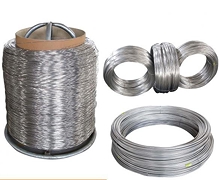
The European Union (EU)’s decision to impose provisional duties on India’s exports of stainless steel wire to counter dumping has sent the US $1.4 billion industry scurrying for an adequate response.
The 27-nation-strong EU had ordered the imposition of tax following allegations that some Indian manufacturers were selling stainless wire below cost. While those in the business are still said to be studying the implications of the new duty on trade, a section of the steel wire producers have already cried foul over the EU’s decision.
The latter had imposed this duty a few days ago to protect the interests of Italian, German and Spanish producers, according to a report by Reuters.
The EU had launched its steel wire investigation in August 2012. In a recent statement, it said producers such as Germany’s HagenerFeinstahl, Spain’s Inoxfil and Italy’s Rodacciai had suffered losses as Indian imports grew by almost 50 percent between 2007 and 2011.
Some Indian companies were taking advantage of the Indian government support and a policy of selling the wire used in batteries at below production costs in the EU market, the EU said in its Official Journal on Wednesday. On the Indian side, the “punishment” could hurt Indian manufacturers such as KEI Industries Ltd and Mukand Ltd.
It is no secret that talks between the EU and India on a free-trade pact have stalled since 2007. The impasse could not be broken, even during a recent meeting between Indian Prime Minister Manmohan Singh and Germany’s Chancellor Angela Merkel in Berlin in April.
The anti-dumping and anti-subsidy duties came into force last Thursday and EU governments will have to vote within four months on whether to make the duties definitive for a period of up to five years.
According to a recent report, Indian exporters of stainless steel wire had increased their combined share of the EU market to 17.9 percent in the 12 months through March 2012, from 12.8 percent in 2009. The Commission had said at the same time that EU manufacturers’ share of their market fell to 62.9 percent from 67.6 percent over the period.
The provisional anti-subsidy duties are as high as 4.3 percent and the provisional anti-dumping levies are up to 27.8 percent, depending on the Indian producer.
Established in the 1920s, the Indian steel wire sector has an annual production capacity of about 3 million tons, of which nearly 75 percent is organized (public) sector.
The 27-nation-strong EU had ordered the imposition of tax following allegations that some Indian manufacturers were selling stainless wire below cost. While those in the business are still said to be studying the implications of the new duty on trade, a section of the steel wire producers have already cried foul over the EU’s decision.
The latter had imposed this duty a few days ago to protect the interests of Italian, German and Spanish producers, according to a report by Reuters.
The EU had launched its steel wire investigation in August 2012. In a recent statement, it said producers such as Germany’s HagenerFeinstahl, Spain’s Inoxfil and Italy’s Rodacciai had suffered losses as Indian imports grew by almost 50 percent between 2007 and 2011.
Some Indian companies were taking advantage of the Indian government support and a policy of selling the wire used in batteries at below production costs in the EU market, the EU said in its Official Journal on Wednesday. On the Indian side, the “punishment” could hurt Indian manufacturers such as KEI Industries Ltd and Mukand Ltd.
It is no secret that talks between the EU and India on a free-trade pact have stalled since 2007. The impasse could not be broken, even during a recent meeting between Indian Prime Minister Manmohan Singh and Germany’s Chancellor Angela Merkel in Berlin in April.
The anti-dumping and anti-subsidy duties came into force last Thursday and EU governments will have to vote within four months on whether to make the duties definitive for a period of up to five years.
According to a recent report, Indian exporters of stainless steel wire had increased their combined share of the EU market to 17.9 percent in the 12 months through March 2012, from 12.8 percent in 2009. The Commission had said at the same time that EU manufacturers’ share of their market fell to 62.9 percent from 67.6 percent over the period.
The provisional anti-subsidy duties are as high as 4.3 percent and the provisional anti-dumping levies are up to 27.8 percent, depending on the Indian producer.
Established in the 1920s, the Indian steel wire sector has an annual production capacity of about 3 million tons, of which nearly 75 percent is organized (public) sector.
May 15, 2013
By SohrabDarabshaw
Source: agmetalminer.com
By SohrabDarabshaw
Source: agmetalminer.com
Các tin khác
- New-generation FTAs open wider export opportunities to Middle East and South Asia (15/06/2026)
- Updated regulations on foreign trade management and import quotas (15/06/2026)
- Mandatory traceability for high-risk goods from July 1st: What should businesses prepare for? (15/06/2026)
- Tariff pressure is forcing businesses to restructure in order to adapt. (15/06/2026)
- Coffee Citizens model aims to lift Vietnamese value chain (15/06/2026)