Home
Home
 About Us


EU anti-dumping complaints against Chinese chemicals at record high
08/05/2026 04:14
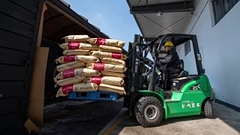
Anti-dumping complaints from Europe’s chemical companies have reached an all-time high, with Brussels launching dozens of cases into cheap Chinese imports over the past two years.
After a decade with hardly any complaints from the sector, they now account for half of new cases, EU officials say. The products are often little-known ingredients vital for manufacturing. For some, such as lysine, an amino acid used in animal feed and medicines, there is only one producer left in the EU.
“There is a huge volume of cases,” a senior EU official told the FT. “Chemicals now account for almost half of new trade defence cases.”
Ineos, a chemicals company owned by one of Britain’s richest men, Sir Jim Ratcliffe, filed 10 complaints in November alone.
China’s strengthening grip has pushed the European industry to “breaking point” said Marco Mensink, director-general of Cefic, the main industry lobby group. He pointed out that the sector was already suffering from high energy prices and over-regulation.
“The pipeline is full,” he added, with at least 26 complaints awaiting investigation.
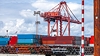
In the past two years, the bloc has opened 24 anti-dumping cases on chemicals to determine if products are sold below their fair price © Jeff J Mitchell/Getty Images
In 2018-20 there was just one investigation a year, slowly increasing since. In 2024 and 2025 there were 12 annually.
The EU official said the surge was largely due to the Chinese property bubble bursting. That has hit domestic demand for housing and household furnishings, with suppliers desperately seeking new customers overseas.
“The Chinese have a lot of zombie companies and are not purging them. The industries that supplied construction are now exporting their excess production,” the official said.
In the past two years, the bloc has opened 24 anti-dumping cases — which determine if products are sold below their fair price — on chemicals. They include 1,4-Butanediol (BDO), an organic compound used to make many plastics, and adipic acid, which is needed to make nylon and some medicines.
But some manufacturers oppose tariffs, as more expensive imports make them less competitive.
The US and Saudi Arabia are growing sources of chemicals sold at dumping prices, as Donald Trump’s tariffs increasingly close the US market.
“What the US used to send to China comes to Europe, what China used to send to the US comes to Europe,” said Mensink.
In the last three years, the industry has shut down about 7 per cent of capacity and the closure rate is doubling every year, he added.
Some chemicals were down to their “last single European producer”, Mensink said, noting that the EU could no longer make items such as paracetamol.
“The claim that China causes overcapacity is a departure from the objective facts,” China’s foreign ministry said.
“Protectionism cannot enhance competitiveness and blaming others cannot solve one’s own problems,” it added, calling on the EU to “safeguard” World Trade Organization rules and not “abuse trade relief tools”.
The EU official said that while the EU has retained an open market, it had to protect certain foundational industries to avoid critical dependencies on other countries.
“Like metals, chemicals are part of the infrastructure of the economy. It is the industry for industry and we need to retain some capacity,” the person added.
In response to criticism from industry that the traditional anti-dumping procedures “do too little, too late”, the EU has tightened its trade defence mechanisms. “It has forced us to be innovative,” the official said.
Last year, the Commission began monitoring imports during investigations, allowing them to backdate any duties. “This is already having a dampening effect,” the official said, as imports drop in expectation of the extra tariffs.
The Commission is also exploring whether to draft a new law that would deal with broader product categories, to eliminate the need for some evidence gathering.
The current system to respond to a surge of imports, known as safeguards, has to apply to all countries.
However, Cefic says more should be done urgently. It has written a letter asking the Commission to hire 20 more case handlers to clear the backlog. It also wants the EU to use existing instruments more aggressively.
James Webber, chemicals and industrials sector lead at the law firm A&O Shearman, voiced caution over pursuing anti-dumping cases, which he described as a “double-edged sword” as they increase production costs.
“In the EU, winners and losers are unevenly balanced. Portugal, for example, could end up paying more for their plastic bottles and polyester and that then feeds into inflation while producers in north-western Europe benefit.”
Source: FinancialTimes
Các tin khác
- U.S. to Impose Duties on Mexican, Thai, Vietnamese Chassis (03/06/2026)
- Mexican sugar producers push to scrap U.S. import quotas (03/06/2026)
- Japan launched an anti-dumping investigation into flat steel imports from three countries (03/06/2026)
- Eurochem challenges anti-dumping duties in the EU (03/06/2026)
- Pangasius prices in Viet Nam surge due to high export demand (03/06/2026)