Home
Home
 About Us



Ethiopia: Consultants warn of dumping threats as Ethiopia answers to WTO
04/02/2009 12:00
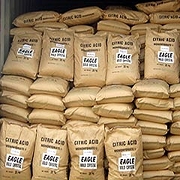
Capital - Taking another step on the ongoing World Trade Organization (WTO) accession negotiations, the Ethiopian government has finalized and is soon to submit answers to questions forwarded by the European Union (EU), Canada and the United States (US).
The country’s replies, expected to be sent to the WTO before April, are in response to over 100 questions. According to Demilew Mekonnen, WTO Affairs Department representative at Ministry of Trade and Industry (MoTI), the questions are based on the Memorandum on the Foreign Trade Regime (MFTR) Ethiopia submitted over two years ago and answers given to close to 200 questions from the US that were first submitted on the memorandum.
Amidst the accession negotiation, local and international consultants submitted studies to the ministry cautioning that the government needs to issue laws if it is to guard local industries from unfair competition.
s part of the accession, Ethiopia will make offers to open up its markets to imports from WTO members. According to Derk Bienen, one of the consultants contracted by the ministry, protection of the domestic industry has been substantially decreased due to tariff reduction implemented in the last 15 years.
The country’s compressive tariff reductions program has slashed protection of local industries from 41.6% prior to reform to 17.5% in 2003. This has been a headache for local industries which fear the worst as threats of a sudden import surge could drive them off the market upon potential liberalization.
“In order for Ethiopia to benefit from the opportunities generated by WTO accession, it might have to resort to policy instruments called trade remedy measures, which protect the domestic industry against unfairly traded, either dumped or subsidized, goods or sudden import surges,” Bienen explained in his study. “The problem is,” he added, “Ethiopia neither has a comprehensive legal regime, nor the existing proclamations comply with WTO rules.”
Ethiopia’s Trade Practice Proclamation provision that defines dumping as difference between import price and actual price puts administrative measures and penalties which WTO rules do not support. While not restricting dumping, the WTO allows members to adopt trade remedy measures.
Million Habte, a local consultant, explains that by levying anti-dumping tariffs [additional tariffs which must not exceed the dumping margin] the government can both safeguard local industries and collect huge revenues. In the hypothetical antidumping duties, Ethiopia could have collected between 331-615 million birr in year 2005 alone.
Before adopting anti-dumping and other trade remedy measure, the WTO wants to see members prove there is injury on local industries solely caused by dumping. To meet this standard of proof, this procedure may take close to18 months, prompting consultants to recommend for the trade regime to be implemented until the date of accession.
“Assuming that accession is completed by 2013, there would still be four years for the design and implementation of the trade defense framework. Then, in order to incorporate experience in the framework, an overall review should take place three years after accession,” the study advises. “The remaining challenge to draft the legal framework is capacity as both petitioners and institution’s effort is limited.”
The country’s replies, expected to be sent to the WTO before April, are in response to over 100 questions. According to Demilew Mekonnen, WTO Affairs Department representative at Ministry of Trade and Industry (MoTI), the questions are based on the Memorandum on the Foreign Trade Regime (MFTR) Ethiopia submitted over two years ago and answers given to close to 200 questions from the US that were first submitted on the memorandum.
Amidst the accession negotiation, local and international consultants submitted studies to the ministry cautioning that the government needs to issue laws if it is to guard local industries from unfair competition.
s part of the accession, Ethiopia will make offers to open up its markets to imports from WTO members. According to Derk Bienen, one of the consultants contracted by the ministry, protection of the domestic industry has been substantially decreased due to tariff reduction implemented in the last 15 years.
The country’s compressive tariff reductions program has slashed protection of local industries from 41.6% prior to reform to 17.5% in 2003. This has been a headache for local industries which fear the worst as threats of a sudden import surge could drive them off the market upon potential liberalization.
“In order for Ethiopia to benefit from the opportunities generated by WTO accession, it might have to resort to policy instruments called trade remedy measures, which protect the domestic industry against unfairly traded, either dumped or subsidized, goods or sudden import surges,” Bienen explained in his study. “The problem is,” he added, “Ethiopia neither has a comprehensive legal regime, nor the existing proclamations comply with WTO rules.”
Ethiopia’s Trade Practice Proclamation provision that defines dumping as difference between import price and actual price puts administrative measures and penalties which WTO rules do not support. While not restricting dumping, the WTO allows members to adopt trade remedy measures.
Million Habte, a local consultant, explains that by levying anti-dumping tariffs [additional tariffs which must not exceed the dumping margin] the government can both safeguard local industries and collect huge revenues. In the hypothetical antidumping duties, Ethiopia could have collected between 331-615 million birr in year 2005 alone.
Before adopting anti-dumping and other trade remedy measure, the WTO wants to see members prove there is injury on local industries solely caused by dumping. To meet this standard of proof, this procedure may take close to18 months, prompting consultants to recommend for the trade regime to be implemented until the date of accession.
“Assuming that accession is completed by 2013, there would still be four years for the design and implementation of the trade defense framework. Then, in order to incorporate experience in the framework, an overall review should take place three years after accession,” the study advises. “The remaining challenge to draft the legal framework is capacity as both petitioners and institution’s effort is limited.”
January 26th, 2009 | EthioPolitics.com |
By Kirubel Tadesse
Source: ethiopolitics.com
By Kirubel Tadesse
Source: ethiopolitics.com
Các tin khác
- Rising global shipping costs put pressure on Viet Nam’s seafood exporters (22/06/2026)
- India likely to retain anti-dumping duties on Bangladeshi jute products (22/06/2026)
- Japan slaps anti-dumping duties on Chinese, Taiwanese steel (22/06/2026)
- India initiates anti-dumping probe against a Chinese, Japanese chemical used in tyre, rubber items (22/06/2026)
- Reasons why the US continues to suspend customs clearance for Vietnamese trailers (22/06/2026)