Home
Home
 About Us


Enhancing the value of export supply chains: It's not just about selling what you have
06/02/2026 10:18
In the context of a strong restructuring of global supply chains, the mindset of "selling what we have" based on price advantages and production volume is gradually becoming outdated.
The pressure to restructure and the "challenge" of repositioning value.
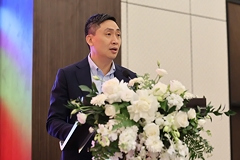
On the afternoon of February 3rd, the forum "Solutions to Enhance the Competitiveness of Vietnamese Export Products in the Global Trade Chain" heated up from the very first minutes. This event, part of the first Spring Fair in 2026, was not just a simple trade promotion activity, but also a crucial conference for the export industry in the face of unpredictable fluctuations in the global market.
In his opening remarks, Mr. Hoang Minh Chien, Deputy Director of the Trade Promotion Department (Ministry of Industry and Trade), frankly pointed out the harsh reality: The world is changing. The trend of trade protectionism is increasing, along with unprecedentedly stringent requirements for sustainable development, environmental and social standards, and traceability.
While Vietnamese businesses previously confidently ventured into the global market thanks to advantages like low costs or massive production volumes, these advantages are gradually disappearing. Mr. Chien emphasized: "Competition in exports is no longer solely based on cost or production volume advantages, but increasingly shifts towards quality, added value, and the ability to deeply participate in the global trade chain." This is precisely why Session 1, themed "Solutions and Policies to Promote Exports in Key Industries," became the focal point of the Forum, where policymakers and association leaders dissected the question: How to enhance value from the source?
From "outsourcing" to mastering the value chain: Design and materials are key.
The focus of Session 1 revolved around the core objective: enhancing the value chain of key export industries. Speakers agreed that, in order to escape the middle-income trap in exports, Viet Nam must shift its growth model.
According to observations at the discussion session, representatives from the Import-Export Department (Ministry of Industry and Trade) presented the main import-export policy directions for 2026. The emphasis in the policy recommendations was not only on expanding markets but also on solutions to support businesses in integrating into the value chain. Adding value cannot be limited to "cutting and sewing" or "assembly"—stages with the lowest profit margins—but must be implemented throughout the entire process, from design and raw materials to production and brand building.
Representatives from the Viet Nam Leather and Footwear Association (LEFASO) presented a practical perspective on the industry's transformation at the Forum. Instead of simply accepting piecework orders, leather and footwear businesses are striving to enhance their value chain from design (ODM) to building their own brands. This is a bold but necessary step to ensure that "Made in Viet Nam" products are not only known as low-cost goods, but also as products with a high level of innovation.
Meanwhile, the leaders of the Viet Nam Wood and Forest Products Association (Viforest) emphasized the importance of trade connectivity and sustainable development. For the wood industry, securing a reliable source of legally sourced raw materials and participating in international trade fairs and exhibitions are crucial strategies for asserting its position in the context of integration. Shifting from exporting raw materials to exporting designed, branded wood products with clearly traceable origins is how the Vietnamese wood industry can enhance its value.
A prime example shared at the seminar was the case of TNG Investment and Trading Joint Stock Company. Mr. Nguyen Duc Manh, General Director of TNG, shared about applying technology to production and solutions to enhance the value chain from design to consumption. The lesson from TNG shows that investing in technology and a closed-loop process from raw materials to finished products is the shortest path to increasing profits and competitiveness.
"Sustainable production": No longer an option, but a survival imperative.
A recurring theme, repeatedly emphasized in the forum's discussions, was the trend of "Green Manufacturing." In the context of major markets like the EU and the US increasingly erecting environmental-related technical barriers (such as the Carbon Border Adjustment Mechanism - CBAM), "greening" the supply chain is no longer just a PR (public relations) option, but a prerequisite for survival.
Deputy Director Hoang Minh Chien commented: "These new requirements are creating immense pressure on Vietnamese export businesses, forcing industries to change their mindset and approach to the market." In reality, key industries such as textiles, footwear, and wood, if they fail to meet environmental and social standards, face the risk of being eliminated from the competition right from the start.
At the panel discussion, speakers from businesses such as TNG also shared their strategies for sustainable growth in the textile and garment industry. The shift towards renewable energy, recycled materials, and increased transparency in production processes are becoming new competitive advantages, helping Vietnamese businesses score points with demanding international buyers.
The "Advance Team" Role of Vietnamese Trade Offices Abroad
To support businesses in navigating this challenging transformation, the role of the Vietnamese Trade Offices abroad is more important than ever. At Session 1, representatives from the Trade Offices engaged in direct discussions about specific opportunities and challenges for each product category.
Trade missions not only act as a "bridge" to promote trade and national brands, but more importantly, they serve as an early warning system. In the context of constantly emerging trade barriers, timely information from trade missions regarding policy changes, technical standards, or consumer preferences in the host market is invaluable.
Trade representatives at the forum pledged to support businesses in finding partners, but also offered insightful recommendations: Businesses need to be more proactive in understanding international rules of the game. Close coordination between the "rear" (manufacturing businesses) and the "front" (trade offices) will create synergy, helping Vietnamese goods penetrate target markets more deeply and sustainably.
The impetus from digital transformation and B2B e-commerce.
Besides production and policy solutions, the Forum also highlighted a new growth driver: cross-border e-commerce. The collaboration between the Trade Promotion Agency and Alibaba.com through the "Viet Nam Pavilion" initiative is considered a highlight.
Mr. Hoang Minh Chien affirmed that digital transformation and e-commerce are not just trends but have become essential requirements. Bringing typical Vietnamese products onto online platforms helps businesses – especially small and medium-sized enterprises (SMEs) – directly access global buyers, reduce intermediaries, and increase profit margins. The seminar introduced the criteria for selecting 100 outstanding businesses to participate in this booth during the 2026-2027 period, opening up opportunities to promote Vietnamese brands on a global scale.
The forum "Solutions to enhance the competitiveness of Vietnamese export products in the global trade chain" in 2026 has concluded, but its messages remain highly relevant.
The export story in 2026 is no longer about who sells cheaper, but about who sells better, greener, and smarter products. From policy recommendations from the Import-Export Department, the determination of the Leather and Footwear and Wood Associations to transform their designs and brands, to warnings and support from the Trade Office system, everything points towards one goal: enhancing intrinsic value .
To achieve this, Vietnamese businesses need a long-term strategic mindset: accepting investment in depth, sacrificing short-term quantitative gains for sustainable development. Only then can we truly "sell what the market needs" as an equal partner in the global supply chain, rather than remaining merely diligent subcontractors.
Source: VTV
Các tin khác
- U.S. to Impose Duties on Mexican, Thai, Vietnamese Chassis (03/06/2026)
- Mexican sugar producers push to scrap U.S. import quotas (03/06/2026)
- Japan launched an anti-dumping investigation into flat steel imports from three countries (03/06/2026)
- Eurochem challenges anti-dumping duties in the EU (03/06/2026)
- Pangasius prices in Viet Nam surge due to high export demand (03/06/2026)