Home
Home
 About Us



Effect of EU anti-dumping duties on Russian CR coil exports and potential strong growth of HDG supply to the EU
14/04/2016 12:00
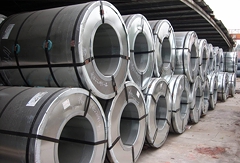
In February 2016, the European Commission introduced anti-dumping import duties of around 20-26% against three Russian producers (MMK, NLMK and Severstal). While we think this will result in the contraction of Russian CR coil exports to the EU in 2016, the duties are not completely restrictive as costs of Russian producers will remain low and will allow them to continue to export. However, the effect of duties will be more severe from 2017 as costs of Russian production will increase. Nevertheless, while Russian CR coil exports will decline, there is a risk of large supply of HDG coil volumes from Russia from 2018 as 1.3 Mt of new capacity is currently under construction and Russian domestic coated sheet demand is expected to remain low in the coming years.
CR coil imports from Russia will fall, but primarily from 2017
The sharp fall in Russian costs in 2015 due to strong Rouble depreciation allowed Russian producers to offer very competitive export prices and compete on par with China, resulting in 22% increase in EU-28 CR coil imports from Russia in 2015. The strong import competition amid difficult market conditions in the industry has prompted European steelmakers to initiate the anti-dumping investigation against Russian producers. Subsequently, the European Commission introduced 20-26% anti-dumping duties against MMK, NLMK and Severstal in February 2016.
While our analysis suggests that Russian producers have certainly not been selling below production costs in 2015 as they benefited from 37% y/y depreciation of the Rouble against US Dollar, it is a well known fact that domestic sheet prices in Russia have been at a high premium to export prices. Under anti-dumping rules of majority of countries across the world, including the EU, dumping is defined as exporting a product at prices lower than the normal value of the product (the domestic prices of the product or the cost of production) on its own domestic market. The chart below shows an estimate for the premium of Russian domestic to export CR coil prices (comparison of CPT Moscow and FOB Black Sea).

However, despite the introduction of anti-dumping duties against Russian producers, we believe they will still be able to export to the EU. Russian CR coil production costs are expected to be 19% lower y/y in 2016 as we expect Rouble to depreciate by 19% against US Dollar in 2016 given the persistent weakness in oil prices. Furthermore, as in our previous forecasts, we still expect global steel prices to rise through 2016 and the recent dramatic increases in steel prices have only resulted in the upgrade to our forecast for the year. Consequently, we believe that Russian producers will still be able to offer around a 5% discount to German domestic prices and on average make zero margin on exports to Europe (see chart below). Given contracting demand in the domestic market and the absence of alternative export markets of a similar size, we believe that Russian producers will prefer to make the sales to keep up their capacity utilisation rates at higher level.

Nevertheless, anti-dumping duties are expected to be more effective in 2017. Production costs of Russian producers are expected to increase by 20% in 2017 due to domestic cost inflation and appreciation of the Rouble with rising oil prices and recovering domestic economy (see chart). Consequently, keeping around a 5% discount to EU domestic prices will result in negative 4% margins for Russian producers, which would not be sustainable and as a result Russian exports are expected to drop more significantly.

While Russian CR coil exports will fall, there is a new supply of HDG on the horizon
Although EU anti-dumping duties are expected to eventually help reduce imports of CR coil from Russia, there is a risk of rising import levels in another product segment - HDG coil. All key Russian flat products producers MMK, NLMK and Severstal are currently planning significant HDG capacity expansions. By 2018, their HDG capacity is expected to increase from 4.1 Mt to 5.4 Mt (see chart). Suppliers of the equipment will be German SMS Group, Italian Tenova and Danieli and Belgian CMI Group. In the domestic market, production will be primarily intended to supply car producers, white goods manufacturers and construction industry.

However, domestic HDG consumption in Russia is expected to remain weak in the forecast period. After 14% fall in 2015, we expect further 6% contraction in 2016 and only slow recovery in the subsequent years. Consequently, between 2018 and 2015, Russian HDG apparent consumption will increase by just 30,000 t. Additionally, import substitution and growing exports will result in 0.59 Mt increase in net exports (our conservative base case). Together, this results in 0.62 Mt increase in production between these years, meaning that of 1.33 Mt increase in capacity, 0.71 Mt will be available for further increase in exports (although some of that will be used for further downstream processing).


We forecast consistent growth of HDG demand in the EU in the coming years of around 2% per year. More significant growth is expected in Eastern Europe, in particular in Hungary, Romania and Poland. Capacity expansions in vehicle production in those countries as well as an acceleration of investment growth in the region will drive HDG consumption growth from 2017. As an example, the Ford plant in Romania is expected to begin operating in 2019 and a new Jaguar Land Rover plant in Slovakia will begin operating in 2018. Consequently, Europe will be a key market for Russian HDG exports in the coming years, although rising production costs in Russia and appreciating Rouble will remove the benefits that Russian exporters enjoyed over the last one and a half year and competition will remain intense. Nevertheless, given weak demand outlook in Russia, there is a risk that companies take the decision to postpone the planned capacity additions. NLMK has already recently said that due to weak domestic demand the company has still not taken the final decision to go ahead with capacity additions despite the signed contract and ongoing basic engineering.
CR coil imports from Russia will fall, but primarily from 2017
The sharp fall in Russian costs in 2015 due to strong Rouble depreciation allowed Russian producers to offer very competitive export prices and compete on par with China, resulting in 22% increase in EU-28 CR coil imports from Russia in 2015. The strong import competition amid difficult market conditions in the industry has prompted European steelmakers to initiate the anti-dumping investigation against Russian producers. Subsequently, the European Commission introduced 20-26% anti-dumping duties against MMK, NLMK and Severstal in February 2016.
While our analysis suggests that Russian producers have certainly not been selling below production costs in 2015 as they benefited from 37% y/y depreciation of the Rouble against US Dollar, it is a well known fact that domestic sheet prices in Russia have been at a high premium to export prices. Under anti-dumping rules of majority of countries across the world, including the EU, dumping is defined as exporting a product at prices lower than the normal value of the product (the domestic prices of the product or the cost of production) on its own domestic market. The chart below shows an estimate for the premium of Russian domestic to export CR coil prices (comparison of CPT Moscow and FOB Black Sea).
However, despite the introduction of anti-dumping duties against Russian producers, we believe they will still be able to export to the EU. Russian CR coil production costs are expected to be 19% lower y/y in 2016 as we expect Rouble to depreciate by 19% against US Dollar in 2016 given the persistent weakness in oil prices. Furthermore, as in our previous forecasts, we still expect global steel prices to rise through 2016 and the recent dramatic increases in steel prices have only resulted in the upgrade to our forecast for the year. Consequently, we believe that Russian producers will still be able to offer around a 5% discount to German domestic prices and on average make zero margin on exports to Europe (see chart below). Given contracting demand in the domestic market and the absence of alternative export markets of a similar size, we believe that Russian producers will prefer to make the sales to keep up their capacity utilisation rates at higher level.
Nevertheless, anti-dumping duties are expected to be more effective in 2017. Production costs of Russian producers are expected to increase by 20% in 2017 due to domestic cost inflation and appreciation of the Rouble with rising oil prices and recovering domestic economy (see chart). Consequently, keeping around a 5% discount to EU domestic prices will result in negative 4% margins for Russian producers, which would not be sustainable and as a result Russian exports are expected to drop more significantly.
While Russian CR coil exports will fall, there is a new supply of HDG on the horizon
Although EU anti-dumping duties are expected to eventually help reduce imports of CR coil from Russia, there is a risk of rising import levels in another product segment - HDG coil. All key Russian flat products producers MMK, NLMK and Severstal are currently planning significant HDG capacity expansions. By 2018, their HDG capacity is expected to increase from 4.1 Mt to 5.4 Mt (see chart). Suppliers of the equipment will be German SMS Group, Italian Tenova and Danieli and Belgian CMI Group. In the domestic market, production will be primarily intended to supply car producers, white goods manufacturers and construction industry.
However, domestic HDG consumption in Russia is expected to remain weak in the forecast period. After 14% fall in 2015, we expect further 6% contraction in 2016 and only slow recovery in the subsequent years. Consequently, between 2018 and 2015, Russian HDG apparent consumption will increase by just 30,000 t. Additionally, import substitution and growing exports will result in 0.59 Mt increase in net exports (our conservative base case). Together, this results in 0.62 Mt increase in production between these years, meaning that of 1.33 Mt increase in capacity, 0.71 Mt will be available for further increase in exports (although some of that will be used for further downstream processing).
We forecast consistent growth of HDG demand in the EU in the coming years of around 2% per year. More significant growth is expected in Eastern Europe, in particular in Hungary, Romania and Poland. Capacity expansions in vehicle production in those countries as well as an acceleration of investment growth in the region will drive HDG consumption growth from 2017. As an example, the Ford plant in Romania is expected to begin operating in 2019 and a new Jaguar Land Rover plant in Slovakia will begin operating in 2018. Consequently, Europe will be a key market for Russian HDG exports in the coming years, although rising production costs in Russia and appreciating Rouble will remove the benefits that Russian exporters enjoyed over the last one and a half year and competition will remain intense. Nevertheless, given weak demand outlook in Russia, there is a risk that companies take the decision to postpone the planned capacity additions. NLMK has already recently said that due to weak domestic demand the company has still not taken the final decision to go ahead with capacity additions despite the signed contract and ongoing basic engineering.
Source: crugroup.com
Các tin khác
- New-generation FTAs open wider export opportunities to Middle East and South Asia (15/06/2026)
- Updated regulations on foreign trade management and import quotas (15/06/2026)
- Mandatory traceability for high-risk goods from July 1st: What should businesses prepare for? (15/06/2026)
- Tariff pressure is forcing businesses to restructure in order to adapt. (15/06/2026)
- Coffee Citizens model aims to lift Vietnamese value chain (15/06/2026)