Home
Home
 About Us


Deeper integration propels Vietnam to global trading power
03/09/2025 04:45
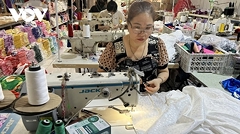
Vietnam has risen from a war-torn nation to a trusted partner of the international community. Its deepening integration affirms the country’s sound development path and reinforces its role as a key link in the global supply chain.
From less-developed economy to vital global link
The Vietnamese economy stands out as a rare case of transformation from a centrally planned system to a socialist-oriented market economy with a high degree of openness. Starting with a GDP of just US$26.3 billion in the early years of the Doi Moi (Renewal) process, the country once faced food shortages and sluggish production. After nearly four decades, GDP has seen a nearly 60-fold increase to US$476.3 billion in 2024, placing Vietnam among the world’s top 20 trading economies-a testament to the momentum gained through international integration.
From a country once plagued by food shortages, Vietnam has risen to become a major rice exporter, with its products now present in more than 180 markets and export revenue reaching US$4.78 billion in 2023. The ST25 variety, recognized as the “world’s best rice,” has helped elevate the profile of Vietnamese agricultural produce. Beyond rice, key commodities such as coffee, pepper, cashew nuts, rubber, and tea have also made strong inroads into global markets. In 2024, agro-forestry-fishery exports totaled US$62.5 billion, with a trade surplus of nearly US$18 billion, marking a remarkable milestone for the country’s agriculture sector.
A key driver of this success has been Vietnam’s deep integration strategy. The country’s accession to the WTO in 2007 marked a turning point, opening up markets, pushing up institutional reforms, and attracting foreign investment. Alongside this, Vietnam has signed and enforced 19 free trade agreements (FTAs), including new-generation deals such as the Comprehensive and Progressive Agreement for Trans-Pacific Partnership (CPTPP) and the EU-Vietnam Free Trade Agreement (EVFTA). These agreements have not only facilitated international trade but also spurred domestic reforms, strengthened business competitiveness, diversified markets, and reduced reliance on a limited number of partners.
Agricultural expert Hoang Trong Thuy analyzed that free trade agreements (FTAs) have helped Vietnam forge common interests, maintain peace for development, while also capitalizing on tariff preferences and integrating more deeply into the global supply chain.
Referring to Vietnam’s agricultural transformation, expert Hoang Trong Thuy noted that after national reunification, the sector faced countless challenges, including natural disasters, fertilizer shortages, weak mechanization, bureaucratic management, and annual imports of over one million tons of food.
The rationing system with food coupons lasted until 1985. Yet by 1989, Vietnam had exported its first rice shipment, reaching 1.5 million tons by 1992. Since 1998, the country has emerged as a major rice exporter, with the grain becoming closely tied to Vietnam’s national identity. In 2024, agro-forestry-fishery exports hit US$62.5 billion, with a trade surplus of US$17.9 billion, underscoring the remarkable progress of the agricultural sector.
Ongoing challenges ahead
The nation is emerging as a dynamic trade hub in 2024 with a highly open economy and deeper participation in global value chains. For sustainable growth, experts say the country must shift from a low-cost growth model to one centered on higher value added. That calls for stronger innovation, improved domestic production capacity, reduced reliance on imported inputs, and a sharper focus on high-tech industries.
In parallel, Vietnam needs to accelerate administrative reforms, restructure enterprises, and invest in modern infrastructure, science and technology, and green logistics. By seizing opportunities from the Fourth Industrial Revolution and the global green transition, the country could make a breakthrough and elevate its international standing in the coming decade.
Andrea Coppola, World Bank Lead Economist for Vietnam said that the country has achieved significant milestones: rapid GDP growth, sharp poverty reduction, and marked improvements in life expectancy and education. However, he emphasized that exports should focus more on quality rather than quantity. Over the past two decades, while export volume has increased tenfold, the average value has only doubled. To reach high-income status, Vietnam must enhance product value, particularly in potential sectors such as semiconductors, electronics, footwear, and large-scale manufacturing.
Despite emerging as one of the world’s major trading economies, Vietnam’s trade structure still shows clear limitations. Exports remain heavily reliant on the foreign direct investment (FDI) sector, while domestic enterprises run a trade deficit. Key export items are predominantly processing-based products, leaving them vulnerable to external shocks. Moreover, most Vietnamese goods are exported through intermediaries, resulting in low added value and limited capacity to build a strong national brand.
Agricultural expert Hoang Trong Thuy noted that excessive reliance on a few markets could undermine Vietnam’s ability to expand into new destinations and hinder sustainable growth. Most of the country’s exports are still sold through intermediaries, while the share distributed directly via Vietnamese companies’ own channels remains low.
He further cautioned that such concentration, along with heavy import dependence on Asia, particularly China, has effectively “anchored” Vietnam in the low-value segments of global supply chains.
It can be said that Vietnam has undergone an inspiring journey from a modest economy to a major trading nation, now among the world’s most open economies.
These remarkable achievements in global trade and integration have not only elevated Vietnam’s international standing but also created opportunities for sustainable socio-economic development.
Source: Việt Báo
Các tin khác
- U.S. to Impose Duties on Mexican, Thai, Vietnamese Chassis (03/06/2026)
- Mexican sugar producers push to scrap U.S. import quotas (03/06/2026)
- Japan launched an anti-dumping investigation into flat steel imports from three countries (03/06/2026)
- Eurochem challenges anti-dumping duties in the EU (03/06/2026)
- Pangasius prices in Viet Nam surge due to high export demand (03/06/2026)