Home
Home
 About Us


Co-operation agreement between EU and Viet Nam seems likely
13/05/2009 12:00
To commemorate Europe Day today, Dr Sean Doyle, head of the European Commission Delegation in Viet Nam, spoke to Viet Nam News about aid, free trade and other matters.
How have relations between the EU and Viet Nam progressed in the past year?
We saw the EU’s assistance from member states and the commission continue at a high level. The EU and Japan are Viet Nam’s two biggest donors.
Most of the aid was focused on poverty reduction, capacity building, governance, human rights and trade-related assistance.
We saw the negotiations on a new Partnership and Co-operation Agreement (PCA) gain momentum, with good progress in the third round in April.
There was less progress with trade due to the diversity of interests within ASEAN, but possibilities for moving forward are now being actively considered by both the Commission on behalf of the EU and Viet Nam
The EU and Viet Nam finished the third round of negotiations for the signing of the PCA between April 21-23 in Brussels. How do you estimate the result of the negotiations?
The discussions covered many topics, coming close to agreement on several, including combating organised crime, data protection, science and technology, and the environment.
Good progress was made on development co-operation, human rights, how to counter the proliferation of weapons of mass destruction, and co-operation in several other sectors.
By the end of the session, practically all provisions of the draft agreement had been discussed, and about half were close to agreement. As each side becomes more familiar with the concerns of the other side, progress increases; and both sides now clearly see the partnership agreement as comprehensive, balanced and forward-looking. It will create a new and broader framework for a stronger, more ambitious and more mutually beneficial partnership.
Philippe Meyer, head of the EU negotiation delegates for the EU-ASEAN free-trade agreement said in February negotiations had been slow and little progress made. The EU is now ready to negotiate with Viet Nam about an agreement. When do you think this will happen?
Since the meeting between EU and ASEAN countries in Kuala Lumpur in March,the negotiations have indeed stalled. The Commission is now considering the way forward, and is discussing all possibilities, including a more bilateral approach with Viet Nam and some other countries within a regional framework.
An EU/Viet Nam agreement would eliminate GSP-type problems, and greatly reduce the risk of anti-dumping actions against Vietnamese exporters to Europe. Even more important, it could considerably open up new markets in Europe for Viet Nam’s exports, and reduce the sale price in Europe of many of its existing exports.
Viet Nam now has the lowest proportion of ASEAN exports going into Europe at zero tariffs: only 41 per cent, against more than 50 per cent for Thailand, 79 per cent for Malaysia, and 88 per cent for Singapore.
We cannot understand how Viet Nam can continue to ignore this situation, at a time when it is doing everything else possible to increase its exports.
In answer to your question, I think negotiations can start as soon as Viet Nam is ready.
Viet Nam targets an increase of 15 per cent in exports to the EU. Do you think that this is feasible in the context of the global crisis? Do you have any advice for Vietnamese businesses hoping to export the EU?
It is currently not possible to predict how the global crisis will affect Viet Nam’s trade flows. It will depend on the depth of the crisis and also on policies of governments, especially in regards to how well they will resist the temptation of protectionism.
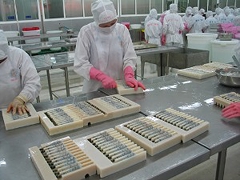
I am optimistic about bilateral trade between the EU and Viet Nam. Most commodities that Viet Nam exports to the EU are low-cost consumer goods such as footwear, textiles, seafood, wood and coffee, all very competitive in terms of price.
It is likely that demand for such goods will be less affected by the falling purchasing power of consumers in overseas markets – and consumers who previously bought more expensive products may now opt for cheaper ones.
So I think we can reas-onably hope that exports from Viet Nam to the EU will be less negatively affected than those of other countries.
The EU has not granted market economy status to Viet Nam. Are there any positive signs that the country will be receiving this status soon?
Since 2004-05, the Commission and Viet Nam have set up a group working to evaluate Viet Nam’s progress in meeting technical requirements for market-economy status in anti-dumping investigations.
Viet Nam has made good progress on a number of areas including less government interference in company behaviour (eg. export subsidies), and simplifying rules on setting up companies.
However, Viet Nam is still lagging behind in regards to international standards of accounting and auditing, the strengthening of bankruptcy rules, allowing land prices to be freely determined by the market, and intellectual property laws.
We hope Viet Nam can meet the requirements soon – and we are providing assistance to help it do so - so that it can qualify for market economy status.
What are the biggest obstacles for firms from EU countries when investing in Viet Nam?
The main obstacles are infrastructure and human resources. According to a recent round-table discussion with EuroCham and the Ministry of Industry and Trade, other hindrances include poor consistency and transparency in the regulatory decision-making process, lack of tax deductibility for advertising and promotion expenses (which limit the ability of small and medium enterprises to build brands in Viet Nam); and weak protection of intellectual property rights, which discourages investment in the high-tech sectors and endangers peoples’ health through fake medicines, electrical equipment and spareparts for cars and motorbikes.
We are assisting Viet Nam with all of this through several programmes, including our flagship trade project, MUTRAP III, to which the EU contributes 10 million euros (US$13.5 million).
How will the EU deal with the threat of swine flu? It has killed 45 people in Mexico and the first confirmed cases of the influenza have been reported in Britain and Spain.
It would seem that the epidemic may be less dangerous than many feared at first. But it is clear that all countries will have to be better prepared than in the past to manage such risks at local, national, regional and international levels. Public information and education in good. Preventive hygienic habits are already improving worldwide. — VNS
Source: vietnamnews.vnagency.com.vn
Các tin khác
- Rising global shipping costs put pressure on Viet Nam’s seafood exporters (22/06/2026)
- India likely to retain anti-dumping duties on Bangladeshi jute products (22/06/2026)
- Japan slaps anti-dumping duties on Chinese, Taiwanese steel (22/06/2026)
- India initiates anti-dumping probe against a Chinese, Japanese chemical used in tyre, rubber items (22/06/2026)
- Reasons why the US continues to suspend customs clearance for Vietnamese trailers (22/06/2026)