Home
Home
 About Us



China trims anti-dumping levy on EU pork, keeps measures for five years
17/12/2025 05:09
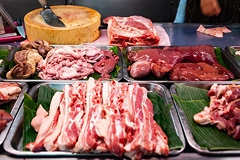
China has lowered the anti-dumping duties it will levy on pork and pig by-products imported from the European Union, publishing a final ruling that cuts tariff rates well below the provisional levels applied since September.
Under the decision, duties will range from 4.9 per cent to 19.8 per cent and will apply for five years from 17 December 2025, according to China’s Ministry of Commerce. The final rates are substantially lower than the provisional “security deposit” rates of 15.6 per cent to 62.4 per cent announced in early September.
Importers will be refunded the difference between the higher provisional deposits paid since September and the lower final duty rates now confirmed. The ruling is company-specific. Most Spanish firms will face a duty of 9.8 per cent, while Spain’s Litera Meat received the lowest rate, 4.9 per cent.
The case stems from an anti-dumping investigation launched on 17 June 2024, following an application by the China Animal Agriculture Association. China’s Ministry of Commerce said its investigation concluded that relevant EU-origin pork and pig by-products were dumped on the Chinese market and caused material injury to the domestic industry.
The products covered extend beyond prime cuts. China is a major destination for European offal and other items that are less commonly consumed in parts of Europe, including pig ears and feet, which are traded in significant volumes. This is one reason the measure matters to exporters even though pork shipments to China have declined from the surge seen in 2020, when China sharply increased imports during a period of domestic supply disruption.
The EU remains a large supplier to China’s pork import market. Reuters reported that China imported $4.8 billion worth of pork, including offal, in 2024, with more than half coming from the EU and with Spain leading EU exports by volume. EU data show that China continues to rank among the biggest destinations for EU pigmeat exports: in January–August 2025, EU exports to China were about 1.426 million tonnes (carcase weight), while exports to the United Kingdom were higher at about 2.281 million tonnes, with other notable destinations including the Philippines, Japan and South Korea.
The ruling sits within a broader period of EU–China trade frictions. Beijing’s pork probe began after the EU moved to impose tariffs on Chinese-made electric vehicles, and China has also pursued trade defence actions affecting other European products, including brandy and an investigation related to dairy exports. The overall commercial relationship remains heavily imbalanced in goods. The European Commission’s trade statistics put the EU’s 2024 trade deficit in goods with China at €305.8 billion, with EU exports of €213.3 billion and imports of €519 billion.
In Brussels, the Commission signalled it would scrutinise whether the Chinese decision and supporting findings align with World Trade Organisation rules. Commission described the Chinese investigation as based on “questionable allegations and insufficient evidence”, and said it was assessing the information available against WTO compliance.
For European producers, the cut in rates may reduce the immediate commercial damage relative to the September decision, but it does not remove the additional cost. The duties are applied on top of existing “most-favoured nation” tariffs for many pork products and will still affect margins, particularly in higher-volume trade lines such as offal. The final rates also introduce a new structure of differentiated treatment by exporter, a feature that can matter in a market where pricing and distribution are highly competitive and where importers compare landed costs across suppliers.
The coming weeks are likely to focus on two tracks: implementation and diplomacy. On implementation, importers and exporters will need to reconcile accounts following the change from provisional deposits to final duties, including any refunds tied to the retroactive difference. On diplomacy, the case adds to the list of active files in a relationship where both sides have been using trade remedies more frequently, including parallel disputes in sectors such as vehicles and spirits.
The pork ruling does not end the EU–China trade argument, but it changes the immediate terms of access for one of Europe’s established agricultural export lines into the Chinese market, shifting the financial burden from the provisional peak towards a narrower band that will now apply for up to five years.
Source: EU Today
Các tin khác
- U.S. to Impose Duties on Mexican, Thai, Vietnamese Chassis (03/06/2026)
- Mexican sugar producers push to scrap U.S. import quotas (03/06/2026)
- Japan launched an anti-dumping investigation into flat steel imports from three countries (03/06/2026)
- Eurochem challenges anti-dumping duties in the EU (03/06/2026)
- Pangasius prices in Viet Nam surge due to high export demand (03/06/2026)