Home
Home
 About Us


China to probe Calvin Klein, Tommy Hilfiger parent firm over Xinjiang cotton
25/09/2024 06:44
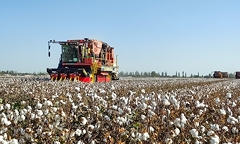
China’s Ministry of Commerce has begun an investigation into PVH Group over what it terms ‘discriminatory measures’ related to Xinjiang
China has launched an investigation into the parent company of clothing brands Calvin Klein and Tommy Hilfiger for “discriminatory measures” related to products from its far western Xinjiang Uygur autonomous region, a move likely to compound already fraught trade tensions with the United States.
The Ministry of Commerce revealed on Tuesday it has initiated an investigation of PVH Group under the framework of its Unreliable Entity List (UEL) – a blacklist which could ban the firm from trade with China and prevent the flow of associated investment or people into the country.
After reports from various agencies to the UEL office, the ministry said, the American firm is suspected of “violating normal market transaction principles by arbitrarily boycotting Xinjiang cotton and other products,” an action the ministry said “severely undermines the legitimate rights and interests of Chinese enterprises” and “threatens China’s sovereignty, security and development interests.”
Per the ministry’s statement, PVH must submit written materials related to the case from the past three years within 30 days. During the period, PVH may present its defence, while the UEL office will conduct its own investigation, including inquiries and document reviews.
Cotton from Xinjiang has been a subject of international headlines since 2020, when several clothing firms from the US and Europe – including Adidas, Nike and H&M – published statements of concern over cotton sourced from the region following allegations of forced labour.
The US Congress passed the Uygur Forced Labour Prevention Act in 2021, functionally blocking all imports from the region through a “rebuttable presumption” all goods are the product of forced labour.
Beijing has vehemently denied that any human rights abuses are taking place in Xinjiang.
In February 2023, arms contractors Lockheed Martin and Raytheon Missiles & Defense were the first companies to be placed on the UEL since its introduction in May 2019. Three more defence companies – including a division of Boeing – were added last May.
Lu Xiang, a China-US specialist at the Chinese Academy of Social Sciences, said the investigation could lead to limits on PVH’s operations in China if the company fails to provide sufficient evidence in its defence or make appropriate changes to its business.
“Previous investigations were focused on the US’ defence companies, while this time the subject is consumer goods,” Lu said. “This shows that China can look into foreign companies suspected to have harmed China’s rights, regardless of industry.”
In its rubric for addition to the UEL, the ministry has laid out four criteria: whether a given entity has taken “discriminatory action” against China, broken market rules or contracts on grounds unrelated to business, brought “substantial damage” to Chinese companies or industries, or threatened China’s national security.
He Weiwen, a senior fellow with Beijing-based think tank the Centre for China and Globalisation, said the ministry’s provisions for investigation under the UEL mechanism could be applied to a firm like PVH.
“[The company was investigated on the grounds that] it rejected products from Xinjiang, which would in principle violate free trade,” He said. “It was of course never intended just for [defence companies].”
According to analysis from global law firm Paul Hastings, it is uncertain whether the list’s punitive measures could be expanded to Hong Kong, Macau or both.
“These regions have some autonomy to establish their own import, export and foreign investment policies, as well as requirements for foreign labour and residency, potentially allowing listed foreign entities to operate there,” the firm said in a 2020 report.
“However, this autonomy is limited to matters that do not involve China’s sovereignty and foreign affairs, which remain under the central government’s authority.” This, the firm theorised, could lead to the creation of local laws to align with these precepts.
The ministry said its reactivation of the UEL mechanism was not taken lightly, and the tool is intended only for “a small number” of entities found to have “undermined market rules” or violated Chinese law.
“Honest and law-abiding foreign entities need not worry.”
Source: South China Morning Post
Các tin khác
- Viet Nam extends anti-dumping duties on some Thai sugar products to 2031 (05/06/2026)
- Hong Kong: Ministry of Commerce Rules on Inheritance of Anti-dumping Duty Rates for Copolymer Polyoxymethylene Imports Originating from S Korea, Thailand and Malaysia (05/06/2026)
- Early-season Vietnamese lychees conquer US consumers (05/06/2026)
- Global rubber prices surge, raising hopes for Vietnamese exporters (05/06/2026)
- Modern logistics creates new growth opportunities for Lang Son’s border-gate economy (05/06/2026)