Home
Home
 About Us



China, Russia question U.S., EU antidumping measures
03/11/2016 12:00
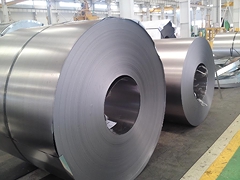
During a recent meeting of the World Trade Organization’s (WTO) Committee on Anti-Dumping Practices in Geneva, representatives from China and Russia went on the defensive, mainly against the United States and European Union, by questioning what they deem to be excessive dumping margins placed upon their cold-rolled and hot-rolled steel products during antidumping investigations.
Dumping occurs when foreign manufacturers sell their products overseas at less than fair market value.
The global oversupply in steel has been largely blamed on unbridled production of these products in countries such as China and Russia in recent years, triggering a massive worldwide slump in steel prices.
China and Russia representatives at the Oct. 27 WTO committee meeting questioned the justification for and methodologies behind the dumping margins set by the United States and European Union.
“The EU said it disagreed with both Russia and China and that it was confident its investigations were fully conducted in line with WTO requirements,” the WTO said in a statement.
On Dec. 11, Section 15 of its 2001 Protocol of Accession to the WTO relating to the “surrogate” methodology in antidumping investigations will expire. The WTO explained that according to these provisions, “when Chinese producers cannot clearly show that market economy conditions prevail, an investigating authority may use a surrogate (or analogue) country methodology that, according to China, results in much higher prices than those reported by Chinese producers and thus higher antidumping duties.”
After the protocol’s expiration, China said WTO members will no longer be allowed to use the surrogate methodology and must conduct their investigations in compliance with the general rule fixed under the WTO’s Anti-Dumping Agreement and use Chinese prices or costs as the basis for calculating the dumping margin.
“The United States said that contrary to China’s assertion, the language in the protocol does not require members to stop using the analogue country methodology in [antidumping] investigations,” the WTO said. The United States stated that China instead needs to step up its progress toward becoming a market-driven economy.
Dumping occurs when foreign manufacturers sell their products overseas at less than fair market value.
The global oversupply in steel has been largely blamed on unbridled production of these products in countries such as China and Russia in recent years, triggering a massive worldwide slump in steel prices.
China and Russia representatives at the Oct. 27 WTO committee meeting questioned the justification for and methodologies behind the dumping margins set by the United States and European Union.
“The EU said it disagreed with both Russia and China and that it was confident its investigations were fully conducted in line with WTO requirements,” the WTO said in a statement.
On Dec. 11, Section 15 of its 2001 Protocol of Accession to the WTO relating to the “surrogate” methodology in antidumping investigations will expire. The WTO explained that according to these provisions, “when Chinese producers cannot clearly show that market economy conditions prevail, an investigating authority may use a surrogate (or analogue) country methodology that, according to China, results in much higher prices than those reported by Chinese producers and thus higher antidumping duties.”
After the protocol’s expiration, China said WTO members will no longer be allowed to use the surrogate methodology and must conduct their investigations in compliance with the general rule fixed under the WTO’s Anti-Dumping Agreement and use Chinese prices or costs as the basis for calculating the dumping margin.
“The United States said that contrary to China’s assertion, the language in the protocol does not require members to stop using the analogue country methodology in [antidumping] investigations,” the WTO said. The United States stated that China instead needs to step up its progress toward becoming a market-driven economy.
Source: AmericanShipper.com
Các tin khác
- New-generation FTAs open wider export opportunities to Middle East and South Asia (15/06/2026)
- Updated regulations on foreign trade management and import quotas (15/06/2026)
- Mandatory traceability for high-risk goods from July 1st: What should businesses prepare for? (15/06/2026)
- Tariff pressure is forcing businesses to restructure in order to adapt. (15/06/2026)
- Coffee Citizens model aims to lift Vietnamese value chain (15/06/2026)