Home
Home
 About Us



China retaliates against Obama administration
28/10/2009 12:00
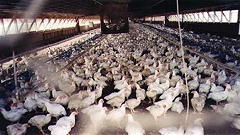
China has started anti-dumping investigations on US chicken, and car-parts imports. China strikes 36% tariff on nylon imports as part of its continued retaliation against the Obama administration's 25 to 35% duties imposed on its tyre imports from China. These are minor disturbances in the trade between the two countries. The disparate speed of recovery is already making worldwide imbalances worse and introducing new tensions to global relations.
The US dollar has decreased by about 14% on a trade-weighted basis. Excluding China and other currencies linked to the US dollar, the fall has been more than 20%. The Bank of China retaliates against Obama administration
Canada's latest economic review said the strength of the Canadian dollar was acting as a drag on recovery and its Governor, Mark Carney, declared last week that "intervention is always an option".
The euro hit a 14-month high of $US1.50 last week, regardless of European Central Bank Chief Jean-Claude Trichet previously calling for US policy-makers to pursue a "strong dollar" policy. Central banks of those Asian countries that do not keep their currencies in a strict band with the US dollar, including South Korea, Taiwan, Philippines and Indonesia, have all intervened in the to stem their rise in value.
Australian view depicts that a strong local dollar is part of the adjustment to our long-term future as Asia's preferred supplier of resources. However, the Rudd government will not remain silent for long to the appeal of manufacturing industry. Picture of World Trade is slightly showing a positive light, with volumes rising 0.5% in the three months to July. But trade remains 11.1% lower than it was a year ago, so competition in the reduced export markets is fierce. China has overhauled Canada as the biggest supplier to the US in the past year. (Imports of China rises from 15 to 19% while Canada's have dropped from just under 17% to 14.5%.
The leaders of the G20 nations have promised in their first summit, to "refrain from raising new barriers to investment or to trade in goods and services, imposing new export restrictions, or implementing World Trade Organisation (WTO) inconsistent measures to stimulate exports".
The UK-based Centre for Economic Policy Research has since followed 121 blatant violations of the pledge by G20 nations. "A G20 nation has broken the no-protectionism pledge every three days," the centre says. Russia, India, Indonesia and Germany have been the worst offenders.
About a third of these measures have been government bailouts of locally owned industries, 15% have been tariff measures, and 14% were direct trade measures such as anti-dumping. The public procurement, local content requirements, export subsidies and outright import bans have all been used to guard domestic industries.
Trade Minister Simon Crean has been trying to restyle the trade round as an "economic stimulus", arguing that trade increases the benefits of economic growth. "What sort of nonsense is it for us to be talking about co-ordinating fiscal stimulus strategies unless we're going to co-ordinate as well the multiplier," Crean says. "And that's why this government in particular needs to get the message that Doha ain't just a trade round. Doha is fundamentally about an economic stimulus."
The US dollar has decreased by about 14% on a trade-weighted basis. Excluding China and other currencies linked to the US dollar, the fall has been more than 20%. The Bank of China retaliates against Obama administration
Canada's latest economic review said the strength of the Canadian dollar was acting as a drag on recovery and its Governor, Mark Carney, declared last week that "intervention is always an option".
The euro hit a 14-month high of $US1.50 last week, regardless of European Central Bank Chief Jean-Claude Trichet previously calling for US policy-makers to pursue a "strong dollar" policy. Central banks of those Asian countries that do not keep their currencies in a strict band with the US dollar, including South Korea, Taiwan, Philippines and Indonesia, have all intervened in the to stem their rise in value.
Australian view depicts that a strong local dollar is part of the adjustment to our long-term future as Asia's preferred supplier of resources. However, the Rudd government will not remain silent for long to the appeal of manufacturing industry. Picture of World Trade is slightly showing a positive light, with volumes rising 0.5% in the three months to July. But trade remains 11.1% lower than it was a year ago, so competition in the reduced export markets is fierce. China has overhauled Canada as the biggest supplier to the US in the past year. (Imports of China rises from 15 to 19% while Canada's have dropped from just under 17% to 14.5%.
The leaders of the G20 nations have promised in their first summit, to "refrain from raising new barriers to investment or to trade in goods and services, imposing new export restrictions, or implementing World Trade Organisation (WTO) inconsistent measures to stimulate exports".
The UK-based Centre for Economic Policy Research has since followed 121 blatant violations of the pledge by G20 nations. "A G20 nation has broken the no-protectionism pledge every three days," the centre says. Russia, India, Indonesia and Germany have been the worst offenders.
About a third of these measures have been government bailouts of locally owned industries, 15% have been tariff measures, and 14% were direct trade measures such as anti-dumping. The public procurement, local content requirements, export subsidies and outright import bans have all been used to guard domestic industries.
Trade Minister Simon Crean has been trying to restyle the trade round as an "economic stimulus", arguing that trade increases the benefits of economic growth. "What sort of nonsense is it for us to be talking about co-ordinating fiscal stimulus strategies unless we're going to co-ordinate as well the multiplier," Crean says. "And that's why this government in particular needs to get the message that Doha ain't just a trade round. Doha is fundamentally about an economic stimulus."
The Australian Business
27-Oct-2009
Source: iitrade.ac.in
27-Oct-2009
Source: iitrade.ac.in
Các tin khác
- Rising global shipping costs put pressure on Viet Nam’s seafood exporters (22/06/2026)
- India likely to retain anti-dumping duties on Bangladeshi jute products (22/06/2026)
- Japan slaps anti-dumping duties on Chinese, Taiwanese steel (22/06/2026)
- India initiates anti-dumping probe against a Chinese, Japanese chemical used in tyre, rubber items (22/06/2026)
- Reasons why the US continues to suspend customs clearance for Vietnamese trailers (22/06/2026)