Home
Home
 About Us



China announces tariff adjustment plan for 2026
05/01/2026 11:15
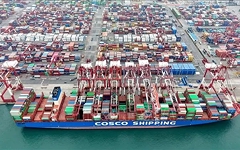
The Tariff Commission under the State Council of China has just announced the "Tariff Adjustment Plan for 2026," which officially takes effect from January 1st.
The proposed approach focuses on selectively adjusting import and export tax rates, optimizing the tax code system, continuing to implement tax rates under agreements and preferential tax rates, thereby contributing to the development of new productive forces, better meeting the growing needs of the people, further expanding high-quality foreign openness, and promoting sustainable economic growth.
The tariff adjustment plan for 2026 focuses on three main areas: adjusting temporary import tariff rates; optimizing the tariff classification and codes; and continuing to apply tariff rates under free trade agreements and preferential tariff rates for suitable partners.
In the area of temporary import tariff adjustments, aimed at strengthening linkages between domestic and international markets and expanding the supply of high-quality goods, China will apply temporary tariff rates lower than the most-favored-nation tariff rate to 935 items in 2026. Specifically, to promote high-level scientific and technological self-reliance and build a modern industrial system, China will reduce import tariffs on some key components and advanced materials, including numerically controlled hydraulic pads used in presses and other high-tech materials. These measures are expected to contribute to enhancing the innovation capacity of enterprises and strengthening domestic industrial supply chains and value chains.
Furthermore, to support the comprehensive green transition of socio-economic development, China continues to reduce import tariffs on certain resources and inputs used in green production, such as recycled black powder for lithium-ion batteries and uncalcined pyrite ore. These are crucial materials in new energy and green industries, aligning with China's low-carbon development goals.
According to the plan, this tariff adjustment is scientifically designed, in line with international practices, and closely linked to the practical development of domestic industries.
In the area of people's livelihoods, the plan continues to emphasize strengthening the guarantee and improvement of people's living standards, supporting the acceleration of the "Healthy China" construction process. Accordingly, China will reduce import tariffs on some key medical products such as artificial blood vessels and diagnostic test kits for certain infectious diseases. This adjustment is expected to help increase the supply of high-quality medical products and reduce treatment costs for patients.
Furthermore, to promote economic and trade cooperation with the least developed countries and support their development capacity enhancement, China continues to grant special tariff preferences to the 43 least developed countries that have established diplomatic relations with China, applying a 0% tariff rate to 100% of tariff lines. At the same time, under the Asia-Pacific Trade Agreement and bilateral agreements with several ASEAN countries, China continues to apply preferential tariff rates to goods imported from Bangladesh, Laos, Cambodia, and Myanmar.
According to Zhao Jungui, Vice Chairman of the China Federation of Petroleum and Chemical Industries, the recent tax adjustments in the petrochemical sector mainly concern products such as bio-aviation fuel, hydrocarbon-based biodiesel, and recycled black powder for lithium-ion batteries. These adjustments reflect China's consistent policy direction of supporting the petrochemical industry in developing new productive forces, while promoting green transformation, reducing emissions, and efficiently utilizing resources.
Source: VTV
Các tin khác
- U.S. to Impose Duties on Mexican, Thai, Vietnamese Chassis (03/06/2026)
- Mexican sugar producers push to scrap U.S. import quotas (03/06/2026)
- Japan launched an anti-dumping investigation into flat steel imports from three countries (03/06/2026)
- Eurochem challenges anti-dumping duties in the EU (03/06/2026)
- Pangasius prices in Viet Nam surge due to high export demand (03/06/2026)