Home
Home
 About Us



China Abolishes Rare Earth Export Quotas
08/01/2015 12:00
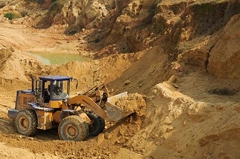
Effective from January 1, 2015, and in conformity with the recent World Trade Organization (WTO) ruling, the Ministry of Commerce (MOFCOM) has announced the elimination of China's export quotas over rare earths, tungsten and molybdenum.
In August last year, China lost its appeal against a WTO dispute settlement panel's agreement with the United States, the European Union and Japan, that its imposition of export restraints on those products, including both quotas and tariffs, breached international trade laws.
Historically, China has extracted 90 percent of the world's available rare earths, which have a wide range of uses in advanced electronic and environmental goods (including flat-screen televisions, hybrid car batteries, wind turbines and energy-efficient lighting), chemicals, and steel and non-ferrous metal industries.
China began restricting rare earth exports in 2010, and Japan, the EU, and the US launched a WTO dispute settlement case in March 2012.
Export restrictions on rare earths are said to have created serious disadvantages for foreign industries, by artificially increasing China's export prices and driving up world prices, and to have lowered China's comparative domestic prices for raw materials. That, it was claimed, has given Chinese industry a competitive advantage and put pressure on foreign producers to move their operations and technologies to China.
The WTO panel found that that the export duties and quotas were in breach of China's WTO commitments and were not justified for reasons of environmental protection or conservation policy. In particular, it concluded that export restrictions cannot be imposed with the expressed intent to conserve exhaustible natural resources or for environmental protection, if domestic use of the same raw materials is not limited for the same purpose.
MOFCOM's dropping of its rare earth export quotas is the first step in complying with the WTO decision. In the future, exports will still need to be licensed based on export contracts, but further government approval will not be required.
However, the effect of the quota removal may be less than previously anticipated as, more recently, Chinese quotas have not been fully utilized, given that other producers have increased their supplies since 2012 and reduced the global reliance on Chinese supplies.
In order to comply with the WTO ruling, MOFCOM will also have to act to remove its rare earth export duties, of between 15 percent and 25 percent, by May this year. However, it has been suggested that China may extend its existing mineral resource tax base at the same time to counteract, at least partly, the effect of tariff cancellation.
Source: Tax News
Các tin khác
- New-generation FTAs open wider export opportunities to Middle East and South Asia (15/06/2026)
- Updated regulations on foreign trade management and import quotas (15/06/2026)
- Mandatory traceability for high-risk goods from July 1st: What should businesses prepare for? (15/06/2026)
- Tariff pressure is forcing businesses to restructure in order to adapt. (15/06/2026)
- Coffee Citizens model aims to lift Vietnamese value chain (15/06/2026)