Home
Home
 About Us



Certain Hot-Rolled Carbon Steel Flat Products from India: Notice of Preliminary Results and Partial Rescission of Countervailing
06/01/2009 12:00
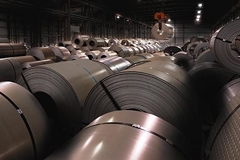
Dec 30, 2008 (FIND, Inc. via COMTEX) -- IPITF | Quote | Chart | News | PowerRating -- SUMMARY: The Department of Commerce (the Department) is conducting an administrative review of the countervailing duty (CVD) order on certain hot- rolled carbon steel flat products from India for the period January 1, 2007, through December 31, 2007, the period of review (POR). These preliminary results cover one company Essar Steel Ltd. (Essar). For the information on the net subsidy rate for the reviewed company, see the "Preliminary Results of Review" section.
We are preliminarily rescinding the administrative review regarding Ispat Industries Limited (Ispat), JSW Steel Limited (JSW), and Tata Steel Limited (Tata) due to the fact that they had no shipments during the POR. For more information on Ispat, JSW, and Tata's shipments during the POR, see the "Background" section of this notice.
EFFECTIVE DATE: December 30, 2008.
FOR FURTHER INFORMATION CONTACT: Gayle Longest, AD/CVD Operations, Office 3, Import Administration, International Trade Administration, U.S. Department of Commerce, Room 4014, 14th Street and Constitution Ave., NW, Washington, DC 20230, telephone: (202) 482-3338.
SUPPLEMENTARY INFORMATION: On December 3, 2001, the Department published in the Federal Register the CVD order on certain hot-rolled carbon steel flat products from India. See Notice of Amended Final Determination and Notice of Countervailing Duty Orders: Certain Hot-Rolled Carbon Steel Flat Products From India and Indonesia, 66 FR 60198 (December 3, 2001) (Amended Final Determination of HRC Investigation). On December 3, 2007, the Department published a notice of opportunity to request an administrative review of this CVD order. See Antidumping or Countervailing Duty Order, Finding, or Suspended Investigation; Opportunity To Request Administrative Review, 72 FR 67889 (December 3, 2007). On December 28, 2007, we received a timely request for review from Essar, an Indian producer and exporter of the subject merchandise. On December 31, 2007, United States Steel Corporation (petitioner) requested that the Department conduct an administrative review of the CVD order on certain hot-rolled carbon steel flat products from India with respect to Essar, Ispat, JSW and Tata.
On January 28, 2008, the Department initiated an administrative review of the CVD order on certain hot-rolled carbon steel flat products from India, covering the period January 1, 2007, through December 31, 2007. See Initiation of Antidumping and Countervailing Duty Administrative Reviews and Request for Revocation in Part, 73 FR 4829 (January 28, 2008).
On February 26, 2008, Ispat and Tata notified the Department that it had no shipments during the POR. On February 28, 2008, the Department issued a questionnaire to the Government of India (GOI), Essar, and JSW. On March 5, 2008, JSW notified the Department that it had no shipments during the POR. The Department reviewed U.S. Customs and Border Protection (CBP) information concerning entries of subject merchandise during the POR and determined that there were no shipments from Ispat, JSW or Tata. See Memorandum to the File through Eric Greynolds regarding "Entries Subject to the 2007 Countervailing Duty Administrative Review," (September 9, 2008) which is on file in the Central Records Unit (CRU), room 1117, of the main Commerce Building. The Department did however find that Essar had entries of the subject merchandise during the POR. See Id.
On May 5, 2008, we received a questionnaire response from the GOI with the accompanying exhibits filed on May 9, 2008. As discussed below, the GOI's submission did not contain responses concerning certain programs such as the Special Economic Zone Act of 2005 (2005 SEZ Act) and programs administered by the state governments. In spite of repeated extensions, the GOI did not file responses concerning these programs.
We received a questionnaire response from Essar on May 12, 2008. We issued supplemental questionnaires to the GOI and Essar regarding programs addressed in the initial CVD questionnaire and received supplemental questionnaire responses. In the case of JSW, on May 12, 2008, the company submitted a letter to the Department stating that it had no shipments of the subject merchandise during the POR. Therefore, JSW did not respond to the initial questionnaire.
On May 29, 2008, petitioner submitted new subsidy allegations pertaining to Essar. On July 30, 2008, the Department published in the Federal Register an extension of the deadline for the preliminary results of this review. See Hot- Rolled Carbon Steel Products From India: Extension of Time Limit for Preliminary Results of Countervailing Duty Administrative Review, 73 FR 44220 (July 30, 2008). On September 25, 2008, the Department initiated an investigation of the new subsidies allegations regarding Essar. *1 On September 26, 2008, we issued the new subsidies questionnaire to Essar and the GOI. On October 10, 2008, and October 17, 2008, we received responses to our new subsidies questionnaires from the GOI and Essar, respectively. From October 14, 2008, through October 31, 2008, we received responses to our new subsidies supplemental questionnaires from the GOI.
*1 See Memorandum to Melissa G. Skinner, Director, Office 3, through Eric B. Greynolds, Program Manager, from Gayle Longest, Case Analyst, regarding "New Subsidy Allegations for Essar Steel Limited" (September 25, 2008). This public document is available on the public file in the Department's CRU located in room 1117.
In accordance with 19 CFR 351.213(b), this review covers only those producers or exporters for which a review was specifically requested. The company subject to this review is Essar. This review covers 59 programs.
Scope of Order
The merchandise subject to this order is certain hot-rolled flat-rolled carbon-quality steel products of a rectangular shape, of a width of 0.5 inch or greater, neither clad, plated, nor coated with
[Page Number 79792]
metal and whether or not painted, varnished, or coated with plastics or other non-metallic substances in coils (whether or not in successively superimposed layers), regardless of thickness, and in straight lengths, of a thickness of less than 4.75 mm and of a width measuring at least 10 times the thickness. Universal mill plate (i.e., flat-rolled products rolled on four faces or in a closed box pass, of a width exceeding 150 mm, but not exceeding 1250 mm, and of a thickness of not less than 4 mm, but not exceeding 1250 mm, and of a thickness of not less than 4 mm, not in coils and without patterns in relief) of a thickness not less than 4.0 mm is not included within the scope of this order.
Specifically included in the scope of this order are vacuum-degassed, fully stabilized (commonly referred to as interstitial-free (IF)) steels, high- strength low-alloy (HSLA) steels, and the substrate for motor lamination steels. If steels are recognized as low-carbon steels with micro-alloying levels of elements such as titanium or niobium (also commonly referred to as columbium), or both, added to stabilize carbon and nitrogen elements. HSLA steels are recognized as steels with micro-alloying levels of elements such as chromium, copper, niobium, vanadium, and molybdenum. The substrate for motor lamination steels contains micro-alloying levels of elements such as silicon and aluminum.
Steel products included in the scope of this order, regardless of definitions in the Harmonized Tariff Schedule of the United States (HTS), are products in which iron predominates, by weight, over each of the other contained elements; ii) the carbon content is 2 percent or less, by weight; and iii) none of the elements listed below exceeds the quantity, by weight, respectively indicated:
1.80 percent of manganese, or
2.25 percent of silicon, or
1.00 percent of copper, or
0.50 percent of aluminum, or
1.25 percent of chromium, or
0.30 percent of cobalt, or
0.40 percent of lead, or
1.25 percent of nickel, or
0.30 percent of tungsten, or
0.10 percent of molybdenum, or
0.10 percent of niobium, or 0.15 percent of vanadium, or
0.15 percent of zirconium.
All products that meet the physical and chemical description provided above are within the scope of this order unless otherwise excluded. The following products, by way of example, are outside or specifically excluded from the scope of this order:
Alloy hot-rolled steel products in which at least one of the chemical elements exceeds those listed above (including, e.g., ASTM specifications A543, A387, A514, A517, A506).
SAE/AISI grades of series 2300 and higher.
Ball bearings steels, as defined in the HTS.
Tool steels, as defined in the HTS.
Silico-maganese (as defined in the HTS) or silicon electrical steel with silicon level exceeding 2.25 percent.
ASTM specifications A710 and A736.
USS Abrasion-resistant steels (USS AR 400, USS AR 500).
All products (proprietary or otherwise) based on an alloy ASTM specification (sample specifications: ASTM, A507, A507).
Non-rectangular shapes, not in coils, which are the result of having been processed by cutting or stamping and which have assumed the character of articles or products classified outside chapter 72 of the HTS.
The merchandise subject to this order is currently classifiable in the HTS as subheadings: 7208.10.15.00, 7208.10.30.00, 7208.10.60.00, 7208.25.30.00, 7208.25.60.00, 7208.26.00.30, 7208.26.00.60, 7208.27.00.30, 7208.27.00.60, 7208.36.00.30, 7208.36.00.60, 7208.37.00.30, 7208.37.00.60, 7208.38.00.15, 7208.38.00.30, 7208.38.00.90, 7208.39.00.15, 7208.39.00.30, 7208.39.00.90, 7208.40.60.30, 7208.40.60.60, 7208.53.00.00, 7208.54.00.00, 7208.90.00.00, 7211.14.00.90, 7211.19.15.00, 7211.19.20.00, 7211.19.30.00, 7211.19.45.00, 7211.19.60.00, 7211.19.75.30, 6211.19.75.60, and 6211.19.75.90. Certain hot- rolled flat-rolled carbon-quality steel covered by this order, including: vacuum-degassed fully stabilized; high-strength low-alloy; and the substrate for motor lamination steel may also enter under the following tariff numbers: 7225.11.00.00, 7225.19.00.00, 7225.30.30.50, 7225.30.70.00, 7225.40.70.00, 7225.99.00.90, 7226.11.10.00, 7226.11.90.30, 7226.11.90.60, 7226.19.10.00, 7226.19.90.00, 7226.91.50.00, 7226.91.70.00, 7226.91.80.00, and 7226.99.00.00. subject merchandise may also enter under 7210.40.10.00, 7212.40.50.00, and 7212.50.00.00. Although the HTS subheadings are provided for convenience and customs purposes, the Department's written description of the merchandise subject to this order is dispositive.
Adverse Facts Available
As discussed above, on February 28, 2008, the Department issued the initial questionnaire to Essar and the GOI, including state governments. After requesting and receiving several extension requests, the GOI filed a response to the Department's initial questionnaire on May 5 and May 9, 2008. *2 However, the GOI failed to provide a response to certain programs addressed in the Department's initial questionnaire, namely the 2005 SEZ Act and programs administered by the state governments.
*2 The Department provided the GOI a total of 71 days to respond to the initial questionnaire, which was comprised of the standard 37-day deadline plus 31 days in extensions.
At the request of the GOI, the Department extended the GOI's deadline to respond to questions regarding the 2005 SEZ Act as well as questions concerning various programs administered by state governments. Specifically, on May 6, 2008, the Department granted the GOI an extension until May 9, 2008, to respond to the outstanding questions. On May 9, 2008, the GOI requested a three-week extension to respond to the questions concerning the 2005 SEZ Act and the state government programs. On May 15, 2008, the Department granted the GOI an extension until May 23, 2008, to respond to the questions concerning the 2005 SEZ Act and the state government programs. *3 On May 23, 2008, the GOI submitted a letter in which it indicated that it was unable to specify a date on which it would be able to submit the requested information. No further response has been filed by the GOI with respect to the 2005 SEZ Act and the state government programs in this proceeding.
*3 The Department included questions concerning the 2005 SEZ Act and the state government programs in its initial questionnaire. Thus, the Department provided the GOI with a total of 85 days to respond to questions concerning the 2005 SEZ Act and the state government programs.
Section 776(a)(1) and (2) of the Tariff Act of 1930, as amended (the Act), provide that the Department shall apply "facts otherwise available" if, inter alia, necessary information is not on the record or an interested party or any other person: (A) withholds information that has been requested; (B) fails to provide information within the deadlines established, or in the form and manner requested by the Department, subject to subsections (c)(1) and (e) of section 782 of the Act; (c) significantly impedes a proceeding; or (D) provides information that cannot be verified as provided by section 782(i) of the Act.
[Page Number 79793]
Where the Department determined that a response to a request for information does not comply with the request, section 782(d) of the Act provides that the Department will so inform the party submitting the response and will, to the extent practicable, provide that party the opportunity to remedy or explain the deficiency. If the party fails to remedy the deficiency within the applicable time limits and subject to section 782(e) of the Act, the Department may disregard all or part of the original and subsequent responses, as appropriate. Section 782(e) of the Act provides that the Department "shall not decline to consider information that is submitted by an interested party and is necessary to the determination but does not meet all applicable requirements established by the administering authority" if the information is timely, can be verified, is not so incomplete that it cannot be used, and if the interested party acts to the best of its ability in providing the information. Where all of these conditions are met, the statue requires the Department to use the information if it can do so without undue difficulties.
Because the GOI failed to provide the requested information by the established deadlines, the Department does not have the necessary information on the record to determine whether the subsidies received by Essar under the 2005 SEZ Act and the state administered programs constitute financial contributions and are specific within sections 771(D) and 771(5A) of the Act, respectively. Therefore, the Department must base its determination on the facts otherwise available in accordance with section 776(a)(2)(B) of the Act. As noted, the Department extended the GOI's deadline to respond to the 2005 SEZ Act and the programs administered by the state governments in the initial questionnaire on several occasions. However, the GOI failed to submit responses to these programs. Therefore, consistent with section 776(a)(2)(B) of the Act, we must resort to facts available.
Because the GOI did not provide the requested information on all of its subsidy programs, pursuant to section 776(b) of the Act, we find that the GOI did not act to the best of its ability and, therefore, we are employing adverse inferences in selecting from among the facts otherwise available. Section 776(b) of the Act provides that the Department may use an adverse inference in applying the facts otherwise available when a party has failed to cooperate by not acting to the best of its ability to comply with a request for information. Section 776(b) of the Act also authorizes the Department to use as adverse facts available (AFA) information derived from the petition, the final determination, a previous administrative review, or other information placed on the record. In a countervailing duty case, the Department requires information from both the government of the country whose merchandise is under the order and the foreign domestic producers and exporters. When the government fails to provide requested information concerning alleged subsidy programs, the Department, as AFA, typically finds that a financial contribution exists under the alleged program and that the program is specific. See, e.g., Notice of Preliminary Results of Countervailing Duty Administrative Review: Certain Cut-to-Length Carbon- Quality Steel Plate from the Republic of Korea, 71 FR 11397, 11399 (March 7, 2006) (unchanged in the Notice of Final Results of Countervailing Duty Administrative Review: Certain Cut-to-Length Carbon-Quality Steel Plate from the Republic of Korea, 71 FR 38861 (July 10, 2006), in which the Department relied on adverse inferences in determining that the Government of Korea directed credit to the steel industry in a manner that constituted a financial contribution and was specific to the steel industry within the meaning of sections 771(5)(D)(i) and 771(5A)(D)(iii) of the Act, respectively). However, the Department will normally rely on the foreign producer's or exporter's records to determine the existence and amount of the benefit. Consistent with its past practice, because the GOI failed to provide information concerning certain alleged subsidies, the Department, as AFA, has determined that those programs confer a financial contribution and are specific pursuant to sections 771(5)(D) and 771(5A) of the Act, respectively. *4 The analysis of the extent of the benefit, if any, is discussed in the "Special Economic Zone Act of 2005 (SEZ Act)," and "Gujarat Special Economic Zone Act (SGOG SEZ Act)" sections below.
*4 The GOI failed to provide any information on how the alleged programs operate. Therefore, in applying adverse inferences, we are unable to reference any sub-paragraphs under sections 771(5)(D) and 771(5A) of the Act. We note that the GOI also failed to provide information regarding these programs in prior reviews.
With respect to the Export Promotion Capital Goods Scheme (EPCGS), the Department sent supplemental questionnaires to Essar on September 29, 2008, and November 7, 2008, requesting additional and clarifying information with respect to several licenses under this program. While Essar provided responses to these questionnaires, it failed to provide all of the information requested with respect to several licenses under the EPCGS program.
Because Essar failed to provide the requested information for the EPCGS licenses in question by the established deadlines, and after several requests, the Department does not have the necessary information to determine the net subsidy for these licenses. Therefore, the Department must base its determination on the facts otherwise available in accordance with section 776(a)(2)(B) of the Act with respect to the licenses for which we have incomplete information.
Because Essar did not provide the requested information on all of its EPCGS licenses, pursuant to section 776(b) of the Act, we find that Essar did not act to the best of its ability and, therefore, we are employing adverse inferences in selecting from among the facts otherwise available. Section 776(b) of the Act provides that the Department may use an adverse inference in applying the facts otherwise available when a party has failed to cooperate by not acting to the best of its ability to comply with a request for information. Section 776(b) of the Act also authorizes the department to use as AFA information derived from the petition, the final determination, a previous administrative review, or other information placed on the record. Normally, the Department will rely on the foreign producer's or exporter's records to determine the existence and amount of the benefit. Consistent with its past practice, because Essar failed to provide information concerning certain EPCGS licenses, the Department, as AFA in these preliminary results, is using Essar's highest calculated benefits pertaining to EPCGS licenses in this review.
Subsidies Valuation Information
Benchmarks for Loans and Discount Rates
Pursuant to 19 CFR 351.524(d)(3)(i), the Department will use, when available, the company-specific cost of long-term fixed-rate loans (excluding loans deemed to be countervailable subsidies) as a discount rate for allocating non-recurring benefits over time. Similarly, pursuant to 19 CFR 351.505(a), the Department will use the actual cost of comparable borrowing by a company as a loan benchmark, when available. According to 19 CFR 351.505(a)(2), a comparable commercial loan is defined as one that, when compared to the loan being examined,
[Page Number 79794]
has similarities in the structure of the loan (e.g., fixed interest rate vs. variable interest rate), the maturity of the loan (e.g., short-term vs. long- term), and the currency in which the loan is denominated.
For programs requiring the application of a benchmark interest rate, 19 CFR 351.505(a)(2)(ii) states a preference for using an interest rate that the company could have obtained on a comparable loan in the commercial market. Also, 19 CFR 351.505(a)(3)(i) stipulates that when selecting a comparable commercial loan that the recipient "could actually obtain on the market," the Department will normally rely on actual short-term and long-term loans obtained by the firm. However, when there are no comparable commercial loans, the Department may use a national average interest rate, pursuant to 19 CFR 351.505(a)(3)(ii). In addition, 19 CFR 351.505(a)(2)(ii) states that the Department will not consider a loan provided by a government-owned bank for purposes of calculating benchmark rates.
For programs requiring an Indian Rupee (rupee) denominated discount rate or the application of a rupee-denominated long-term fixed-rate benchmark, we used, where available, company-specific, weighted-average interest rates on comparable commercial long-term, rupee-denominated loans. When there were no comparable long-term, rupee-denominated loans from commercial banks during the year under consideration, pursuant to 19 CFR 3351.5059a)(3)(ii), we used a national average interest rate as the benchmark. Specifically, we used India's prime lending rate (PLR), as published by the Reserve Bank of India (RBI), as our long-term, benchmark interest rate. However, at this time, we lack information regarding India's PLR for the POR. Therefore, for purposes of the preliminary results, we are using rupee long-term rates as reported by the International Monetary Fund's (IMF) publication International Financial Statistics. The use of the IMF's publication for benchmark rate information is consistent with the Department's practice in prior Indian cases. See Final Affirmative Countervailing Duty Determination: Certain Hot-Rolled Carbon Steel Flat Products From India, 66 FR 49635 (September 28, 2001) (HRC Investigation) and accompanying Issues and Decision Memorandum (HRC Investigation Decision Memorandum) at "Benchmarks for Loans and Discount Rate" section; see also Notice of Final Affirmative Countervailing Duty Determination and Final Negative Critical Circumstances Determination: Certain Lined Paper Products from India, 71 FR 45034 (August 8, 2006) (Final Determination of Lined Paper Investigation), and accompanying Issues and Decision Memorandum (Final Determination of Lined Paper Investigation Decision Memorandum) at "Benchmarks for Loans and Discount Rate." After the preliminary results, we will seek information regarding India's PLR for the POR.
For those programs requiring a foreign currency-denominated discount rate or application of a foreign currency-denominated long-term fixed-rate benchmark, we used, where available, company-specific, weighted-average interest rates of comparable commercial long-term loans, denominated in the same currency. Where no such benchmark instruments were available, consistent with 19 CFR 351.505(a)(3)(ii), we used currency-specific lending rates from private creditors as reported by the IMF's publication International Financial Statistics. See Id.
For variable-rate rupee-denominated or foreign currency-denominated loans outstanding during the POR, our preference is to use the interest rates of variable-rate lending instruments issued during the year in which the government loans were issued, pursuant to 19 CFR 351.505(a)(5)(i). Where such benchmark instruments were unavailable, we used interest rates from loans issued during the POR as our benchmark, as, for purposes of this proceeding, such rates better reflect a variable interest rate that would be in effect during the review period.
Pursuant to 19 CFR 351.505(a)(2)(iv), if a program under review is a government-provided, short-term loan, the preference is to use an annual average of the interest rates on comparable commercial loans during the year in which the government-provided loan was taken out, weighted by the principal amount of each loan. For this review, we required both US dollar-denominated and rupee-denominated short-term loan benchmark rates to determine benefits received under the Pre-Shipment Export Financing program. Absent a company- specific, commercial interest rate denominated in rupees to calculate the benefit, we sourced a rupee-denominated short-term interest rate for India as reported in the IMF's International Financial Statistics. Where we did not have comparable, company-specific short-term loans denominated in US dollars, we used the dollar-denominated short-term interest rate for the United States as reported in International Financial Statistics. See e.g., the "Benchmarks for Loans and Discount Rate" section of the Final Determination of Lined Paper Investigation Decision Memorandum.
Use of Uncreditworthy Benchmarks for Essar
In the administrative review covering the period April 20, 2001, through December 31, 2002, we found Essar to be uncreditworthy during 2001 and 2002. See Final Results of Countervailing Duty Administrative Review: Certain Hot- Rolled Carbon Steel Flat Products from India, 69 FR 26549 (May 13, 2004) (Final Results of First HRC Review) and accompanying Issues and Decision Memorandum (Final Results of First HRC Review Decision Memorandum) at "Creditworthiness." As no new evidence has been provided to the Department with respect to Essar's uncreditworthiness during 2001 and 2002, we will continue to apply the uncreditworthy benchmark methodology for those programs requiring a long-term benchmark for 2001 and 2002. For our long-term interest rates, we used India's PLRs and converted those rates into benchmark interest rates for Essar using the formula set forth in 19 CFR 351.505(a)(3)(iii).
Allocation Period
Under 19 CFR 351.524(d)(2)(i), we presume the allocation period for non- recurring subsidies to be the average useful life (AUL) of renewable physical assets for the industry concerned, as listed in the Internal Revenue Service's 1977 Class Life Asset Depreciation Range System (IRS tables), as updated by the U.S. Department of the Treasury. This presumption will apply unless a party claims and establishes that the IRS tables do not reasonably reflect the AUL of the renewable physical assets for the company or industry under review, and the party can establish that the difference between the company-specific or country-wide AUL for the industry under review is significant, pursuant to 19 CFR 351.524(d)(2)(ii). For assets used to manufacture products such as hot- rolled carbon steel flat products, the IRS tables prescribe an AUL of 15 years.
In their questionnaire response, the respondent did not rebut the regulatory presumption of a 15-year AUL. Therefore, we used a 15-year AUL to allocate any non-recurring subsidies for purposes of these preliminary results.
Further, for non-recurring subsidies, we have applied the "0.5 percent test" described in 19 CFR 351.524(b)(2). Under this test, we compare the amount of subsidies approved under a given
[Page Number 79795]
program in a particular year to sales (total sales or total export sales, as appropriate) for the same year. If the amount of subsidies is less than 0.5 percent of the relevant sales, then the benefits are allocated to the year of receipt rather than allocated over the AUL period.
Analysis of Programs
A. Programs Administered by the Government of India
1. Pre- and Post-Shipment Export Financing
The RBI provides short-term pre-shipment export financing, or "packing credits," to exporters through commercial banks. Upon presentation of a confirmed export order or letter of credit to a bank, companies may receive pre-shipment credit lines upon which they may draw as needed. Credit line limits are established by commercial banks based upon a company's creditworthiness and past export performance, and may be denominated either in Indian rupees or in foreign currency. Commercial banks extending export credit to Indian companies must, by law, charge interest on this credit at rates capped by the RBI. For post-shipment export financing, exporters are eligible to receive post-shipment short-term credit in the form of discounted trade bills or advances by commercial banks at preferential interest rates to finance the period between the date of shipment of exported merchandise and payment from export customers (transit period).
The Department has previously determined that these export financing programs are countervailable to the extent that the interest rates are capped by the GOI and are lower than the rates exporters would have paid on comparable commercial loans. See e.g., PolyethyleneTerephthalate Film, Sheet, and Strip form India: Final Results of Countervailing Duty Administrative Review, 72 FR 6530 (February 12, 2007) (Final Results of 3rd PET Film Review) and accompanying Issues and Decision Memorandum (Final Results of 3rd PET Film Review Decision Memorandum) at "Pre-Shipment and Post-Shipment Export Financing." Specifically, the Department determined that the GOI's issuance of financing at preferential rates constituted a financial contribution pursuant to section 771(5)(D)(i) of the Act and that the interest savings under this program conferred a benefit pursuant to section 771(5)(E)(ii) of the Act. The Department also found this program, which is contingent upon exports, to be specific within the meaning of section 771(5A)(B) of the Act. No new information or evidence of changed circumstances has been presented in this review to warrant a reconsideration of the Department's finding.
Essar reported rupee-denominated, pre-shipment loans outstanding during the POR. Essar also reported U.S. dollar-denominated, pre-shipment export loans outstanding during the POR. Essar reported that it did not use post-shipment loans during the POR.
To calculate the benefit conferred by the pre-shipment loan program, we compared the actual interest paid on the loans with the amount of interest that would have been paid at the benchmark interest rates. We used a rupee- or U.S. dollar-denominated benchmark, as appropriate (see "Subsidies Valuation Information" section, supra). Where the benchmark interest exceeds the actual interest paid, the difference constitutes the benefit. For pre-shipment loans, we calculated the company-specific program rates by dividing the benefit received by the company during the POR by the company's total exports during the POR.
For pre-shipment loans, we calculated the net subsidy rate by dividing the benefit by the participating company's total exports, consistent with the Department's practice. See e.g., Final Determination of Lined Paper Investigation Decision Memorandum at "Pre- and Post-Shipment Export Financing."
We preliminarily determine the new countervailable subsidy rate under the pre-shipment export financing program to be 5.14 percent ad valorem for Essar.
2. EPCGS
The EPCGS provides for a reduction or exemption of customs duties and an exemption for excise taxes on imports of capital goods. Under this program, producers may import capital equipment at a reduced customs duty, subject to an export obligation equal to eight times the duty saved to be fulfilled over a period of eight years (12 years where the CIF value is Rs. 100 crore *5 ) from the date the license was issued. For failure to meet the export obligation, a company is subject to payment of all or part of the duty reduction, depending on the extent of the export shortfall, plus penalty interest.
*5 A crore is equal to 10,000,000 rupees.
The Department has previously determined that the import duty reductions provided under the EPCGS constitute a countervailable export subsidy. See e.g., Final Results of 3rd PET Film Review Decision Memorandum at "Export Promotion Capital Goods Scheme." Specifically, the Department has found that under the EPCGS program, the GOI provides a financial contribution under section 771(5)(D) of the Act. The Department also found this program to be specific under section 771(5A)(B) of the Act because it is contingent upon export performance. No new information or evidence of changed circumstances has been provided with respect to this program. Therefore, we continue to find that import duty reductions provided under the EPCGS are countervailable export subsidies.
Essar reported that it received import duty reductions under the EPCGS program. For these preliminary results, we have determined the benefit for the respondent in accordance with our findings and treatment of this program in other Indian CVD proceedings. Id. Because the importation of capital equipment is tied to firms' capital structure, we are, in accordance with 19 CFR 361.524(c)(2)(iii), treating the receipt of duty exemptions under the program as non-recurring subsidies. Id. Furthermore, under the Department's approach, there are two types of benefits under the EPCGS program. The first benefit is the amount of unpaid duties that would have to be paid to the GOI if the export requirements are not met. The repayment of this liability is contingent on subsequent events, and in such instances, it is the Department's practice to treat any balance on an unpaid liability as an interest-free loan. See 19 CFR 351.505(d)(1). See e.g., Final Results of 3rd PET Film Review Decision Memorandum at "Export Promotion Capital Goods Scheme."
For those EPCGS licenses for which Essar has not yet met the export obligations specified in the licenses by the end of the POR, we preliminarily find that the company had an outstanding contingent liability to be treated as an interest-free loan in the amount of the import duty reduction or exemption for those EPCGS licenses for which Essar applied but, as of the end of the POR, has not received a waiver of their obligations to repay the duties from the GOI.
Accordingly, for those unpaid duties for which Essar has yet to fulfill its export obligations, we preliminarily find the benefit to be the interest that it would have paid during the POR had it borrowed the full amount of the duty reduction at the time of import. Pursuant to 19 CFR 351.505(d)(1), we used a long-term interest rate as our benchmark to calculate the benefit of a contingent liability interest-free loan because the event upon which repayment of the duties depends (i.e.,
[Page Number 79796]
the date of expiration of the time period for the company to fulfill its export commitments) occurs at a point in time more than one year after the date the capital goods were imported. Specifically, we used the long-term benchmark interest rates as described in the "Subsidies Valuation" section, supra. The rate used corresponds to the year in which the company imported the items under the program.
Furthermore, consistent with our policy, absent any acknowledgment from the GOI, in the form of an official letter demonstrating that the liability has been eliminated, we treat benefits from these licenses as contingent liabilities. See e.g., Final Results of 3rd PET Film Review Decision Memorandum "Export Promotion Capital Goods Scheme;" see also Final Determination of Lined Paper Investigation Decision Memorandum at "Export Promotion Capital Goods Scheme."
The second benefit is the waiver of duty on imports of capital equipment covered by those EPCGS licenses for which export requirements have been met. For certain licenses, Essar reported that it had completed its export obligation under the EPCGS program, thereby eliminating the outstanding contingent liabilities on the corresponding duty exemptions. However, as explained above, in keeping with our practice, we have only accepted those claims that are accompanied by official letters from the GOI as contingent liabilities.
For those licenses for which respondent demonstrated that it had fulfilled the export obligations, we followed our methodology set forth in the Final Determination of Lined Paper Investigation and treated the import duty savings as grants received in the year in which the GOI waived the contingent liability on the import duty exemptions. See Final Determination of Lined Paper Investigation Decision Memorandum at "Export Promotion Capital Goods Scheme (EPCGS)" section. In accordance with 19 CFR 351.524(b)(2), for each license, we performed the "0.5 percent test" to determine whether the benefit should be fully expensed in the year of receipt or allocated over the AUL used in this proceeding pursuant to the grant allocation methodology set forth in 19 CFR 351.524(d)(1).
Essar reported that it paid application fees in order to obtain its EPCGS licenses. We preliminarily find that the application fees paid qualify as an "application fee, deposit, or similar payment paid in order to qualify for, or to receive, the benefit of the countervailable subsidy." See Section 771(6)(A) of the Act. As a result, we have offset the benefit in an amount equal to the fees paid.
To calculate the company-specific subsidy rates for this program, we summed the benefits from the waived licenses, which we determine confers a benefit in the form of a grant, and from those licenses that have yet to be waived, which we determine confers a benefit in the form of contingent liability loans. With respect to licenses related to imports of capital goods during the POR, we prorated the contingent liability by the actual number of days the contingent liability was in effect during the POR. See Final Determination of Lined Paper Investigation Decision Memorandum at "Export Promotion Capital Goods Scheme." We then divided the total benefits received by each company by the company's total export sales for the POR. On this basis, we preliminarily determine the net countervailable subsidy from this program to be 1.02 percent ad valorem for Essar.
3. Sale of High-Grade Iron Ore for Less Than Adequate Remuneration
The Department has previously determined that the GOI provides high-grade iron ore to steel producers for less than adequate remuneration through the government-owned National Mineral Development Corporation (NMDC). See Notice of Final Results of Countervailing Duty Administrative Review: Certain Hot- Rolled Carbon Steel Flat Products from India, 71 FR 28665 (May 17, 2006) (Final Results of Second HRC Review), and accompanying Issues and Decision Memorandum (Final Results of Second HRC Review Decision Memorandum) at "Sale of High-Grade Iron Ore for Less Than Adequate Remuneration," see also Notice of Preliminary Results of Countervailing Duty Administrative Review: Certain Hot-Rolled Carbon Steel Flat Products from India, 71 FR 1512, 1512 (January 10, 2006) (Preliminary Results of Second HRC Review). NMDC is governed by the Ministry of Steel and the GOI holds the vast majority of its shares. In past reviews, we have found the NMDC to be a government authority that provides a financial contribution within the meaning section 771(5)(D)(iii) of the Act. See e.g., Certain Hot-Rolled Carbon Steel Flat Products from India: Final Results of Countervailing Duty Administrative Review, 73 FR 40295 (July 14, 2008) (Final Results of Fourth HRC Review) and accompanying Issues and Decision Memorandum (Final Results of Fourth HRC Review Decision Memorandum) at "Sale of High-Grade Iron Ore for Less Than Adequate Remuneration." No new information has been provided to the Department by the GOI to warrant a reconsideration of our finding. Therefore, for this review, we preliminarily find that the GOI directly, through the government-owned NMDC, continues to provide a financial contribution as defined under section 771(5)(D) (iii) of the Act and that the GOI's provision of high-grade iron ore is specific under section 771 (5A)(D)(iii)(I) of the Act because the actual recipient of the subsidy is limited to industries that use iron ore, including the steel industry, and is thus limited in number. Essar reported that it purchased high-grade iron ore (i.e., iron ore with iron (Fe) content of 64 percent or above) fines and high-grade direct reduced calibrated lump iron ore (DR-CLO lumps) from the NMDC during the POR.
Section 771(5)(E)(iv) of the Act provides that a benefit is conferred by a government when the government provides the good or service for less than adequate remuneration. Pursuant to 19 CFR 351.511(a)(2)(i) the Department will normally seek to measure the adequacy of remuneration by comparing the government price for the goods or service to a market-determined price resulting from actual transactions in the country in question. The regulations provide that such market-determined prices could include prices stemming from actual transactions between private parties, actual imports, or, in certain circumstances, actual sales from competitively run government auctions.
Essar provided information concerning its purchases of DR-CLO iron ore lumps from a non-affiliated foreign supplier during the POR. There is no information on the record that suggests such private supplier prices, including import prices into India, do not reflect actual market-determined prices in India for comparable ore, or that such private supplier prices have been distorted by GOI control of or other involvement in the market. Therefore, pursuant to 19 CFR 351.511(a)(2)(i), we used Essar's actual import prices charged by the non-affiliated foreign supplier for DR-CLO lumps to compare with Essar's purchases of DR-CLO lumps from NMDC. Our approach in this regard is consistent with the approach employed in the previous review. See Final Results of Fourth HRC Review Decision Memorandum at "Sale of High-Grade Iron Ore for Less Than Adequate Remuneration."
With respect to Essar's purchases of iron ore fines from the GOI, the record of this review contains no information
[Page Number 79797]
on actual transaction prices between private parties in India, imports, or sales from government auctions that can be used to measure any benefit to Essar as a result of this program. Thus, for these transactions, the Department is unable to measure the adequacy of remuneration using actual market-determined prices in India, as directed by 19 CFR 351.511(a)(2)(i).
Under 19 CFR 351.511(a)(2)(ii), where actual market-determined prices are not available with which to make the comparison under paragraph (a)(2)(i), the Department will seek to measure the adequacy of remuneration by comparing the government price to a world market price where it is reasonable to conclude that such prices would be available to purchasers in the country in question. This second tier directs the Department to examine prices which it would be reasonable to conclude that purchasers could obtain in India. There are publications on the record that include prices from the world market for comparable goods which can be used as a benchmark to determine whether the GOI sold iron ore fines to the respondent for less than adequate remuneration. Specifically, the Tex Report, a daily Japanese publication that reports on world-wide price negotiations for high-grade iron ore, includes prices for high-grade iron ore that were set for 2007. Therefore, consistent with our approach in the Final Results of Fourth HRC Review, we continue to find that the prices reported in the Tex Report constitute world market prices that would be available to the respondent in accordance with 19 CFR 351.511(a)(2)(ii). See Final Results of Fourth HRC Review Decision Memorandum at "Sale of High-Grade Iron Ore for Less Than Adequate Remuneration." Specifically, we used for benchmark purposes the 2007 fines price of iron ore from Hamersley, Australia, listed in the Tex Report as our world market price, as this price constitutes a world market price that would be available to the respondent in India.
We compared Essar's actual domestic prices paid for iron ore fines and DR- CLO lumps (including delivery charges from the mine to the port and from the port to the factory) with benchmark prices that were inclusive of ocean freight. We further adjusted the benchmark to include inland freight from the port to the factory. We also included, for these preliminary results, central sales tax paid on Essar's domestic purchases of iron ore fines and DR-CLO lumps, and we in turn adjusted the benchmark prices to include import duties and any other fees payable on imports.
Concerning the ocean freight adjustment to the benchmark used to measure the adequacy of remuneration of the GOI's sales of iron ore lumps and fines to Essar, we used the publicly available per metric ton cost that Tata incurred to transport coal from Australia to India. *6 The use of this information was necessary because the prices in the Tex Report are FOB foreign port and, thus, lacked information concerning ocean freight delivery charges.
*6 See Memorandum to the File from Gayle Longest, Case Analyst, "Calculations for the Final Results of Countervailing Duty Administrative Review for the period of review (POR) January 1, 2006 through December 31, 2006" (October 23, 2008), in which the calculations were moved to the record of the ongoing review. These calculations contain the information concerning the freight adjustment discussed above.
Essar reported its purchases of domestic iron ore on a transaction-by- transaction basis. Therefore, we conducted our calculations for Essar on a transaction-specific basis. We also adjusted our calculations for iron (Fe) content. We first used the data provided and the information contained in invoices and contracts on the record to ascertain the actual percentage Fe of the domestic iron ore that was purchased. We then multiplied the derived domestic percentage Fe content by the benchmark price per percentage Fe content. Where the data were not available, to derive the actual Fe content of the domestic iron ore purchase, we multiplied the reported base Fe content of the domestic purchase by the benchmark price per percentage Fe content. This resulted in the benchmark price per wet metric ton for iron ore of the same Fe content as the domestic iron ore purchase. After adjusting this benchmark price by including delivery charges (as described above), we compared the delivered benchmark prices with the delivered domestic prices to obtain the benefit amounts on a transaction-by-transaction basis for each type of iron ore. Then, we summed the benefit amounts and divided the total benefit received during the POR by the company's total sales for 2007. On this basis, we preliminarily calculate a net countervailable subsidy rate of 11.48 percent ad valorem for Essar.
4. Special Economic Zone Act of 2005 (SEZ Act)
The Special Economic Zone Act of 2005, No. 28 (2005 SEZ Act), provides for the establishment, development and management of Special Economic Zones for the promotion of exports. *7 In the previous administrative review of this order, petitioner alleged that Essar received benefits under the 2005 SEZ Act. However, in those previous reviews, the GOI did not respond to the Department's questionnaires concerning the 2005 SEZ Act. See e.g., Preliminary Results of Fourth HRC Review, 73 FR 1578 at 1579 (January 9, 2008) and Final Results of Fourth HRC Review, 73 FR 40295 (July 14, 2008). As explained above in the "Adverse Facts Available" section, supra, the GOI failed to respond to the Department's questionnaire with respect to the SEZ Act in this review as well. Accordingly, pursuant to sections 776(a) and (b) of the Act, we find that Essar's use of the programs under the 2005 SEZ Act, as described below, constitute financial contributions section 771(5)(D) of the Act. We further find that Essar's use of the programs under the 2005 SEZ Act was contingent on exports and, therefore, specific within the meaning of section 771(5A)(B) of the Act.
*7 See The Gazette of India Extraordinary Part II-Section 1, published by authority New Delhi, Thursday, June 23, 2005, Ministry of Law and Justice (Legislative Department), The Special Economic Zones Act, 2005 No. 28 of 2005, which petitioners placed on the record of the current review in their November 24, 2008 submission.
a. Duty free import/domestic procurement of goods and services for development, operation, and maintenance of SEZ units program
Essar explained in its October 30, 2008, questionnaire response and November 18, 2008, supplemental questionnaire response (November 18, 2008 QR) that the Essar Steel-Mod V SEZ unit (ESTL-MOD V unit) became eligible for duty free import for both overseas and domestic procurement of goods and services as of January 31, 2007. Essar reported that under this program it imported duty-free goods during the POR for use in its ESTL-MOD V unit. See October 30, 2008 QR at 9 and November 18, 2008 QR at 1-2.
As explained above, we preliminarily determine, based on adverse facts available, that Essar's use of programs under the 2005 SEZ Act constitutes a financial contribution that is specific within the meaning of sections 771(5)(D) and 771(5A)(B) of the Act. Furthermore, we preliminarily determine that Essar's receipt of duty exemptions under the 2005 SEZ Act conferred a benefit under section 771(5)(E) of the Act. Because the GOI did not respond to questions concerning the 2005 SEZ Act, we preliminarily determine that the exception described under 19 CFR 351.519(a)(4) applies. Accordingly, we determine that the benefit is equal to the entire amount of
[Page Number 79798]
the duty exemptions Essar received under the program. Therefore, to calculate the benefit, we summed all of the duty exemptions Essar received under the 2005 SEZ Act during the POR.
To calculate the net subsidy rate, we divided the total benefits Essar received during the POR by its total export sales for the POR. On this basis, we preliminarily determined the net countervailable subsidy from this program to be 1.66 percent ad valorem for Essar.
b. Exemption from excise duties on goods machinery and capital goods brought from the Domestic Tariff Area for use by an enterprise in the SEZ
Essar indicated in its questionnaire response that, as of January 31, 2007, the ESTL-MOD V unit became eligible for exemption from excise duties on goods machinery and capital goods brought from the Domestic Tariff Area for use by an enterprise in the SEZ. Information Essar provided indicates that during the POR, it accrued excise duty exemptions under the program on raw materials and capital goods brought from a Domestic Tariff Area for use in its ESTL-MOD V unit.
As explained above, we preliminarily determine, based on adverse facts available, that Essar's use of programs under the 2005 SEZ Act constitutes a financial contribution that is specific within the meaning of sections 771(5)(D) and 771(5A)(B) of the Act. Furthermore, we preliminarily determine that Essar's receipt of excise duty exemptions on capital goods under the 2005 SEZ Act conferred a benefit under section 771(5)(E) of the Act.
In accordance with 19 CFR 351.524(c)(2)(iii), we preliminarily determine that the provision of excise duty exemptions on capital goods provides non- recurring benefits because the excise duty exemptions are tied to the capital assets of the firm. Therefore, we have treated the excise duty exemptions on capital goods received under the program as grants. We summed all of the duty exemptions on capital goods received under the program, which is equal to all of the duty exemptions on capital goods received during the POR, and divided the total by Essar's total export sales for the POR. Because the resulting rate was less than 0.5 percent, we expensed the duty exemptions on capital goods received under the program to the POR.
In accordance with 19 CFR 351.517(a), we preliminarily determine that the benefit is equal to the entire amount of the excise duty exemptions Essar received on its imports of raw materials under the program. Accordingly, to calculate the benefit, we summed all of the excise duty exemptions Essar received under the program during the POR.
To calculate the net subsidy rate, we divided the total benefits Essar received under the program during the POR by Essar's total export sales during the POR. Accordingly, we preliminarily determined the net countervailable subsidy from this program to be 2.57 percent ad valorem for Essar.
c. Exemption from the Central Sales Tax (CST) *8
*8 In our initial questionnaire and in these preliminary results, we are treating the following as two separate sub-programs under the 2005 SEZ Act: the GOI's Exemption from the Central Sales Tax (CST) and the SGOG's Sales and Other State Taxes on Purchases of Inputs (Both Goods and Services) for the SEZ or a Unit Within the SEZ. We will seek clarification on whether these programs are two separate programs subsequent to the preliminary results.
In its questionnaire response, Essar explained that the ESTL-MOD V unit became eligible for exemption from the 2 percent CST on inter-state purchases as of January 31, 2007. Essar reported that under this program, it received CST exemptions on inter-state purchases made by the ESTL-MOD V unit during the POR.
As explained above, we preliminarily determine, based on adverse facts available, that Essar's use of programs under the 2005 SEZ Act constitutes a financial contribution that is specific within the meaning of sections 771(5)(D) and 771(5A)(B) of the Act. Furthermore, we preliminarily determine that Essar's receipt of CST exemptions on inter-state purchases confer a benefit under section 771(5)(E) of the Act.
In accordance with 19 CFR 351.510(a), we find that the benefit is equal to amount of sales tax that Essar would have paid during the POR absent the exemptions provided under the program. Pursuant to 19 CFR 351.510(b), we are treating the benefit as having been received as of the time of Essar's inter- state purchases. In accordance with 19 CFR 351.510(c), we are allocating the CST exemptions Essar received on its inter-state purchases made during the POR to the POR.
To calculate the net subsidy rate, we divided the total benefits received by Essar by its total export sales for the POR. On this basis, we preliminarily determined the net countervailable subsidy from this program to be 0.002 percent ad valorem for Essar.
d. Exemption from the National Service Tax
According to Essar, SEZ units are exempt from paying the national service tax of 12.36 percent. Therefore, according to Essar, a service provider to an SEZ unit is not required to pay the 12.36 percent service tax on invoices issued to SEZ units. Essar reported that it received a service tax exemption for the ESTL-MOD-V unit during the POR.
As explained above, we preliminarily determine, based on adverse facts available, that Essar's use of programs under the 2005 SEZ Act constitutes a financial contribution that is specific within the meaning of sections 771(5)(D) and 771(5A)(B) of the Act. Furthermore, we preliminarily determine that Essar's receipt of national service tax exemptions on inter-state purchases confer a benefit under section 771(5)(E) of the Act.
In accordance with 19 CFR 351.510(a), we find that the benefit is equal to amount of service tax that Essar would have paid during the POR absent the exemptions provided under the program. Pursuant to 19 CFR 351.510(b), we are treating the benefit as having been received as of the time Essar provided the services subject to the tax. In accordance with 19 CFR 351.510(c), we are allocating the service tax exemptions Essar received on its provision of services during the POR to the POR.
To calculate the net subsidy rate, we divided the total benefits received by Essar by its total export sales for the POR. On this basis, we preliminarily determined the net countervailable subsidy from this program to be 0.07 percent ad valorem for Essar.
B. Programs Administered by the Government of Gujarat
1. Gujarat Special Economic Zone Act (SGOG SEZ Act)
a. Stamp duty and registration fees for land transfers, loan agreements, credit deeds, and mortgages
According to Essar, during the POR the ESTL-MOD V unit leased an area of land from the SEZ Developer, Essar SEZ Hazira Limited, for a period of 20 years. Essar reported that under the SGOG SEZ act, the registration charge was not collected. Essar further reported that under the SGOG SEZ act, the stamp duty on the lease rental was also not collected. See Essar's November 18, 2008 QR at 7.
As explained above, we preliminarily determine, based on adverse facts available, that Essar's use of programs under the 2005 SEZ Act constitutes a
[Page Number 79799]
financial contribution that is specific within the meaning of sections 771(5)(D) and 771(5A)(B) of the Act. Furthermore, we preliminarily determine that the exemptions on registration charges and stamp duties confer a benefit under section 771(5)(E) of the Act.
In accordance with 19 CFR 351.510(a), we find that the benefit is equal to amount of registration and stamp duty charges that Essar would have paid during the POR absent the registration and stamp duty exemptions provided under the program. Pursuant to 19 CFR 351.510(b), we are treating the benefit as having been received as of the time of the ESTL-MOD V unit's lease. Therefore, in accordance with 19 CFR 351.510(c), we are allocating the registration charge and stamp duty exemptions Essar received on the lease it signed during the POR to the POR.
To calculate the net subsidy rate, we divided the total benefits received by Essar by its total export sales for the POR. On this basis, we preliminarily determined the net countervailable subsidy from this program to be 0.001 percent ad valorem for Essar.
b. Sales tax, purchase tax, and other taxes payable on sales and transactions
According to Essar, inputs purchased by SEZ units from within the State of Gujarat are exempted from payment of sales tax.
As explained above, we preliminarily determine, based on adverse facts available, that Essar's use of programs under the 2005 SEZ Act constitutes a financial contribution that is specific within the meaning of sections 771(5)(D) and 771(5A)(B) of the Act. Furthermore, we preliminarily determine that the sales tax exemptions received by Essar confer a benefit under section 771(5)(E) of the Act.
In accordance with 19 CFR 351.510(a), we find that the benefit is equal to amount of sales tax that Essar would have paid during the POR absent the exemption provided under the program. Pursuant to 19 CFR 351.510(b), we are treating the benefit as having been received as of the time of the ESTL-MOD V unit's input purchases. Therefore, in accordance with 19 CFR 351.510(c), we are allocating the sales tax exemptions Essar received on the input purchase during the POR to the POR.
To calculate the net subsidy rate, we divided the total benefits received by Essar by its total export sales for the POR. On this basis, we preliminarily determined the net countervailable subsidy from this program to be 0.002 percent ad valorem for Essar.
c. Sales and other state taxes on purchases of inputs (both goods and services) for the SEZ or a Unit within the SEZ
According to Essar, a CST of 2 percent is charged on goods and services procured by SEZ units from states other than Gujarat. However, according to Essar, this amount is exempted when goods and services are supplied to SEZ units. Essar reported that under this program, it received sales tax exemptions on purchases from states other than Gujarat made by the ESTL-MOD V unit during the POR.
As explained above, we preliminarily determine that Essar's use of programs under the SGOG SEZ Act constitutes a financial contribution that is specific within the meaning of sections 771(5)(D) and 771(5A)(B) of the Act. Furthermore, we preliminarily determine that Essar's receipt of sales tax exemptions on inter-state purchases confer a benefit under section 771(5)(E) of the Act.
In accordance with 19 CFR 351.510(a), we find that the benefit is equal to the amount of sales tax that Essar would have paid during the POR absent the exemptions provided under the program. Pursuant to 19 CFR 351.510(b), we are treating the benefit as having been received as of the time of Essar's inter- state purchases. In accordance with 19 CFR 351.510(c), we are allocating the sales tax exemptions Essar received on its inter-state purchases made during the POR to the POR. *9
*9 We will seek additional clarifying information from Essar regarding any tax benefits it received under this program.
To calculate the net subsidy rate, we divided the total benefits received by Essar by its total export sales for the POR. On this basis, we preliminarily determined the net countervailable subsidy from this program to be 0.002 percent ad valorem for Essar.
C. Programs Preliminarily Found Not To Confer a Countervailable Benefit During the POR
1. Own Your Own Wagon Scheme
The Own Your Own Wagon (OYW) Scheme is a program through which the GOI seeks to enhance India's rail transport capacity to meet the needs of various sections of the economy. Under the OYW, the GOI encourages private participation in ownership of wagons (rail cars) to supplement the resources available with the Railways for acquiring rolling stock. The OYW Scheme is administered by the GOI's
We are preliminarily rescinding the administrative review regarding Ispat Industries Limited (Ispat), JSW Steel Limited (JSW), and Tata Steel Limited (Tata) due to the fact that they had no shipments during the POR. For more information on Ispat, JSW, and Tata's shipments during the POR, see the "Background" section of this notice.
EFFECTIVE DATE: December 30, 2008.
FOR FURTHER INFORMATION CONTACT: Gayle Longest, AD/CVD Operations, Office 3, Import Administration, International Trade Administration, U.S. Department of Commerce, Room 4014, 14th Street and Constitution Ave., NW, Washington, DC 20230, telephone: (202) 482-3338.
SUPPLEMENTARY INFORMATION: On December 3, 2001, the Department published in the Federal Register the CVD order on certain hot-rolled carbon steel flat products from India. See Notice of Amended Final Determination and Notice of Countervailing Duty Orders: Certain Hot-Rolled Carbon Steel Flat Products From India and Indonesia, 66 FR 60198 (December 3, 2001) (Amended Final Determination of HRC Investigation). On December 3, 2007, the Department published a notice of opportunity to request an administrative review of this CVD order. See Antidumping or Countervailing Duty Order, Finding, or Suspended Investigation; Opportunity To Request Administrative Review, 72 FR 67889 (December 3, 2007). On December 28, 2007, we received a timely request for review from Essar, an Indian producer and exporter of the subject merchandise. On December 31, 2007, United States Steel Corporation (petitioner) requested that the Department conduct an administrative review of the CVD order on certain hot-rolled carbon steel flat products from India with respect to Essar, Ispat, JSW and Tata.
On January 28, 2008, the Department initiated an administrative review of the CVD order on certain hot-rolled carbon steel flat products from India, covering the period January 1, 2007, through December 31, 2007. See Initiation of Antidumping and Countervailing Duty Administrative Reviews and Request for Revocation in Part, 73 FR 4829 (January 28, 2008).
On February 26, 2008, Ispat and Tata notified the Department that it had no shipments during the POR. On February 28, 2008, the Department issued a questionnaire to the Government of India (GOI), Essar, and JSW. On March 5, 2008, JSW notified the Department that it had no shipments during the POR. The Department reviewed U.S. Customs and Border Protection (CBP) information concerning entries of subject merchandise during the POR and determined that there were no shipments from Ispat, JSW or Tata. See Memorandum to the File through Eric Greynolds regarding "Entries Subject to the 2007 Countervailing Duty Administrative Review," (September 9, 2008) which is on file in the Central Records Unit (CRU), room 1117, of the main Commerce Building. The Department did however find that Essar had entries of the subject merchandise during the POR. See Id.
On May 5, 2008, we received a questionnaire response from the GOI with the accompanying exhibits filed on May 9, 2008. As discussed below, the GOI's submission did not contain responses concerning certain programs such as the Special Economic Zone Act of 2005 (2005 SEZ Act) and programs administered by the state governments. In spite of repeated extensions, the GOI did not file responses concerning these programs.
We received a questionnaire response from Essar on May 12, 2008. We issued supplemental questionnaires to the GOI and Essar regarding programs addressed in the initial CVD questionnaire and received supplemental questionnaire responses. In the case of JSW, on May 12, 2008, the company submitted a letter to the Department stating that it had no shipments of the subject merchandise during the POR. Therefore, JSW did not respond to the initial questionnaire.
On May 29, 2008, petitioner submitted new subsidy allegations pertaining to Essar. On July 30, 2008, the Department published in the Federal Register an extension of the deadline for the preliminary results of this review. See Hot- Rolled Carbon Steel Products From India: Extension of Time Limit for Preliminary Results of Countervailing Duty Administrative Review, 73 FR 44220 (July 30, 2008). On September 25, 2008, the Department initiated an investigation of the new subsidies allegations regarding Essar. *1 On September 26, 2008, we issued the new subsidies questionnaire to Essar and the GOI. On October 10, 2008, and October 17, 2008, we received responses to our new subsidies questionnaires from the GOI and Essar, respectively. From October 14, 2008, through October 31, 2008, we received responses to our new subsidies supplemental questionnaires from the GOI.
*1 See Memorandum to Melissa G. Skinner, Director, Office 3, through Eric B. Greynolds, Program Manager, from Gayle Longest, Case Analyst, regarding "New Subsidy Allegations for Essar Steel Limited" (September 25, 2008). This public document is available on the public file in the Department's CRU located in room 1117.
In accordance with 19 CFR 351.213(b), this review covers only those producers or exporters for which a review was specifically requested. The company subject to this review is Essar. This review covers 59 programs.
Scope of Order
The merchandise subject to this order is certain hot-rolled flat-rolled carbon-quality steel products of a rectangular shape, of a width of 0.5 inch or greater, neither clad, plated, nor coated with
[Page Number 79792]
metal and whether or not painted, varnished, or coated with plastics or other non-metallic substances in coils (whether or not in successively superimposed layers), regardless of thickness, and in straight lengths, of a thickness of less than 4.75 mm and of a width measuring at least 10 times the thickness. Universal mill plate (i.e., flat-rolled products rolled on four faces or in a closed box pass, of a width exceeding 150 mm, but not exceeding 1250 mm, and of a thickness of not less than 4 mm, but not exceeding 1250 mm, and of a thickness of not less than 4 mm, not in coils and without patterns in relief) of a thickness not less than 4.0 mm is not included within the scope of this order.
Specifically included in the scope of this order are vacuum-degassed, fully stabilized (commonly referred to as interstitial-free (IF)) steels, high- strength low-alloy (HSLA) steels, and the substrate for motor lamination steels. If steels are recognized as low-carbon steels with micro-alloying levels of elements such as titanium or niobium (also commonly referred to as columbium), or both, added to stabilize carbon and nitrogen elements. HSLA steels are recognized as steels with micro-alloying levels of elements such as chromium, copper, niobium, vanadium, and molybdenum. The substrate for motor lamination steels contains micro-alloying levels of elements such as silicon and aluminum.
Steel products included in the scope of this order, regardless of definitions in the Harmonized Tariff Schedule of the United States (HTS), are products in which iron predominates, by weight, over each of the other contained elements; ii) the carbon content is 2 percent or less, by weight; and iii) none of the elements listed below exceeds the quantity, by weight, respectively indicated:
1.80 percent of manganese, or
2.25 percent of silicon, or
1.00 percent of copper, or
0.50 percent of aluminum, or
1.25 percent of chromium, or
0.30 percent of cobalt, or
0.40 percent of lead, or
1.25 percent of nickel, or
0.30 percent of tungsten, or
0.10 percent of molybdenum, or
0.10 percent of niobium, or 0.15 percent of vanadium, or
0.15 percent of zirconium.
All products that meet the physical and chemical description provided above are within the scope of this order unless otherwise excluded. The following products, by way of example, are outside or specifically excluded from the scope of this order:
Alloy hot-rolled steel products in which at least one of the chemical elements exceeds those listed above (including, e.g., ASTM specifications A543, A387, A514, A517, A506).
SAE/AISI grades of series 2300 and higher.
Ball bearings steels, as defined in the HTS.
Tool steels, as defined in the HTS.
Silico-maganese (as defined in the HTS) or silicon electrical steel with silicon level exceeding 2.25 percent.
ASTM specifications A710 and A736.
USS Abrasion-resistant steels (USS AR 400, USS AR 500).
All products (proprietary or otherwise) based on an alloy ASTM specification (sample specifications: ASTM, A507, A507).
Non-rectangular shapes, not in coils, which are the result of having been processed by cutting or stamping and which have assumed the character of articles or products classified outside chapter 72 of the HTS.
The merchandise subject to this order is currently classifiable in the HTS as subheadings: 7208.10.15.00, 7208.10.30.00, 7208.10.60.00, 7208.25.30.00, 7208.25.60.00, 7208.26.00.30, 7208.26.00.60, 7208.27.00.30, 7208.27.00.60, 7208.36.00.30, 7208.36.00.60, 7208.37.00.30, 7208.37.00.60, 7208.38.00.15, 7208.38.00.30, 7208.38.00.90, 7208.39.00.15, 7208.39.00.30, 7208.39.00.90, 7208.40.60.30, 7208.40.60.60, 7208.53.00.00, 7208.54.00.00, 7208.90.00.00, 7211.14.00.90, 7211.19.15.00, 7211.19.20.00, 7211.19.30.00, 7211.19.45.00, 7211.19.60.00, 7211.19.75.30, 6211.19.75.60, and 6211.19.75.90. Certain hot- rolled flat-rolled carbon-quality steel covered by this order, including: vacuum-degassed fully stabilized; high-strength low-alloy; and the substrate for motor lamination steel may also enter under the following tariff numbers: 7225.11.00.00, 7225.19.00.00, 7225.30.30.50, 7225.30.70.00, 7225.40.70.00, 7225.99.00.90, 7226.11.10.00, 7226.11.90.30, 7226.11.90.60, 7226.19.10.00, 7226.19.90.00, 7226.91.50.00, 7226.91.70.00, 7226.91.80.00, and 7226.99.00.00. subject merchandise may also enter under 7210.40.10.00, 7212.40.50.00, and 7212.50.00.00. Although the HTS subheadings are provided for convenience and customs purposes, the Department's written description of the merchandise subject to this order is dispositive.
Adverse Facts Available
As discussed above, on February 28, 2008, the Department issued the initial questionnaire to Essar and the GOI, including state governments. After requesting and receiving several extension requests, the GOI filed a response to the Department's initial questionnaire on May 5 and May 9, 2008. *2 However, the GOI failed to provide a response to certain programs addressed in the Department's initial questionnaire, namely the 2005 SEZ Act and programs administered by the state governments.
*2 The Department provided the GOI a total of 71 days to respond to the initial questionnaire, which was comprised of the standard 37-day deadline plus 31 days in extensions.
At the request of the GOI, the Department extended the GOI's deadline to respond to questions regarding the 2005 SEZ Act as well as questions concerning various programs administered by state governments. Specifically, on May 6, 2008, the Department granted the GOI an extension until May 9, 2008, to respond to the outstanding questions. On May 9, 2008, the GOI requested a three-week extension to respond to the questions concerning the 2005 SEZ Act and the state government programs. On May 15, 2008, the Department granted the GOI an extension until May 23, 2008, to respond to the questions concerning the 2005 SEZ Act and the state government programs. *3 On May 23, 2008, the GOI submitted a letter in which it indicated that it was unable to specify a date on which it would be able to submit the requested information. No further response has been filed by the GOI with respect to the 2005 SEZ Act and the state government programs in this proceeding.
*3 The Department included questions concerning the 2005 SEZ Act and the state government programs in its initial questionnaire. Thus, the Department provided the GOI with a total of 85 days to respond to questions concerning the 2005 SEZ Act and the state government programs.
Section 776(a)(1) and (2) of the Tariff Act of 1930, as amended (the Act), provide that the Department shall apply "facts otherwise available" if, inter alia, necessary information is not on the record or an interested party or any other person: (A) withholds information that has been requested; (B) fails to provide information within the deadlines established, or in the form and manner requested by the Department, subject to subsections (c)(1) and (e) of section 782 of the Act; (c) significantly impedes a proceeding; or (D) provides information that cannot be verified as provided by section 782(i) of the Act.
[Page Number 79793]
Where the Department determined that a response to a request for information does not comply with the request, section 782(d) of the Act provides that the Department will so inform the party submitting the response and will, to the extent practicable, provide that party the opportunity to remedy or explain the deficiency. If the party fails to remedy the deficiency within the applicable time limits and subject to section 782(e) of the Act, the Department may disregard all or part of the original and subsequent responses, as appropriate. Section 782(e) of the Act provides that the Department "shall not decline to consider information that is submitted by an interested party and is necessary to the determination but does not meet all applicable requirements established by the administering authority" if the information is timely, can be verified, is not so incomplete that it cannot be used, and if the interested party acts to the best of its ability in providing the information. Where all of these conditions are met, the statue requires the Department to use the information if it can do so without undue difficulties.
Because the GOI failed to provide the requested information by the established deadlines, the Department does not have the necessary information on the record to determine whether the subsidies received by Essar under the 2005 SEZ Act and the state administered programs constitute financial contributions and are specific within sections 771(D) and 771(5A) of the Act, respectively. Therefore, the Department must base its determination on the facts otherwise available in accordance with section 776(a)(2)(B) of the Act. As noted, the Department extended the GOI's deadline to respond to the 2005 SEZ Act and the programs administered by the state governments in the initial questionnaire on several occasions. However, the GOI failed to submit responses to these programs. Therefore, consistent with section 776(a)(2)(B) of the Act, we must resort to facts available.
Because the GOI did not provide the requested information on all of its subsidy programs, pursuant to section 776(b) of the Act, we find that the GOI did not act to the best of its ability and, therefore, we are employing adverse inferences in selecting from among the facts otherwise available. Section 776(b) of the Act provides that the Department may use an adverse inference in applying the facts otherwise available when a party has failed to cooperate by not acting to the best of its ability to comply with a request for information. Section 776(b) of the Act also authorizes the Department to use as adverse facts available (AFA) information derived from the petition, the final determination, a previous administrative review, or other information placed on the record. In a countervailing duty case, the Department requires information from both the government of the country whose merchandise is under the order and the foreign domestic producers and exporters. When the government fails to provide requested information concerning alleged subsidy programs, the Department, as AFA, typically finds that a financial contribution exists under the alleged program and that the program is specific. See, e.g., Notice of Preliminary Results of Countervailing Duty Administrative Review: Certain Cut-to-Length Carbon- Quality Steel Plate from the Republic of Korea, 71 FR 11397, 11399 (March 7, 2006) (unchanged in the Notice of Final Results of Countervailing Duty Administrative Review: Certain Cut-to-Length Carbon-Quality Steel Plate from the Republic of Korea, 71 FR 38861 (July 10, 2006), in which the Department relied on adverse inferences in determining that the Government of Korea directed credit to the steel industry in a manner that constituted a financial contribution and was specific to the steel industry within the meaning of sections 771(5)(D)(i) and 771(5A)(D)(iii) of the Act, respectively). However, the Department will normally rely on the foreign producer's or exporter's records to determine the existence and amount of the benefit. Consistent with its past practice, because the GOI failed to provide information concerning certain alleged subsidies, the Department, as AFA, has determined that those programs confer a financial contribution and are specific pursuant to sections 771(5)(D) and 771(5A) of the Act, respectively. *4 The analysis of the extent of the benefit, if any, is discussed in the "Special Economic Zone Act of 2005 (SEZ Act)," and "Gujarat Special Economic Zone Act (SGOG SEZ Act)" sections below.
*4 The GOI failed to provide any information on how the alleged programs operate. Therefore, in applying adverse inferences, we are unable to reference any sub-paragraphs under sections 771(5)(D) and 771(5A) of the Act. We note that the GOI also failed to provide information regarding these programs in prior reviews.
With respect to the Export Promotion Capital Goods Scheme (EPCGS), the Department sent supplemental questionnaires to Essar on September 29, 2008, and November 7, 2008, requesting additional and clarifying information with respect to several licenses under this program. While Essar provided responses to these questionnaires, it failed to provide all of the information requested with respect to several licenses under the EPCGS program.
Because Essar failed to provide the requested information for the EPCGS licenses in question by the established deadlines, and after several requests, the Department does not have the necessary information to determine the net subsidy for these licenses. Therefore, the Department must base its determination on the facts otherwise available in accordance with section 776(a)(2)(B) of the Act with respect to the licenses for which we have incomplete information.
Because Essar did not provide the requested information on all of its EPCGS licenses, pursuant to section 776(b) of the Act, we find that Essar did not act to the best of its ability and, therefore, we are employing adverse inferences in selecting from among the facts otherwise available. Section 776(b) of the Act provides that the Department may use an adverse inference in applying the facts otherwise available when a party has failed to cooperate by not acting to the best of its ability to comply with a request for information. Section 776(b) of the Act also authorizes the department to use as AFA information derived from the petition, the final determination, a previous administrative review, or other information placed on the record. Normally, the Department will rely on the foreign producer's or exporter's records to determine the existence and amount of the benefit. Consistent with its past practice, because Essar failed to provide information concerning certain EPCGS licenses, the Department, as AFA in these preliminary results, is using Essar's highest calculated benefits pertaining to EPCGS licenses in this review.
Subsidies Valuation Information
Benchmarks for Loans and Discount Rates
Pursuant to 19 CFR 351.524(d)(3)(i), the Department will use, when available, the company-specific cost of long-term fixed-rate loans (excluding loans deemed to be countervailable subsidies) as a discount rate for allocating non-recurring benefits over time. Similarly, pursuant to 19 CFR 351.505(a), the Department will use the actual cost of comparable borrowing by a company as a loan benchmark, when available. According to 19 CFR 351.505(a)(2), a comparable commercial loan is defined as one that, when compared to the loan being examined,
[Page Number 79794]
has similarities in the structure of the loan (e.g., fixed interest rate vs. variable interest rate), the maturity of the loan (e.g., short-term vs. long- term), and the currency in which the loan is denominated.
For programs requiring the application of a benchmark interest rate, 19 CFR 351.505(a)(2)(ii) states a preference for using an interest rate that the company could have obtained on a comparable loan in the commercial market. Also, 19 CFR 351.505(a)(3)(i) stipulates that when selecting a comparable commercial loan that the recipient "could actually obtain on the market," the Department will normally rely on actual short-term and long-term loans obtained by the firm. However, when there are no comparable commercial loans, the Department may use a national average interest rate, pursuant to 19 CFR 351.505(a)(3)(ii). In addition, 19 CFR 351.505(a)(2)(ii) states that the Department will not consider a loan provided by a government-owned bank for purposes of calculating benchmark rates.
For programs requiring an Indian Rupee (rupee) denominated discount rate or the application of a rupee-denominated long-term fixed-rate benchmark, we used, where available, company-specific, weighted-average interest rates on comparable commercial long-term, rupee-denominated loans. When there were no comparable long-term, rupee-denominated loans from commercial banks during the year under consideration, pursuant to 19 CFR 3351.5059a)(3)(ii), we used a national average interest rate as the benchmark. Specifically, we used India's prime lending rate (PLR), as published by the Reserve Bank of India (RBI), as our long-term, benchmark interest rate. However, at this time, we lack information regarding India's PLR for the POR. Therefore, for purposes of the preliminary results, we are using rupee long-term rates as reported by the International Monetary Fund's (IMF) publication International Financial Statistics. The use of the IMF's publication for benchmark rate information is consistent with the Department's practice in prior Indian cases. See Final Affirmative Countervailing Duty Determination: Certain Hot-Rolled Carbon Steel Flat Products From India, 66 FR 49635 (September 28, 2001) (HRC Investigation) and accompanying Issues and Decision Memorandum (HRC Investigation Decision Memorandum) at "Benchmarks for Loans and Discount Rate" section; see also Notice of Final Affirmative Countervailing Duty Determination and Final Negative Critical Circumstances Determination: Certain Lined Paper Products from India, 71 FR 45034 (August 8, 2006) (Final Determination of Lined Paper Investigation), and accompanying Issues and Decision Memorandum (Final Determination of Lined Paper Investigation Decision Memorandum) at "Benchmarks for Loans and Discount Rate." After the preliminary results, we will seek information regarding India's PLR for the POR.
For those programs requiring a foreign currency-denominated discount rate or application of a foreign currency-denominated long-term fixed-rate benchmark, we used, where available, company-specific, weighted-average interest rates of comparable commercial long-term loans, denominated in the same currency. Where no such benchmark instruments were available, consistent with 19 CFR 351.505(a)(3)(ii), we used currency-specific lending rates from private creditors as reported by the IMF's publication International Financial Statistics. See Id.
For variable-rate rupee-denominated or foreign currency-denominated loans outstanding during the POR, our preference is to use the interest rates of variable-rate lending instruments issued during the year in which the government loans were issued, pursuant to 19 CFR 351.505(a)(5)(i). Where such benchmark instruments were unavailable, we used interest rates from loans issued during the POR as our benchmark, as, for purposes of this proceeding, such rates better reflect a variable interest rate that would be in effect during the review period.
Pursuant to 19 CFR 351.505(a)(2)(iv), if a program under review is a government-provided, short-term loan, the preference is to use an annual average of the interest rates on comparable commercial loans during the year in which the government-provided loan was taken out, weighted by the principal amount of each loan. For this review, we required both US dollar-denominated and rupee-denominated short-term loan benchmark rates to determine benefits received under the Pre-Shipment Export Financing program. Absent a company- specific, commercial interest rate denominated in rupees to calculate the benefit, we sourced a rupee-denominated short-term interest rate for India as reported in the IMF's International Financial Statistics. Where we did not have comparable, company-specific short-term loans denominated in US dollars, we used the dollar-denominated short-term interest rate for the United States as reported in International Financial Statistics. See e.g., the "Benchmarks for Loans and Discount Rate" section of the Final Determination of Lined Paper Investigation Decision Memorandum.
Use of Uncreditworthy Benchmarks for Essar
In the administrative review covering the period April 20, 2001, through December 31, 2002, we found Essar to be uncreditworthy during 2001 and 2002. See Final Results of Countervailing Duty Administrative Review: Certain Hot- Rolled Carbon Steel Flat Products from India, 69 FR 26549 (May 13, 2004) (Final Results of First HRC Review) and accompanying Issues and Decision Memorandum (Final Results of First HRC Review Decision Memorandum) at "Creditworthiness." As no new evidence has been provided to the Department with respect to Essar's uncreditworthiness during 2001 and 2002, we will continue to apply the uncreditworthy benchmark methodology for those programs requiring a long-term benchmark for 2001 and 2002. For our long-term interest rates, we used India's PLRs and converted those rates into benchmark interest rates for Essar using the formula set forth in 19 CFR 351.505(a)(3)(iii).
Allocation Period
Under 19 CFR 351.524(d)(2)(i), we presume the allocation period for non- recurring subsidies to be the average useful life (AUL) of renewable physical assets for the industry concerned, as listed in the Internal Revenue Service's 1977 Class Life Asset Depreciation Range System (IRS tables), as updated by the U.S. Department of the Treasury. This presumption will apply unless a party claims and establishes that the IRS tables do not reasonably reflect the AUL of the renewable physical assets for the company or industry under review, and the party can establish that the difference between the company-specific or country-wide AUL for the industry under review is significant, pursuant to 19 CFR 351.524(d)(2)(ii). For assets used to manufacture products such as hot- rolled carbon steel flat products, the IRS tables prescribe an AUL of 15 years.
In their questionnaire response, the respondent did not rebut the regulatory presumption of a 15-year AUL. Therefore, we used a 15-year AUL to allocate any non-recurring subsidies for purposes of these preliminary results.
Further, for non-recurring subsidies, we have applied the "0.5 percent test" described in 19 CFR 351.524(b)(2). Under this test, we compare the amount of subsidies approved under a given
[Page Number 79795]
program in a particular year to sales (total sales or total export sales, as appropriate) for the same year. If the amount of subsidies is less than 0.5 percent of the relevant sales, then the benefits are allocated to the year of receipt rather than allocated over the AUL period.
Analysis of Programs
A. Programs Administered by the Government of India
1. Pre- and Post-Shipment Export Financing
The RBI provides short-term pre-shipment export financing, or "packing credits," to exporters through commercial banks. Upon presentation of a confirmed export order or letter of credit to a bank, companies may receive pre-shipment credit lines upon which they may draw as needed. Credit line limits are established by commercial banks based upon a company's creditworthiness and past export performance, and may be denominated either in Indian rupees or in foreign currency. Commercial banks extending export credit to Indian companies must, by law, charge interest on this credit at rates capped by the RBI. For post-shipment export financing, exporters are eligible to receive post-shipment short-term credit in the form of discounted trade bills or advances by commercial banks at preferential interest rates to finance the period between the date of shipment of exported merchandise and payment from export customers (transit period).
The Department has previously determined that these export financing programs are countervailable to the extent that the interest rates are capped by the GOI and are lower than the rates exporters would have paid on comparable commercial loans. See e.g., PolyethyleneTerephthalate Film, Sheet, and Strip form India: Final Results of Countervailing Duty Administrative Review, 72 FR 6530 (February 12, 2007) (Final Results of 3rd PET Film Review) and accompanying Issues and Decision Memorandum (Final Results of 3rd PET Film Review Decision Memorandum) at "Pre-Shipment and Post-Shipment Export Financing." Specifically, the Department determined that the GOI's issuance of financing at preferential rates constituted a financial contribution pursuant to section 771(5)(D)(i) of the Act and that the interest savings under this program conferred a benefit pursuant to section 771(5)(E)(ii) of the Act. The Department also found this program, which is contingent upon exports, to be specific within the meaning of section 771(5A)(B) of the Act. No new information or evidence of changed circumstances has been presented in this review to warrant a reconsideration of the Department's finding.
Essar reported rupee-denominated, pre-shipment loans outstanding during the POR. Essar also reported U.S. dollar-denominated, pre-shipment export loans outstanding during the POR. Essar reported that it did not use post-shipment loans during the POR.
To calculate the benefit conferred by the pre-shipment loan program, we compared the actual interest paid on the loans with the amount of interest that would have been paid at the benchmark interest rates. We used a rupee- or U.S. dollar-denominated benchmark, as appropriate (see "Subsidies Valuation Information" section, supra). Where the benchmark interest exceeds the actual interest paid, the difference constitutes the benefit. For pre-shipment loans, we calculated the company-specific program rates by dividing the benefit received by the company during the POR by the company's total exports during the POR.
For pre-shipment loans, we calculated the net subsidy rate by dividing the benefit by the participating company's total exports, consistent with the Department's practice. See e.g., Final Determination of Lined Paper Investigation Decision Memorandum at "Pre- and Post-Shipment Export Financing."
We preliminarily determine the new countervailable subsidy rate under the pre-shipment export financing program to be 5.14 percent ad valorem for Essar.
2. EPCGS
The EPCGS provides for a reduction or exemption of customs duties and an exemption for excise taxes on imports of capital goods. Under this program, producers may import capital equipment at a reduced customs duty, subject to an export obligation equal to eight times the duty saved to be fulfilled over a period of eight years (12 years where the CIF value is Rs. 100 crore *5 ) from the date the license was issued. For failure to meet the export obligation, a company is subject to payment of all or part of the duty reduction, depending on the extent of the export shortfall, plus penalty interest.
*5 A crore is equal to 10,000,000 rupees.
The Department has previously determined that the import duty reductions provided under the EPCGS constitute a countervailable export subsidy. See e.g., Final Results of 3rd PET Film Review Decision Memorandum at "Export Promotion Capital Goods Scheme." Specifically, the Department has found that under the EPCGS program, the GOI provides a financial contribution under section 771(5)(D) of the Act. The Department also found this program to be specific under section 771(5A)(B) of the Act because it is contingent upon export performance. No new information or evidence of changed circumstances has been provided with respect to this program. Therefore, we continue to find that import duty reductions provided under the EPCGS are countervailable export subsidies.
Essar reported that it received import duty reductions under the EPCGS program. For these preliminary results, we have determined the benefit for the respondent in accordance with our findings and treatment of this program in other Indian CVD proceedings. Id. Because the importation of capital equipment is tied to firms' capital structure, we are, in accordance with 19 CFR 361.524(c)(2)(iii), treating the receipt of duty exemptions under the program as non-recurring subsidies. Id. Furthermore, under the Department's approach, there are two types of benefits under the EPCGS program. The first benefit is the amount of unpaid duties that would have to be paid to the GOI if the export requirements are not met. The repayment of this liability is contingent on subsequent events, and in such instances, it is the Department's practice to treat any balance on an unpaid liability as an interest-free loan. See 19 CFR 351.505(d)(1). See e.g., Final Results of 3rd PET Film Review Decision Memorandum at "Export Promotion Capital Goods Scheme."
For those EPCGS licenses for which Essar has not yet met the export obligations specified in the licenses by the end of the POR, we preliminarily find that the company had an outstanding contingent liability to be treated as an interest-free loan in the amount of the import duty reduction or exemption for those EPCGS licenses for which Essar applied but, as of the end of the POR, has not received a waiver of their obligations to repay the duties from the GOI.
Accordingly, for those unpaid duties for which Essar has yet to fulfill its export obligations, we preliminarily find the benefit to be the interest that it would have paid during the POR had it borrowed the full amount of the duty reduction at the time of import. Pursuant to 19 CFR 351.505(d)(1), we used a long-term interest rate as our benchmark to calculate the benefit of a contingent liability interest-free loan because the event upon which repayment of the duties depends (i.e.,
[Page Number 79796]
the date of expiration of the time period for the company to fulfill its export commitments) occurs at a point in time more than one year after the date the capital goods were imported. Specifically, we used the long-term benchmark interest rates as described in the "Subsidies Valuation" section, supra. The rate used corresponds to the year in which the company imported the items under the program.
Furthermore, consistent with our policy, absent any acknowledgment from the GOI, in the form of an official letter demonstrating that the liability has been eliminated, we treat benefits from these licenses as contingent liabilities. See e.g., Final Results of 3rd PET Film Review Decision Memorandum "Export Promotion Capital Goods Scheme;" see also Final Determination of Lined Paper Investigation Decision Memorandum at "Export Promotion Capital Goods Scheme."
The second benefit is the waiver of duty on imports of capital equipment covered by those EPCGS licenses for which export requirements have been met. For certain licenses, Essar reported that it had completed its export obligation under the EPCGS program, thereby eliminating the outstanding contingent liabilities on the corresponding duty exemptions. However, as explained above, in keeping with our practice, we have only accepted those claims that are accompanied by official letters from the GOI as contingent liabilities.
For those licenses for which respondent demonstrated that it had fulfilled the export obligations, we followed our methodology set forth in the Final Determination of Lined Paper Investigation and treated the import duty savings as grants received in the year in which the GOI waived the contingent liability on the import duty exemptions. See Final Determination of Lined Paper Investigation Decision Memorandum at "Export Promotion Capital Goods Scheme (EPCGS)" section. In accordance with 19 CFR 351.524(b)(2), for each license, we performed the "0.5 percent test" to determine whether the benefit should be fully expensed in the year of receipt or allocated over the AUL used in this proceeding pursuant to the grant allocation methodology set forth in 19 CFR 351.524(d)(1).
Essar reported that it paid application fees in order to obtain its EPCGS licenses. We preliminarily find that the application fees paid qualify as an "application fee, deposit, or similar payment paid in order to qualify for, or to receive, the benefit of the countervailable subsidy." See Section 771(6)(A) of the Act. As a result, we have offset the benefit in an amount equal to the fees paid.
To calculate the company-specific subsidy rates for this program, we summed the benefits from the waived licenses, which we determine confers a benefit in the form of a grant, and from those licenses that have yet to be waived, which we determine confers a benefit in the form of contingent liability loans. With respect to licenses related to imports of capital goods during the POR, we prorated the contingent liability by the actual number of days the contingent liability was in effect during the POR. See Final Determination of Lined Paper Investigation Decision Memorandum at "Export Promotion Capital Goods Scheme." We then divided the total benefits received by each company by the company's total export sales for the POR. On this basis, we preliminarily determine the net countervailable subsidy from this program to be 1.02 percent ad valorem for Essar.
3. Sale of High-Grade Iron Ore for Less Than Adequate Remuneration
The Department has previously determined that the GOI provides high-grade iron ore to steel producers for less than adequate remuneration through the government-owned National Mineral Development Corporation (NMDC). See Notice of Final Results of Countervailing Duty Administrative Review: Certain Hot- Rolled Carbon Steel Flat Products from India, 71 FR 28665 (May 17, 2006) (Final Results of Second HRC Review), and accompanying Issues and Decision Memorandum (Final Results of Second HRC Review Decision Memorandum) at "Sale of High-Grade Iron Ore for Less Than Adequate Remuneration," see also Notice of Preliminary Results of Countervailing Duty Administrative Review: Certain Hot-Rolled Carbon Steel Flat Products from India, 71 FR 1512, 1512 (January 10, 2006) (Preliminary Results of Second HRC Review). NMDC is governed by the Ministry of Steel and the GOI holds the vast majority of its shares. In past reviews, we have found the NMDC to be a government authority that provides a financial contribution within the meaning section 771(5)(D)(iii) of the Act. See e.g., Certain Hot-Rolled Carbon Steel Flat Products from India: Final Results of Countervailing Duty Administrative Review, 73 FR 40295 (July 14, 2008) (Final Results of Fourth HRC Review) and accompanying Issues and Decision Memorandum (Final Results of Fourth HRC Review Decision Memorandum) at "Sale of High-Grade Iron Ore for Less Than Adequate Remuneration." No new information has been provided to the Department by the GOI to warrant a reconsideration of our finding. Therefore, for this review, we preliminarily find that the GOI directly, through the government-owned NMDC, continues to provide a financial contribution as defined under section 771(5)(D) (iii) of the Act and that the GOI's provision of high-grade iron ore is specific under section 771 (5A)(D)(iii)(I) of the Act because the actual recipient of the subsidy is limited to industries that use iron ore, including the steel industry, and is thus limited in number. Essar reported that it purchased high-grade iron ore (i.e., iron ore with iron (Fe) content of 64 percent or above) fines and high-grade direct reduced calibrated lump iron ore (DR-CLO lumps) from the NMDC during the POR.
Section 771(5)(E)(iv) of the Act provides that a benefit is conferred by a government when the government provides the good or service for less than adequate remuneration. Pursuant to 19 CFR 351.511(a)(2)(i) the Department will normally seek to measure the adequacy of remuneration by comparing the government price for the goods or service to a market-determined price resulting from actual transactions in the country in question. The regulations provide that such market-determined prices could include prices stemming from actual transactions between private parties, actual imports, or, in certain circumstances, actual sales from competitively run government auctions.
Essar provided information concerning its purchases of DR-CLO iron ore lumps from a non-affiliated foreign supplier during the POR. There is no information on the record that suggests such private supplier prices, including import prices into India, do not reflect actual market-determined prices in India for comparable ore, or that such private supplier prices have been distorted by GOI control of or other involvement in the market. Therefore, pursuant to 19 CFR 351.511(a)(2)(i), we used Essar's actual import prices charged by the non-affiliated foreign supplier for DR-CLO lumps to compare with Essar's purchases of DR-CLO lumps from NMDC. Our approach in this regard is consistent with the approach employed in the previous review. See Final Results of Fourth HRC Review Decision Memorandum at "Sale of High-Grade Iron Ore for Less Than Adequate Remuneration."
With respect to Essar's purchases of iron ore fines from the GOI, the record of this review contains no information
[Page Number 79797]
on actual transaction prices between private parties in India, imports, or sales from government auctions that can be used to measure any benefit to Essar as a result of this program. Thus, for these transactions, the Department is unable to measure the adequacy of remuneration using actual market-determined prices in India, as directed by 19 CFR 351.511(a)(2)(i).
Under 19 CFR 351.511(a)(2)(ii), where actual market-determined prices are not available with which to make the comparison under paragraph (a)(2)(i), the Department will seek to measure the adequacy of remuneration by comparing the government price to a world market price where it is reasonable to conclude that such prices would be available to purchasers in the country in question. This second tier directs the Department to examine prices which it would be reasonable to conclude that purchasers could obtain in India. There are publications on the record that include prices from the world market for comparable goods which can be used as a benchmark to determine whether the GOI sold iron ore fines to the respondent for less than adequate remuneration. Specifically, the Tex Report, a daily Japanese publication that reports on world-wide price negotiations for high-grade iron ore, includes prices for high-grade iron ore that were set for 2007. Therefore, consistent with our approach in the Final Results of Fourth HRC Review, we continue to find that the prices reported in the Tex Report constitute world market prices that would be available to the respondent in accordance with 19 CFR 351.511(a)(2)(ii). See Final Results of Fourth HRC Review Decision Memorandum at "Sale of High-Grade Iron Ore for Less Than Adequate Remuneration." Specifically, we used for benchmark purposes the 2007 fines price of iron ore from Hamersley, Australia, listed in the Tex Report as our world market price, as this price constitutes a world market price that would be available to the respondent in India.
We compared Essar's actual domestic prices paid for iron ore fines and DR- CLO lumps (including delivery charges from the mine to the port and from the port to the factory) with benchmark prices that were inclusive of ocean freight. We further adjusted the benchmark to include inland freight from the port to the factory. We also included, for these preliminary results, central sales tax paid on Essar's domestic purchases of iron ore fines and DR-CLO lumps, and we in turn adjusted the benchmark prices to include import duties and any other fees payable on imports.
Concerning the ocean freight adjustment to the benchmark used to measure the adequacy of remuneration of the GOI's sales of iron ore lumps and fines to Essar, we used the publicly available per metric ton cost that Tata incurred to transport coal from Australia to India. *6 The use of this information was necessary because the prices in the Tex Report are FOB foreign port and, thus, lacked information concerning ocean freight delivery charges.
*6 See Memorandum to the File from Gayle Longest, Case Analyst, "Calculations for the Final Results of Countervailing Duty Administrative Review for the period of review (POR) January 1, 2006 through December 31, 2006" (October 23, 2008), in which the calculations were moved to the record of the ongoing review. These calculations contain the information concerning the freight adjustment discussed above.
Essar reported its purchases of domestic iron ore on a transaction-by- transaction basis. Therefore, we conducted our calculations for Essar on a transaction-specific basis. We also adjusted our calculations for iron (Fe) content. We first used the data provided and the information contained in invoices and contracts on the record to ascertain the actual percentage Fe of the domestic iron ore that was purchased. We then multiplied the derived domestic percentage Fe content by the benchmark price per percentage Fe content. Where the data were not available, to derive the actual Fe content of the domestic iron ore purchase, we multiplied the reported base Fe content of the domestic purchase by the benchmark price per percentage Fe content. This resulted in the benchmark price per wet metric ton for iron ore of the same Fe content as the domestic iron ore purchase. After adjusting this benchmark price by including delivery charges (as described above), we compared the delivered benchmark prices with the delivered domestic prices to obtain the benefit amounts on a transaction-by-transaction basis for each type of iron ore. Then, we summed the benefit amounts and divided the total benefit received during the POR by the company's total sales for 2007. On this basis, we preliminarily calculate a net countervailable subsidy rate of 11.48 percent ad valorem for Essar.
4. Special Economic Zone Act of 2005 (SEZ Act)
The Special Economic Zone Act of 2005, No. 28 (2005 SEZ Act), provides for the establishment, development and management of Special Economic Zones for the promotion of exports. *7 In the previous administrative review of this order, petitioner alleged that Essar received benefits under the 2005 SEZ Act. However, in those previous reviews, the GOI did not respond to the Department's questionnaires concerning the 2005 SEZ Act. See e.g., Preliminary Results of Fourth HRC Review, 73 FR 1578 at 1579 (January 9, 2008) and Final Results of Fourth HRC Review, 73 FR 40295 (July 14, 2008). As explained above in the "Adverse Facts Available" section, supra, the GOI failed to respond to the Department's questionnaire with respect to the SEZ Act in this review as well. Accordingly, pursuant to sections 776(a) and (b) of the Act, we find that Essar's use of the programs under the 2005 SEZ Act, as described below, constitute financial contributions section 771(5)(D) of the Act. We further find that Essar's use of the programs under the 2005 SEZ Act was contingent on exports and, therefore, specific within the meaning of section 771(5A)(B) of the Act.
*7 See The Gazette of India Extraordinary Part II-Section 1, published by authority New Delhi, Thursday, June 23, 2005, Ministry of Law and Justice (Legislative Department), The Special Economic Zones Act, 2005 No. 28 of 2005, which petitioners placed on the record of the current review in their November 24, 2008 submission.
a. Duty free import/domestic procurement of goods and services for development, operation, and maintenance of SEZ units program
Essar explained in its October 30, 2008, questionnaire response and November 18, 2008, supplemental questionnaire response (November 18, 2008 QR) that the Essar Steel-Mod V SEZ unit (ESTL-MOD V unit) became eligible for duty free import for both overseas and domestic procurement of goods and services as of January 31, 2007. Essar reported that under this program it imported duty-free goods during the POR for use in its ESTL-MOD V unit. See October 30, 2008 QR at 9 and November 18, 2008 QR at 1-2.
As explained above, we preliminarily determine, based on adverse facts available, that Essar's use of programs under the 2005 SEZ Act constitutes a financial contribution that is specific within the meaning of sections 771(5)(D) and 771(5A)(B) of the Act. Furthermore, we preliminarily determine that Essar's receipt of duty exemptions under the 2005 SEZ Act conferred a benefit under section 771(5)(E) of the Act. Because the GOI did not respond to questions concerning the 2005 SEZ Act, we preliminarily determine that the exception described under 19 CFR 351.519(a)(4) applies. Accordingly, we determine that the benefit is equal to the entire amount of
[Page Number 79798]
the duty exemptions Essar received under the program. Therefore, to calculate the benefit, we summed all of the duty exemptions Essar received under the 2005 SEZ Act during the POR.
To calculate the net subsidy rate, we divided the total benefits Essar received during the POR by its total export sales for the POR. On this basis, we preliminarily determined the net countervailable subsidy from this program to be 1.66 percent ad valorem for Essar.
b. Exemption from excise duties on goods machinery and capital goods brought from the Domestic Tariff Area for use by an enterprise in the SEZ
Essar indicated in its questionnaire response that, as of January 31, 2007, the ESTL-MOD V unit became eligible for exemption from excise duties on goods machinery and capital goods brought from the Domestic Tariff Area for use by an enterprise in the SEZ. Information Essar provided indicates that during the POR, it accrued excise duty exemptions under the program on raw materials and capital goods brought from a Domestic Tariff Area for use in its ESTL-MOD V unit.
As explained above, we preliminarily determine, based on adverse facts available, that Essar's use of programs under the 2005 SEZ Act constitutes a financial contribution that is specific within the meaning of sections 771(5)(D) and 771(5A)(B) of the Act. Furthermore, we preliminarily determine that Essar's receipt of excise duty exemptions on capital goods under the 2005 SEZ Act conferred a benefit under section 771(5)(E) of the Act.
In accordance with 19 CFR 351.524(c)(2)(iii), we preliminarily determine that the provision of excise duty exemptions on capital goods provides non- recurring benefits because the excise duty exemptions are tied to the capital assets of the firm. Therefore, we have treated the excise duty exemptions on capital goods received under the program as grants. We summed all of the duty exemptions on capital goods received under the program, which is equal to all of the duty exemptions on capital goods received during the POR, and divided the total by Essar's total export sales for the POR. Because the resulting rate was less than 0.5 percent, we expensed the duty exemptions on capital goods received under the program to the POR.
In accordance with 19 CFR 351.517(a), we preliminarily determine that the benefit is equal to the entire amount of the excise duty exemptions Essar received on its imports of raw materials under the program. Accordingly, to calculate the benefit, we summed all of the excise duty exemptions Essar received under the program during the POR.
To calculate the net subsidy rate, we divided the total benefits Essar received under the program during the POR by Essar's total export sales during the POR. Accordingly, we preliminarily determined the net countervailable subsidy from this program to be 2.57 percent ad valorem for Essar.
c. Exemption from the Central Sales Tax (CST) *8
*8 In our initial questionnaire and in these preliminary results, we are treating the following as two separate sub-programs under the 2005 SEZ Act: the GOI's Exemption from the Central Sales Tax (CST) and the SGOG's Sales and Other State Taxes on Purchases of Inputs (Both Goods and Services) for the SEZ or a Unit Within the SEZ. We will seek clarification on whether these programs are two separate programs subsequent to the preliminary results.
In its questionnaire response, Essar explained that the ESTL-MOD V unit became eligible for exemption from the 2 percent CST on inter-state purchases as of January 31, 2007. Essar reported that under this program, it received CST exemptions on inter-state purchases made by the ESTL-MOD V unit during the POR.
As explained above, we preliminarily determine, based on adverse facts available, that Essar's use of programs under the 2005 SEZ Act constitutes a financial contribution that is specific within the meaning of sections 771(5)(D) and 771(5A)(B) of the Act. Furthermore, we preliminarily determine that Essar's receipt of CST exemptions on inter-state purchases confer a benefit under section 771(5)(E) of the Act.
In accordance with 19 CFR 351.510(a), we find that the benefit is equal to amount of sales tax that Essar would have paid during the POR absent the exemptions provided under the program. Pursuant to 19 CFR 351.510(b), we are treating the benefit as having been received as of the time of Essar's inter- state purchases. In accordance with 19 CFR 351.510(c), we are allocating the CST exemptions Essar received on its inter-state purchases made during the POR to the POR.
To calculate the net subsidy rate, we divided the total benefits received by Essar by its total export sales for the POR. On this basis, we preliminarily determined the net countervailable subsidy from this program to be 0.002 percent ad valorem for Essar.
d. Exemption from the National Service Tax
According to Essar, SEZ units are exempt from paying the national service tax of 12.36 percent. Therefore, according to Essar, a service provider to an SEZ unit is not required to pay the 12.36 percent service tax on invoices issued to SEZ units. Essar reported that it received a service tax exemption for the ESTL-MOD-V unit during the POR.
As explained above, we preliminarily determine, based on adverse facts available, that Essar's use of programs under the 2005 SEZ Act constitutes a financial contribution that is specific within the meaning of sections 771(5)(D) and 771(5A)(B) of the Act. Furthermore, we preliminarily determine that Essar's receipt of national service tax exemptions on inter-state purchases confer a benefit under section 771(5)(E) of the Act.
In accordance with 19 CFR 351.510(a), we find that the benefit is equal to amount of service tax that Essar would have paid during the POR absent the exemptions provided under the program. Pursuant to 19 CFR 351.510(b), we are treating the benefit as having been received as of the time Essar provided the services subject to the tax. In accordance with 19 CFR 351.510(c), we are allocating the service tax exemptions Essar received on its provision of services during the POR to the POR.
To calculate the net subsidy rate, we divided the total benefits received by Essar by its total export sales for the POR. On this basis, we preliminarily determined the net countervailable subsidy from this program to be 0.07 percent ad valorem for Essar.
B. Programs Administered by the Government of Gujarat
1. Gujarat Special Economic Zone Act (SGOG SEZ Act)
a. Stamp duty and registration fees for land transfers, loan agreements, credit deeds, and mortgages
According to Essar, during the POR the ESTL-MOD V unit leased an area of land from the SEZ Developer, Essar SEZ Hazira Limited, for a period of 20 years. Essar reported that under the SGOG SEZ act, the registration charge was not collected. Essar further reported that under the SGOG SEZ act, the stamp duty on the lease rental was also not collected. See Essar's November 18, 2008 QR at 7.
As explained above, we preliminarily determine, based on adverse facts available, that Essar's use of programs under the 2005 SEZ Act constitutes a
[Page Number 79799]
financial contribution that is specific within the meaning of sections 771(5)(D) and 771(5A)(B) of the Act. Furthermore, we preliminarily determine that the exemptions on registration charges and stamp duties confer a benefit under section 771(5)(E) of the Act.
In accordance with 19 CFR 351.510(a), we find that the benefit is equal to amount of registration and stamp duty charges that Essar would have paid during the POR absent the registration and stamp duty exemptions provided under the program. Pursuant to 19 CFR 351.510(b), we are treating the benefit as having been received as of the time of the ESTL-MOD V unit's lease. Therefore, in accordance with 19 CFR 351.510(c), we are allocating the registration charge and stamp duty exemptions Essar received on the lease it signed during the POR to the POR.
To calculate the net subsidy rate, we divided the total benefits received by Essar by its total export sales for the POR. On this basis, we preliminarily determined the net countervailable subsidy from this program to be 0.001 percent ad valorem for Essar.
b. Sales tax, purchase tax, and other taxes payable on sales and transactions
According to Essar, inputs purchased by SEZ units from within the State of Gujarat are exempted from payment of sales tax.
As explained above, we preliminarily determine, based on adverse facts available, that Essar's use of programs under the 2005 SEZ Act constitutes a financial contribution that is specific within the meaning of sections 771(5)(D) and 771(5A)(B) of the Act. Furthermore, we preliminarily determine that the sales tax exemptions received by Essar confer a benefit under section 771(5)(E) of the Act.
In accordance with 19 CFR 351.510(a), we find that the benefit is equal to amount of sales tax that Essar would have paid during the POR absent the exemption provided under the program. Pursuant to 19 CFR 351.510(b), we are treating the benefit as having been received as of the time of the ESTL-MOD V unit's input purchases. Therefore, in accordance with 19 CFR 351.510(c), we are allocating the sales tax exemptions Essar received on the input purchase during the POR to the POR.
To calculate the net subsidy rate, we divided the total benefits received by Essar by its total export sales for the POR. On this basis, we preliminarily determined the net countervailable subsidy from this program to be 0.002 percent ad valorem for Essar.
c. Sales and other state taxes on purchases of inputs (both goods and services) for the SEZ or a Unit within the SEZ
According to Essar, a CST of 2 percent is charged on goods and services procured by SEZ units from states other than Gujarat. However, according to Essar, this amount is exempted when goods and services are supplied to SEZ units. Essar reported that under this program, it received sales tax exemptions on purchases from states other than Gujarat made by the ESTL-MOD V unit during the POR.
As explained above, we preliminarily determine that Essar's use of programs under the SGOG SEZ Act constitutes a financial contribution that is specific within the meaning of sections 771(5)(D) and 771(5A)(B) of the Act. Furthermore, we preliminarily determine that Essar's receipt of sales tax exemptions on inter-state purchases confer a benefit under section 771(5)(E) of the Act.
In accordance with 19 CFR 351.510(a), we find that the benefit is equal to the amount of sales tax that Essar would have paid during the POR absent the exemptions provided under the program. Pursuant to 19 CFR 351.510(b), we are treating the benefit as having been received as of the time of Essar's inter- state purchases. In accordance with 19 CFR 351.510(c), we are allocating the sales tax exemptions Essar received on its inter-state purchases made during the POR to the POR. *9
*9 We will seek additional clarifying information from Essar regarding any tax benefits it received under this program.
To calculate the net subsidy rate, we divided the total benefits received by Essar by its total export sales for the POR. On this basis, we preliminarily determined the net countervailable subsidy from this program to be 0.002 percent ad valorem for Essar.
C. Programs Preliminarily Found Not To Confer a Countervailable Benefit During the POR
1. Own Your Own Wagon Scheme
The Own Your Own Wagon (OYW) Scheme is a program through which the GOI seeks to enhance India's rail transport capacity to meet the needs of various sections of the economy. Under the OYW, the GOI encourages private participation in ownership of wagons (rail cars) to supplement the resources available with the Railways for acquiring rolling stock. The OYW Scheme is administered by the GOI's
Tue. December 30, 2008; Posted: 09:44 AM
Source: www.tradingmarkets.com
Source: www.tradingmarkets.com
Các tin khác
- Rising global shipping costs put pressure on Viet Nam’s seafood exporters (22/06/2026)
- India likely to retain anti-dumping duties on Bangladeshi jute products (22/06/2026)
- Japan slaps anti-dumping duties on Chinese, Taiwanese steel (22/06/2026)
- India initiates anti-dumping probe against a Chinese, Japanese chemical used in tyre, rubber items (22/06/2026)
- Reasons why the US continues to suspend customs clearance for Vietnamese trailers (22/06/2026)