Home
Home
 About Us



Building a sustainable supply chain for ethanol bioethanol production.
10/04/2026 04:18
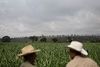
With the demand for blending E10RON95 bioethanol continuing to increase, ensuring a stable supply of raw materials such as cassava and corn for the production of ethanol bioethanol for blending remains a major challenge, requiring comprehensive solutions to overcome it.
The raw material supply area is not yet stable.
According to the Vietnam Biofuel Association, there are currently 6 fuel ethanol production plants nationwide with a total designed capacity of approximately 600,000 m³/year. If operating at 100% capacity, these 6 plants could meet about 40% of the demand for blending E10RON95 bioethanol. However, ensuring a sufficient supply of raw materials for these ethanol production plants to operate at 100% capacity remains a significant challenge.
In reality, most of the ethanol produced domestically is currently derived from cassava, a raw material with limited reserves and low yield, leading to high production costs.
Associate Professor Dr. Chu Tien Quang, former Head of the Rural Development Policy Department (Central Institute for Economic Management Research), stated that in Vietnam, the area planted with cassava is gradually shrinking due to declining yields, rapid soil degradation, and environmental impacts. Furthermore, due to scattered planting and lack of mechanization, cassava yields in Vietnam remain low, and harvesting costs are high. Farmers also lack the motivation to plant cassava due to low purchase prices and the absence of stable guaranteed purchase contracts.
Sharing this view, Mr. Nguyen Tri Ngoc, Vice President and General Secretary of the Vietnam General Association of Agriculture and Rural Development, stated that the development of cassava cultivation linked to raw material areas for ethanol production has been implemented for many years. However, to ensure sustainability, appropriate policies and technical procedures are needed, as cassava is both a valuable raw material for biofuel production and poses a potential risk of over-exploitation of the environment.
From a business perspective, Mr. Pham Van Tuan, Director of Nha Xanh Vietnam Co., Ltd., stated that the company's ethanol production raw materials currently mainly come from cassava and corn; cassava is purchased entirely domestically through traders and agricultural businesses that buy directly from farmers. For corn, the company uses both domestic sources and imports from South American markets such as Argentina and Brazil, as well as from the United States.
According to Mr. Tuan, corn has a more readily available supply and more stable quality in terms of starch content, impurities, and technical indicators for ethanol production, while cassava has a very clear seasonal nature; during the season, the supply is abundant and the price is low, but after the season, the price increases quite sharply.
To mitigate supply risks, businesses are adopting a flexible strategy in raw material selection. Additionally, with domestic cassava sources, businesses need to proactively purchase and stockpile for the following months to avoid shortages when the market fluctuates.
Building a supply chain that includes cultivation, processing, and consumption.
To sustainably develop the raw material area, building a close linkage chain between farmers - cooperatives - processing enterprises is crucial. In this chain, enterprises must guarantee the purchase and ensure sufficiently attractive prices for the raw material area to be sustainable, Associate Professor Dr. Chu Tien Quang pointed out.
Similarly, Mr. Nguyen Tri Ngoc proposed that farmers should be placed as the main actors in the process of developing raw material areas, provided that stable income is guaranteed per unit area.
According to Do Van Tuan, Chairman of the Vietnam Biofuel Association, it takes several years to establish an ethanol production industry. In Vietnam, the interconnectedness of the ethanol supply chain will be the driving force to promote ethanol production. In fact, Thanh Cong Sugar Company has built large-scale sugarcane plantations, turning sugarcane farmers into small "shareholders" or factory workers, thus reassuring farmers to invest in plantations and technology, and gradually improve productivity. This is also a common model in ethanol production in the US – where corn farmers have shares in ethanol factories, thereby providing a stable supply of raw materials for ethanol producers with the world's largest production volume.
Based on practical experience in production, the Director of Nha Xanh Vietnam Co., Ltd. believes that to promote the sustainable development of the biofuel industry, more supportive policies and mechanisms are needed. Accordingly, the State needs to clearly plan key raw material areas for growing corn and cassava to supply ethanol plants, while investing in transportation and irrigation infrastructure to reduce logistics and procurement costs.
In addition, the government should consider exempting or reducing corporate income tax for 5-10 years for ethanol production projects to encourage long-term investment. Regarding the current 5% import tax on ethanol, businesses hope this rate will be maintained to provide reasonable protection for domestic production.
Along with building supply chains, utilizing existing agricultural by-products such as bran, straw, and corn cobs should also be considered an important solution in ensuring the supply of raw materials for ethanol production. This is because it reduces pollution, avoids waste, and is much less costly than planning new planting areas, said Associate Professor Dr. Chu Tien Quang.
Source: Vietnam.vn
Các tin khác
- U.S. to Impose Duties on Mexican, Thai, Vietnamese Chassis (03/06/2026)
- Mexican sugar producers push to scrap U.S. import quotas (03/06/2026)
- Japan launched an anti-dumping investigation into flat steel imports from three countries (03/06/2026)
- Eurochem challenges anti-dumping duties in the EU (03/06/2026)
- Pangasius prices in Viet Nam surge due to high export demand (03/06/2026)