Home
Home
 About Us



Brussels Shoe Silliness
19/10/2009 12:00
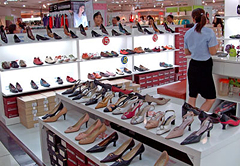
Brussels' last extension of antidumping duties on shoes from China and Vietnam in 2008 raised prices for consumers at a time when food- and fuel-price rises were in the news. Now the pols are considering yet another extension of those duties, while consumers and businesses are reeling from the global economic slowdown. From dumb to dumber.
At issue are the duties on Chinese and Vietnamese shoes, of 16.5% and 10% respectively, which were first imposed in 2006 for two years. Just before the expiry date, the Commission effectively extended the duties by launching a policy review. The Commission now has recommended letting the duties run for another 15 months. EU member states will vote on the measure next month.
The good news is that 15 of the 27 member states appear to understand this is a bad idea. Northern European free traders like Britain and the Netherlands have always been skeptical of the shoe case. Meanwhile, the past year also has seen support for the duties eroding within member states like Italy whose governments still champion the measure. Witness Italian fashion house Diesel, which now opposes the duties on the grounds that it can't get high-enough quality workmanship at home in Italy anymore, as production director Rudy Pagiotto told the Journal last week.
Such companies are living examples of how out of touch with economic reality EU antidumping policy is. The duties have been snaring a lot of shoes that are designed and marketed by EU companies in the EU—two high-value activities that create well-paying jobs and add to GDP—and are merely manufactured abroad. For these companies, manufacturing in Europe is simply uneconomical, one reason the duties on Chinese and Vietnamese shoes have mainly shifted production to the likes of Indonesia and Thailand instead of bringing it back to the EU.
Nonetheless, Brussels has collected about €800 million ($1.2 billion) in shoe duties since 2006. The Commission claims consumers haven't seen much impact in retail prices. Even if that's true, it's only because European importers paying the duties, European companies marketing and distributing the shoes, and European retailers selling them have all absorbed some of the costs—leaving them with less cash available for little things like job-creating business investments.
Higher prices are only one possible cost to consumers: When the Commission's review started a year ago, there were already anecdotal reports that some companies were switching to lower-quality inputs to make up their losses on the tariffs, leaving shoe buyers paying the same amount for "less" shoe.
While the consensus on the futility of these duties is growing, the politicking to keep them in place still will be fierce, especially considering strong support from some small but vocal European manufacturers. These companies struggle to make shoes as efficiently as plants in China or Vietnam. They say extending the duties will shield them from "unfair" competition long enough to invest in better technologies to boost their competitiveness.
The danger is that supporters could make backroom deals with just enough duty-skeptic member states to keep the trade protections in place another 15 months. Doing so would be a mistake. Antidumping duties on shoes have already done enough damage to Europe. It's time to dump them before they do any more.
At issue are the duties on Chinese and Vietnamese shoes, of 16.5% and 10% respectively, which were first imposed in 2006 for two years. Just before the expiry date, the Commission effectively extended the duties by launching a policy review. The Commission now has recommended letting the duties run for another 15 months. EU member states will vote on the measure next month.
The good news is that 15 of the 27 member states appear to understand this is a bad idea. Northern European free traders like Britain and the Netherlands have always been skeptical of the shoe case. Meanwhile, the past year also has seen support for the duties eroding within member states like Italy whose governments still champion the measure. Witness Italian fashion house Diesel, which now opposes the duties on the grounds that it can't get high-enough quality workmanship at home in Italy anymore, as production director Rudy Pagiotto told the Journal last week.
Such companies are living examples of how out of touch with economic reality EU antidumping policy is. The duties have been snaring a lot of shoes that are designed and marketed by EU companies in the EU—two high-value activities that create well-paying jobs and add to GDP—and are merely manufactured abroad. For these companies, manufacturing in Europe is simply uneconomical, one reason the duties on Chinese and Vietnamese shoes have mainly shifted production to the likes of Indonesia and Thailand instead of bringing it back to the EU.
Nonetheless, Brussels has collected about €800 million ($1.2 billion) in shoe duties since 2006. The Commission claims consumers haven't seen much impact in retail prices. Even if that's true, it's only because European importers paying the duties, European companies marketing and distributing the shoes, and European retailers selling them have all absorbed some of the costs—leaving them with less cash available for little things like job-creating business investments.
Higher prices are only one possible cost to consumers: When the Commission's review started a year ago, there were already anecdotal reports that some companies were switching to lower-quality inputs to make up their losses on the tariffs, leaving shoe buyers paying the same amount for "less" shoe.
While the consensus on the futility of these duties is growing, the politicking to keep them in place still will be fierce, especially considering strong support from some small but vocal European manufacturers. These companies struggle to make shoes as efficiently as plants in China or Vietnam. They say extending the duties will shield them from "unfair" competition long enough to invest in better technologies to boost their competitiveness.
The danger is that supporters could make backroom deals with just enough duty-skeptic member states to keep the trade protections in place another 15 months. Doing so would be a mistake. Antidumping duties on shoes have already done enough damage to Europe. It's time to dump them before they do any more.
OCTOBER 14, 2009, 3:35 P.M. ET
Source: online.wsj.com
Source: online.wsj.com
Các tin khác
- Rising global shipping costs put pressure on Viet Nam’s seafood exporters (22/06/2026)
- India likely to retain anti-dumping duties on Bangladeshi jute products (22/06/2026)
- Japan slaps anti-dumping duties on Chinese, Taiwanese steel (22/06/2026)
- India initiates anti-dumping probe against a Chinese, Japanese chemical used in tyre, rubber items (22/06/2026)
- Reasons why the US continues to suspend customs clearance for Vietnamese trailers (22/06/2026)