Home
Home
 About Us



BRAZIL: Possible Anti-dumping Measures In US And EU Worry Local Steelmakers
26/07/2017 12:00
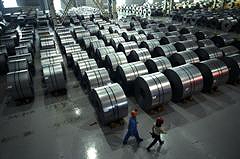
(RTTNews) - The Brazilian steel sector is worried about potential new barriers to local steel products in the United States and the European Union (EU).
According to the Brazilian Steel Institute (IABr) and the Brazilian Foreign Trade Association (AEB), possible anti-dumping measures could further hamper an industry that relies on exports to grow, since the economic recession in the last few years has hurt the domestic demand for steel.
The most recent data show that from January to May crude steel output in Brazil reached 14.1 million tons, up 14.2% from the same period in 2016, but domestic sales were at 6.6 million tons, down by 2.2%.
According to IABr's chairman, Marco Polo de Mello Lopes, the Brazilian domestic steel market "does not exist in this very moment" and has not yet managed to recover.
Steelmakers currently work with 40% of idle capacity and increasingly direct their production to exports. The margins of foreign sales, however, are smaller due to taxes and have been diminishing due to the recent US dollar devaluation compared to the Brazilian real.
"Certainly, the domestic industry would be harmed by new market closures. Brazil does not have to be under the Section 232's procedures in the United States," he said, mentioning the legal tool that allows the US president to impose tariffs and trade remedies to a particular product to protect national security.
The U.S. Secretary of Commerce initiated a Section 232 investigation on steel imports on April 19, arguing that the large volumes of excess global steel production and capacity distort the global steel markets.
Last week, on a visit to France, the U.S. President Donald Trump said he plans to impose new import taxes on steel products. By law, the U.S. Secretary of Commerce has 270 days to present the Department's findings and recommendations to the President, who would have to decide on the matter within 90 days.
"The US industry is not self-sufficient in steel and needs to be complemented," Lopes said. He added that the U.S .wants to bar mainly products from China, but may end up affecting other countries. The IABR chairman points out that the U.S. has a surplus in the trade balance with Brazil and there would be no need to hamper Brazilian imports.
The United States has been imposing tariffs on some countries since last year. In March 2016, the Department of Commerce decided to impose a 38.93% tariff on Brazil's cold rolled steel products and also charged rates for products from China, India, Japan, South Korea, Russia and the United Kingdom.
In addition to the U.S., the EU can also impose barriers to steel imported from Brazil, Iran, Russia, and Ukraine. The case is under review by the European Commission. According to the Reuters news agency, tariffs on hot rolled steel in the country could reach up to 33%.
The solution to avoid a global protectionist wave of measures against steel is to launch negotiations on the steel output surplus, mainly in China, in forums such as the G20. Even after adjustments, China's steel production capacity is huge and continues to grow, flooding the other countries. The Asian leader in the sector produced 73.2 million crude steel in June, up 5.7% year-on-year.
"Efforts are being made to move forward within the G20s framework to try to establish a policy that will lead to a surplus reduction so that it would be possible to make progress towards greater normality in the international market" without the need for countries to increase barriers, said the IABr's chairman.
Another alternative to mitigate increased protectionism regarding steel products is the increase in "Reintegra" rate from 2% to 5%. Created by the government, Reintegra provides a partial refund of taxes paid by exporting companies. By increasing the rate, exports would be more profitable.
According to AEB chairman, Jos? Augusto de Castro, who defends Reintegra's tax rebate increase, it is unlikely for the government to increase the rate now. Last week, stating the need to reduce the public account's deficit, the Brazilian government raised rates on fuels.
"We have talked to several ministers, and they all tell us that they will talk to [President Michel] Temer. They admit Reintegra's importance - except the Treasury, which has analyzed the case in a purely fiscal manner," he said in an interview. According to him, government losses with Reintegra's increase would be compensated by an increase in revenues by increasing exports, which he claims would happen.
According to Castro, AEB intends to continue discussions on the issue with the government at the National Foreign Trade Meeting (Enaex) on August 9 and 10, for which President Temer was invited but has not yet confirmed attendance.
According to the Brazilian Steel Institute (IABr) and the Brazilian Foreign Trade Association (AEB), possible anti-dumping measures could further hamper an industry that relies on exports to grow, since the economic recession in the last few years has hurt the domestic demand for steel.
The most recent data show that from January to May crude steel output in Brazil reached 14.1 million tons, up 14.2% from the same period in 2016, but domestic sales were at 6.6 million tons, down by 2.2%.
According to IABr's chairman, Marco Polo de Mello Lopes, the Brazilian domestic steel market "does not exist in this very moment" and has not yet managed to recover.
Steelmakers currently work with 40% of idle capacity and increasingly direct their production to exports. The margins of foreign sales, however, are smaller due to taxes and have been diminishing due to the recent US dollar devaluation compared to the Brazilian real.
"Certainly, the domestic industry would be harmed by new market closures. Brazil does not have to be under the Section 232's procedures in the United States," he said, mentioning the legal tool that allows the US president to impose tariffs and trade remedies to a particular product to protect national security.
The U.S. Secretary of Commerce initiated a Section 232 investigation on steel imports on April 19, arguing that the large volumes of excess global steel production and capacity distort the global steel markets.
Last week, on a visit to France, the U.S. President Donald Trump said he plans to impose new import taxes on steel products. By law, the U.S. Secretary of Commerce has 270 days to present the Department's findings and recommendations to the President, who would have to decide on the matter within 90 days.
"The US industry is not self-sufficient in steel and needs to be complemented," Lopes said. He added that the U.S .wants to bar mainly products from China, but may end up affecting other countries. The IABR chairman points out that the U.S. has a surplus in the trade balance with Brazil and there would be no need to hamper Brazilian imports.
The United States has been imposing tariffs on some countries since last year. In March 2016, the Department of Commerce decided to impose a 38.93% tariff on Brazil's cold rolled steel products and also charged rates for products from China, India, Japan, South Korea, Russia and the United Kingdom.
In addition to the U.S., the EU can also impose barriers to steel imported from Brazil, Iran, Russia, and Ukraine. The case is under review by the European Commission. According to the Reuters news agency, tariffs on hot rolled steel in the country could reach up to 33%.
The solution to avoid a global protectionist wave of measures against steel is to launch negotiations on the steel output surplus, mainly in China, in forums such as the G20. Even after adjustments, China's steel production capacity is huge and continues to grow, flooding the other countries. The Asian leader in the sector produced 73.2 million crude steel in June, up 5.7% year-on-year.
"Efforts are being made to move forward within the G20s framework to try to establish a policy that will lead to a surplus reduction so that it would be possible to make progress towards greater normality in the international market" without the need for countries to increase barriers, said the IABr's chairman.
Another alternative to mitigate increased protectionism regarding steel products is the increase in "Reintegra" rate from 2% to 5%. Created by the government, Reintegra provides a partial refund of taxes paid by exporting companies. By increasing the rate, exports would be more profitable.
According to AEB chairman, Jos? Augusto de Castro, who defends Reintegra's tax rebate increase, it is unlikely for the government to increase the rate now. Last week, stating the need to reduce the public account's deficit, the Brazilian government raised rates on fuels.
"We have talked to several ministers, and they all tell us that they will talk to [President Michel] Temer. They admit Reintegra's importance - except the Treasury, which has analyzed the case in a purely fiscal manner," he said in an interview. According to him, government losses with Reintegra's increase would be compensated by an increase in revenues by increasing exports, which he claims would happen.
According to Castro, AEB intends to continue discussions on the issue with the government at the National Foreign Trade Meeting (Enaex) on August 9 and 10, for which President Temer was invited but has not yet confirmed attendance.
Source: Business Insider
Các tin khác
- New-generation FTAs open wider export opportunities to Middle East and South Asia (15/06/2026)
- Updated regulations on foreign trade management and import quotas (15/06/2026)
- Mandatory traceability for high-risk goods from July 1st: What should businesses prepare for? (15/06/2026)
- Tariff pressure is forcing businesses to restructure in order to adapt. (15/06/2026)
- Coffee Citizens model aims to lift Vietnamese value chain (15/06/2026)