Home
Home
 About Us


Brazil makes first antidumping ruling under new guidelines
22/09/2014 12:00
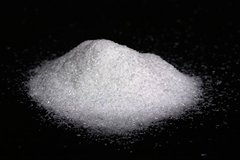
Brazil’s chamber of foreign trade, CAMEX, has imposed an antidumping duty on imports of a phosphate additive used in baking – its first resolution since a new decree passed last year strengthened the country’s trade remedies.
CAMEX imposed the duty on exporters from China, the US and Canada, as well as some Brazilian importers. It passed the resolution on future imports of sodium acid pyrophosphate on 8 August.
US phosphate producer Innophos and China’s Thermphos Food Additive received two of the lowest duties and were advised by Brazil’sTozziniFreire Advogados and Barretto Ferreira e Brancher respectively. Another Chinese exporter, Hubei Xingfa Chemicals Group, was advised by Felsberg Advogados, while a Brazilian importer, Ashland subsidiary ISP do Brasil, was advised by Demarest Advogados. Other companies involved in the procedure included ICL Brasil, J Macêdo and Makeni Comércio e Indústria de Produtos Químicos, which relied on in-house counsel.
TozziniFreire partner Vera Kanas explains that the resolution is the first since antidumping decree 8.058/2013 was passed in July last year, “dramatically changing” the antidumping procedure in Brazil. “We had the opportunity of working under a complex new set of rules, and we could check how the authority applied, in practice, several of these new rules,” she adds.
Innophos’s Canadian and US operations were initially subject to a high dumping margin based on the facts available in a preliminary determination by trade authorities, which was made mandatory by the new decree. This was eventually reduced after the company supplied its own figures in accordance with the new guidelines.
The antidumping decree aims to increase transparency in the investigation process and reduces the timescale of investigations to 10 months. It also introduced a procedure whereby trade authorities can select importers responsible for the bulk of imports of a certain product to participate in the case, before any exporter could take part.
Barretto Ferreira’s Carla Amaral de Andrade Junqueira Canero says her firm is satisfied with the result: “In the end the antidumping duty was applied, as we assumed it would be, but we managed to have the lowest margin of all the Chinese importers applied to our client.”
However, the ruling was not well received by all parties. According to Felsberg partner Fernanda Sayeg, her client was treated unfairly because adjustments to Hubei Xingfa’s normal value and export price were different from those made to US exporters and meant the company received an unfairly high dumping margin of US$851 per tonne. By comparison, Innophos’s US and Canadian imports were awarded a duty of US$418 and US$546 per tonne respectively, while Thermphos was given a duty of US$684.
According to Brazil’s antidumping legislation, authorities will not consider figures provided by exporters from non-market economy countries, such as China, and the normal value and export price adjustments should be calculated based on figures provided from market economy exporters.
Source: BKBG.com.br
Các tin khác
- Viet Nam's steel industry takes another step forward in the anti-dumping lawsuit against Chinese goods (17/06/2026)
- Türkiye launches anti-dumping probe into car tire imports (17/06/2026)
- TRA proposes extending anti-dumping measure on wire rod (17/06/2026)
- Ample room remains for Viet Nam–India logistics cooperation (17/06/2026)
- Local authorities to directly issue fragrant rice export certificates from July 2026 (17/06/2026)