Home
Home
 About Us



Australia accuses China of breaching free trade deal by restricting imports
10/12/2020 12:00
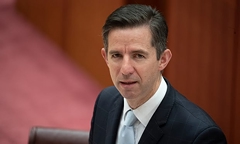
Trade minister Simon Birmingham says ‘targeted nature’ of China’s measures raise concern about its adherence to trade deal and WTO obligations
China appears to be breaching its trade deal with Australia by taking a series of “disruptive and restrictive measures” against Australian exports, the Morrison government has said.
As concerns grow among Australian exporters about the impact of a widening range of actions, the trade minister, Simon Birmingham, told the Senate on Wednesday all dispute settlement options were on the table.
Chinese authorities suspended imports from a sixth Australian red meat processing plant this week, as Australian wine exporters scrambled to find alternative markets after being hit with hefty tariffs.
China has generally defended its trade measures on technical grounds and has denied engaging in a politically motivated campaign of “targeting” of Australian exports, but it has argued it is up to the Australian side to take concrete steps that would
allow high-level dialogue to resume.
Birmingham was required to attend the Senate on Wednesday to make an explanation about the China-Australia free trade agreement (Chafta) after the upper house passed an order to produce documents last week.
Birmingham, who is expected to lose the trade portfolio in a forthcoming cabinet reshuffle because he has been promoted to finance, said Chafta had increased access to the Chinese market and delivered a round of tariff cuts.
“However, the Australian government has become increasingly concerned about a series of trade disruptive and restrictive measures implemented by the Chinese government on a wide range of goods imported from [Australia] and that these disruptions have increased significantly in recent months,” he said.
“In the view of the Australian government, the targeted nature of Chinese government measures on Australian goods raises concerns about China’s adherence to the letter and spirit of both its Chafta and its [World Trade Organization] obligations.”
Birmingham said Australia had raised these concerns with Chinese officials on multiple occasions in both Canberra and Beijing and had asked the Chinese government to engage with them at ministerial levels.
Australia had also raised concerns about the Chinese government’s measures in WTO forums, including most recently at a meeting of the WTO committee meeting on trade and goods on 25 November, he said. Those concerns were about barley, wine, meat and dairy establishments, live seafood exports, logs, timber, coal and cotton.
Birmingham said Chafta included a structure of regular meetings that were meant to create an ongoing dialogue between the two countries, but after a “reasonable start” in bilateral engagement, China’s lack of engagement in recent years had prevented the use of these structures.
He said Australia would “continue to raise issues of apparent potential or discriminatory actions targeted against Australia” and was “considering all dispute settlement options in order to support our exporters and to ensure they can compete on fair terms”.
At the beginning of this month, Birmingham gave his strongest signal yet that the government was likely to challenge the hefty tariffs on barley through WTO processes – a stance backed by Labor.
China has defended the barley tariffs, saying they are based on investigation into government subsidies and the dumping of goods into China at artificially low prices – claims contested by Australia.
The independent senator Rex Patrick, who initiated the order to produce documents on Chafta, welcomed Birmingham’s speech, although he said it still reflected “wishful thinking” about China’s engagement with the world.
“It is a good thing that, after much delay, the minister now acknowledges the clear pattern of China’s action in what is a coercive trade campaign,” Patrick told the Senate.
“Both the Coalition and Labor were naive in negotiating a free trade agreement with a regime with no respect for the rule of law.”
Advocates of Chafta note the total value of Australian goods and services exports to China has nearly doubled from $87bn in 2015 to $169bn last year.
Labor’s trade spokesperson, Madeleine King, told Guardian Australia last week the government should not walk away from Chafta, arguing there were “quite a range of products that go into China and we wouldn’t want to put that in jeopardy, even though right now a lot of them are clearly part of the trade moves by China”.
But Dr Jeffrey Wilson, a research director of the Perth USAsia Centre, has argued the free trade agreement inked by the Abbott government in 2015 was “not worth the paper it’s written on today” in light of the actions taken by Beijing.
Beijing has repeatedly pointed to Australia’s own anti-dumping investigations against Chinese products. Last month China’s foreign ministry argued it was Australia that had undermined cooperation and open trading principles by blocking Chinese investment projects on “ambiguous and unfounded” national security concerns.
Against the backdrop of increasing tensions between the two countries, Greg Moriarty, the head of Australia’s defence department, on Tuesday evening accused China of acting in a “disturbing” manner and complicating Australia’s security environment by building military infrastructure in disputed parts of the South China Sea.
China appears to be breaching its trade deal with Australia by taking a series of “disruptive and restrictive measures” against Australian exports, the Morrison government has said.
As concerns grow among Australian exporters about the impact of a widening range of actions, the trade minister, Simon Birmingham, told the Senate on Wednesday all dispute settlement options were on the table.
Chinese authorities suspended imports from a sixth Australian red meat processing plant this week, as Australian wine exporters scrambled to find alternative markets after being hit with hefty tariffs.
China has generally defended its trade measures on technical grounds and has denied engaging in a politically motivated campaign of “targeting” of Australian exports, but it has argued it is up to the Australian side to take concrete steps that would
allow high-level dialogue to resume.
Birmingham was required to attend the Senate on Wednesday to make an explanation about the China-Australia free trade agreement (Chafta) after the upper house passed an order to produce documents last week.
Birmingham, who is expected to lose the trade portfolio in a forthcoming cabinet reshuffle because he has been promoted to finance, said Chafta had increased access to the Chinese market and delivered a round of tariff cuts.
“However, the Australian government has become increasingly concerned about a series of trade disruptive and restrictive measures implemented by the Chinese government on a wide range of goods imported from [Australia] and that these disruptions have increased significantly in recent months,” he said.
“In the view of the Australian government, the targeted nature of Chinese government measures on Australian goods raises concerns about China’s adherence to the letter and spirit of both its Chafta and its [World Trade Organization] obligations.”
Birmingham said Australia had raised these concerns with Chinese officials on multiple occasions in both Canberra and Beijing and had asked the Chinese government to engage with them at ministerial levels.
Australia had also raised concerns about the Chinese government’s measures in WTO forums, including most recently at a meeting of the WTO committee meeting on trade and goods on 25 November, he said. Those concerns were about barley, wine, meat and dairy establishments, live seafood exports, logs, timber, coal and cotton.
Birmingham said Chafta included a structure of regular meetings that were meant to create an ongoing dialogue between the two countries, but after a “reasonable start” in bilateral engagement, China’s lack of engagement in recent years had prevented the use of these structures.
He said Australia would “continue to raise issues of apparent potential or discriminatory actions targeted against Australia” and was “considering all dispute settlement options in order to support our exporters and to ensure they can compete on fair terms”.
At the beginning of this month, Birmingham gave his strongest signal yet that the government was likely to challenge the hefty tariffs on barley through WTO processes – a stance backed by Labor.
China has defended the barley tariffs, saying they are based on investigation into government subsidies and the dumping of goods into China at artificially low prices – claims contested by Australia.
The independent senator Rex Patrick, who initiated the order to produce documents on Chafta, welcomed Birmingham’s speech, although he said it still reflected “wishful thinking” about China’s engagement with the world.
“It is a good thing that, after much delay, the minister now acknowledges the clear pattern of China’s action in what is a coercive trade campaign,” Patrick told the Senate.
“Both the Coalition and Labor were naive in negotiating a free trade agreement with a regime with no respect for the rule of law.”
Advocates of Chafta note the total value of Australian goods and services exports to China has nearly doubled from $87bn in 2015 to $169bn last year.
Labor’s trade spokesperson, Madeleine King, told Guardian Australia last week the government should not walk away from Chafta, arguing there were “quite a range of products that go into China and we wouldn’t want to put that in jeopardy, even though right now a lot of them are clearly part of the trade moves by China”.
But Dr Jeffrey Wilson, a research director of the Perth USAsia Centre, has argued the free trade agreement inked by the Abbott government in 2015 was “not worth the paper it’s written on today” in light of the actions taken by Beijing.
Beijing has repeatedly pointed to Australia’s own anti-dumping investigations against Chinese products. Last month China’s foreign ministry argued it was Australia that had undermined cooperation and open trading principles by blocking Chinese investment projects on “ambiguous and unfounded” national security concerns.
Against the backdrop of increasing tensions between the two countries, Greg Moriarty, the head of Australia’s defence department, on Tuesday evening accused China of acting in a “disturbing” manner and complicating Australia’s security environment by building military infrastructure in disputed parts of the South China Sea.
Source: The Guardian
Các tin khác
- Anti-dumping measures on steel remained a common tool in 2025 – OECD (08/06/2026)
- Exporters urged to enhance traceability in response to proposed US tariffs (08/06/2026)
- Viet Nam’s early-season fresh lychees win over the US market (08/06/2026)
- New challenges for export businesses (08/06/2026)
- Tariff risks push Viet Nam to post record deficit (08/06/2026)