Home
Home
 About Us



Asian shoe test for EU trade commissioner
13/10/2009 12:00
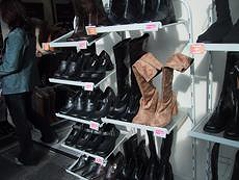
Global footwear producers and leading European retailers have condemned plans to extend anti-dumping duties on European Union imports of Chinese and Vietnamese shoes by at least 15 months.
“Prices have increased by on average at least 10 per cent since the imposition of the duties in 2006,” the European Footwear Alliance, representing manufacturers such as Nike, Adidas and Timberland, said in a statement.
“EFA members have paid €800m ($1.18bn, £738m) in anti-dumping duties in the last three-and-a-half years and we fail to understand who has benefited.”
The recommendation by Baroness Ashton, Europe’s trade commissioner, marks a key turn in one of the most contentious trade disputes to come before the European Commission in years. It will touch off a frantic round of debate between the Commission, member states and the footwear industry before a final decision, expected next month.
The baroness was swayed by findings that the duties, first imposed in 2006 by her predecessor, Lord Mandelson, had helped to stabilise market share for ailing European footwear makers, according to a person familiar with the investigation,
The Commission concluded the duties had had little impact on consumers, pushing up average shoe prices by €1.50. The duties amount to 16.5 per cent for Chinese footwear and 10 per cent for those from Vietnam. The decision to extend the duties or allow them to lapse is the most fraught of Lady Ashton’s short tenure, and is expected to bear on whether or not she is reappointed to the next Commission.
The 2006 decision proved divisive among the 27-member EU and its €12bn -a-year leather processing industry. Wednesday’s recommendation pits tariff advocates, who say the duties have helped to stabilise the market share of European producers while pushing up consumer prices only slightly, against big retailers and brands such as Clarks and Adidas, who say Europeans do not want the low-paid work of making shoes and they must make them elsewhere to stay competitive.
It could also add further tension to the EU’s trade relations with China.
The 15-month term suggested by Lady Ashton would in effect cover two seasons of shoe imports, based on the industry’s ordering schedule.
The Commission has sought to play down the political dimensions of the case, arguing that its freedom to act is limited by trade law. It has rejected comparisons of the case to the US decision to impose duties on Chinese tyres.
European producers’ share of the EU market fell from 65 per cent to 40 per cent between 2001 and 2005, mostly because of inroads by China and Vietnam, according to EU statistics.
Free-trade advocates say an extension could invite accusations that the EU practises the protectionism it complains about elsewhere.
Many trade experts were uneasy on learning that Lady Ashton, then leader of the House of Lords, had been nominated to replace Lord Mandelson. They felt she lacked his expertise, but the consensus now is that she has done well in a dismal trade environment in which the EU has generally avoided a slide into protectionism.
Copyright The Financial Times Limited 2009. You may share using our article tools. Please don't cut articles from FT.com and redistribute by email or post to the web.
“Prices have increased by on average at least 10 per cent since the imposition of the duties in 2006,” the European Footwear Alliance, representing manufacturers such as Nike, Adidas and Timberland, said in a statement.
“EFA members have paid €800m ($1.18bn, £738m) in anti-dumping duties in the last three-and-a-half years and we fail to understand who has benefited.”
The recommendation by Baroness Ashton, Europe’s trade commissioner, marks a key turn in one of the most contentious trade disputes to come before the European Commission in years. It will touch off a frantic round of debate between the Commission, member states and the footwear industry before a final decision, expected next month.
The baroness was swayed by findings that the duties, first imposed in 2006 by her predecessor, Lord Mandelson, had helped to stabilise market share for ailing European footwear makers, according to a person familiar with the investigation,
The Commission concluded the duties had had little impact on consumers, pushing up average shoe prices by €1.50. The duties amount to 16.5 per cent for Chinese footwear and 10 per cent for those from Vietnam. The decision to extend the duties or allow them to lapse is the most fraught of Lady Ashton’s short tenure, and is expected to bear on whether or not she is reappointed to the next Commission.
The 2006 decision proved divisive among the 27-member EU and its €12bn -a-year leather processing industry. Wednesday’s recommendation pits tariff advocates, who say the duties have helped to stabilise the market share of European producers while pushing up consumer prices only slightly, against big retailers and brands such as Clarks and Adidas, who say Europeans do not want the low-paid work of making shoes and they must make them elsewhere to stay competitive.
It could also add further tension to the EU’s trade relations with China.
The 15-month term suggested by Lady Ashton would in effect cover two seasons of shoe imports, based on the industry’s ordering schedule.
The Commission has sought to play down the political dimensions of the case, arguing that its freedom to act is limited by trade law. It has rejected comparisons of the case to the US decision to impose duties on Chinese tyres.
European producers’ share of the EU market fell from 65 per cent to 40 per cent between 2001 and 2005, mostly because of inroads by China and Vietnam, according to EU statistics.
Free-trade advocates say an extension could invite accusations that the EU practises the protectionism it complains about elsewhere.
Many trade experts were uneasy on learning that Lady Ashton, then leader of the House of Lords, had been nominated to replace Lord Mandelson. They felt she lacked his expertise, but the consensus now is that she has done well in a dismal trade environment in which the EU has generally avoided a slide into protectionism.
Copyright The Financial Times Limited 2009. You may share using our article tools. Please don't cut articles from FT.com and redistribute by email or post to the web.
By Joshua Chaffinin Brussels and Reuters
Published: October 7 2009 23:32 | Last updated: October 7 2009 23:32
Source: www.ft.com
Published: October 7 2009 23:32 | Last updated: October 7 2009 23:32
Source: www.ft.com
Các tin khác
- Rising global shipping costs put pressure on Viet Nam’s seafood exporters (22/06/2026)
- India likely to retain anti-dumping duties on Bangladeshi jute products (22/06/2026)
- Japan slaps anti-dumping duties on Chinese, Taiwanese steel (22/06/2026)
- India initiates anti-dumping probe against a Chinese, Japanese chemical used in tyre, rubber items (22/06/2026)
- Reasons why the US continues to suspend customs clearance for Vietnamese trailers (22/06/2026)