Home
Home
 About Us



Asian shoe stampede presents EU with its toughest test
08/10/2009 12:00
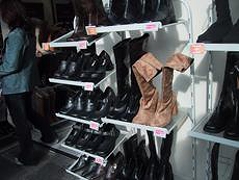
Almost a year after taking over as Europe’s trade commissioner, Baroness Ashton faces her stiffest challenge yet as she steps into a dispute involving footwear from China and Vietnam. Confronted by a surge in low-cost imports, Peter Mandelson, her predecessor, slapped duties of 16.5 percent on a variety of leather shoes from China, and 10 percent on those from Vietnam in 2006.
The decision proved divisive among the 27-member European Union and its €12bn ($17bn, £11bn)-a-year leather processing industry. It now falls to Lady Ashton to decide whether to extend the anti-dumping duties for up to five years or allow them to lapse. Last week, she submitted a draft recommendation indicating she favoured an extension. That is likely to ignite frantic bargaining between states, companies and parts of the European Commission before a decision next month.
Depending on the outcome, Lady Ashton risks being accused by Spain and Italy in particular of abandoning small-scale shoemakers beset by the economic crisis and foreign competition. During 2001-05, European producers’ share of the EU market fell to 40 percent from 65 percent, mostly due to China and Vietnam, according to Commission statistics. Tariff advocates say the duties have helped to stabilise market share for European producers while pushing up consumer prices by only €1.50 per pair of shoes.
But big retailers and brands such as Clarks and Adidas say Europeans do not want the low-paid work of making shoes, and they must make them elsewhere to remain competitive. They have been joined by free-trade advocates who say an extension could further strain trade relations with China and invite accusations that the EU practices the protectionism it complains about elsewhere.
Fredrik Erixon of the European Centre for International Political Economy, a think-tank, says: “It’s an important case ... because it’s highly political.” The dispute has come to a head just as José Manuel Barroso, Commission president, and member states, start bargaining to assemble the next Commission. Lady Ashton’s chances of returning could hinge on the outcome, say analysts. One lobbyist said: “She’s desperately trying to get reconfirmed and not muck anything up.” The Commission reiterated her pledge to “scrupulously apply the law” and evaluate all evidence. This time last year, many trade experts were uneasy on learning that Lady Ashton, then leader of the House of Lords, had been nominated to replace Lord Mandelson. They felt she lacked his expertise and profile but the consensus is she has done well in a dismal trade environment in which the EU has generally avoided the slide into protectionism many feared.
While the Doha round of world trade talks remains stalled, she has nudged forward a proposed free trade deal with South Korea against opposition from European carmakers and resolved a stubborn dispute with the US over imports of hormone-treated beef. Staffers say she stressed the need to augment tough tariff talks with diplomacywhen popular support for free trade was waning. ady Ashton said recently: “I still think we don’t do enough to get the narrative across to people about why protectionism doesn’t work, and that the often emotional response about trade meaning job losses is not countered by the economic opportunity that trade has always brought. financial times
The decision proved divisive among the 27-member European Union and its €12bn ($17bn, £11bn)-a-year leather processing industry. It now falls to Lady Ashton to decide whether to extend the anti-dumping duties for up to five years or allow them to lapse. Last week, she submitted a draft recommendation indicating she favoured an extension. That is likely to ignite frantic bargaining between states, companies and parts of the European Commission before a decision next month.
Depending on the outcome, Lady Ashton risks being accused by Spain and Italy in particular of abandoning small-scale shoemakers beset by the economic crisis and foreign competition. During 2001-05, European producers’ share of the EU market fell to 40 percent from 65 percent, mostly due to China and Vietnam, according to Commission statistics. Tariff advocates say the duties have helped to stabilise market share for European producers while pushing up consumer prices by only €1.50 per pair of shoes.
But big retailers and brands such as Clarks and Adidas say Europeans do not want the low-paid work of making shoes, and they must make them elsewhere to remain competitive. They have been joined by free-trade advocates who say an extension could further strain trade relations with China and invite accusations that the EU practices the protectionism it complains about elsewhere.
Fredrik Erixon of the European Centre for International Political Economy, a think-tank, says: “It’s an important case ... because it’s highly political.” The dispute has come to a head just as José Manuel Barroso, Commission president, and member states, start bargaining to assemble the next Commission. Lady Ashton’s chances of returning could hinge on the outcome, say analysts. One lobbyist said: “She’s desperately trying to get reconfirmed and not muck anything up.” The Commission reiterated her pledge to “scrupulously apply the law” and evaluate all evidence. This time last year, many trade experts were uneasy on learning that Lady Ashton, then leader of the House of Lords, had been nominated to replace Lord Mandelson. They felt she lacked his expertise and profile but the consensus is she has done well in a dismal trade environment in which the EU has generally avoided the slide into protectionism many feared.
While the Doha round of world trade talks remains stalled, she has nudged forward a proposed free trade deal with South Korea against opposition from European carmakers and resolved a stubborn dispute with the US over imports of hormone-treated beef. Staffers say she stressed the need to augment tough tariff talks with diplomacywhen popular support for free trade was waning. ady Ashton said recently: “I still think we don’t do enough to get the narrative across to people about why protectionism doesn’t work, and that the often emotional response about trade meaning job losses is not countered by the economic opportunity that trade has always brought. financial times
By Joshua Chaffin
Web posted at: 10/5/2009 3:24:8
AFP
Source: www.thepeninsulaqatar.com
Web posted at: 10/5/2009 3:24:8
AFP
Source: www.thepeninsulaqatar.com
Các tin khác
- Rising global shipping costs put pressure on Viet Nam’s seafood exporters (22/06/2026)
- India likely to retain anti-dumping duties on Bangladeshi jute products (22/06/2026)
- Japan slaps anti-dumping duties on Chinese, Taiwanese steel (22/06/2026)
- India initiates anti-dumping probe against a Chinese, Japanese chemical used in tyre, rubber items (22/06/2026)
- Reasons why the US continues to suspend customs clearance for Vietnamese trailers (22/06/2026)