Home
Home
 About Us


Asean Trade Needs To Leap Tall Non Tariff Barriers With a Single AEC Market
23/07/2015 12:00
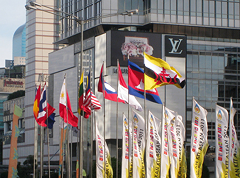
Try delivering an order of say machinery across from Singapore as a logistics hub across to Cambodia and it will soon become apparent, just what is preventing trade growing faster between European Union companies and the Association of Southeast Asian Nations (Asean).
Each country has its own customs procedures, documentations, standards, rules on country of origin so,it would mean the company shipping it across would have to fill up a set of forms and fulfill the requirements of each of the countries through which the goods pass. So say the machinery needs to be transported by land across Malaysia to Thailand and then end up in Cambodia. It means documentation and customs needs to be observed for each country. This in itself is not so bad but as the standards and procedures differ for each country, the amount of paperwork and time taken is considerable, adding to the expense of delivering the good to the final customer.
This sort of lack of harmonisation according to a panel on EU Asean business was the biggest barrier to increasing trade. The panel comprised the ambassador to Asean from EU, Dr Michael Pulch, Chris Humphrey, Executive Director, EU-Asean business council, Ms Angelia Chew, KPMG partner and MsSyetarnHansakul, a senior economist from Deutsche Bank research
Indeed more than one of the speakers on the panel last week Thursday during a press conference, pointed out that European Union companies, are often surprised in this part of the world that dealing with Asean trade is like dealing with 10 separate countries. Within the European Union, they are used to a far greater economy of scale, as a common market for goods has been in place for far longer. Hence while there are many European countries, moving goods across borders has become considerably easier.
The lack of a common payment platform and no common credit bureau in Asean does not help. While Asean may be not even dreaming of a currency union, there can surely be far more done in terms of improving common banking facilities across borders. The current stage of banking integration is slow at best. (See: AEC and banking integration: Fintech shows the way ) This,according to Chris Humphrey would benefit not just the large companies wanting to trade across Asean borders, but the small and medium sized enterprises which have fewer resources and lack the scale of larger economies. For a small company located in say, Medan, he said, being able to move goods quickly and efficiently to Ipoh could then become a reality.
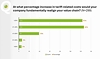
So, while tariff barriers have to a large extent come down for a good many sectors, non tariff barriers are plentiful. The graph below shows the view from the EU business council on the non tariff barriers that are in force at the start of this year. This excludes the ones for which initiatives have started but are not yet in force. The momentum to put up non trade barriers is shown by how many such initiatives are already underway. This is particularly acute for technical barriers to trade where the number of such initiatives is over a thousand compared to the 90 already in force. Photo sanitary and sanitary conditions are next highest at close to 500 initiatives.
The EU Asean business council launched its position paper on market access in Asean last week Thursday in Singapore. The European Union also published at the same time its latest EU Asean trade and investment statistics. The European Union, is Asean’s second most important trading partner after China accounting for 13 per cent of Asean’s trade in goods with the world and with the trade being very much in Asean’sfavour.
Each country has its own customs procedures, documentations, standards, rules on country of origin so,it would mean the company shipping it across would have to fill up a set of forms and fulfill the requirements of each of the countries through which the goods pass. So say the machinery needs to be transported by land across Malaysia to Thailand and then end up in Cambodia. It means documentation and customs needs to be observed for each country. This in itself is not so bad but as the standards and procedures differ for each country, the amount of paperwork and time taken is considerable, adding to the expense of delivering the good to the final customer.
This sort of lack of harmonisation according to a panel on EU Asean business was the biggest barrier to increasing trade. The panel comprised the ambassador to Asean from EU, Dr Michael Pulch, Chris Humphrey, Executive Director, EU-Asean business council, Ms Angelia Chew, KPMG partner and MsSyetarnHansakul, a senior economist from Deutsche Bank research
Indeed more than one of the speakers on the panel last week Thursday during a press conference, pointed out that European Union companies, are often surprised in this part of the world that dealing with Asean trade is like dealing with 10 separate countries. Within the European Union, they are used to a far greater economy of scale, as a common market for goods has been in place for far longer. Hence while there are many European countries, moving goods across borders has become considerably easier.
The lack of a common payment platform and no common credit bureau in Asean does not help. While Asean may be not even dreaming of a currency union, there can surely be far more done in terms of improving common banking facilities across borders. The current stage of banking integration is slow at best. (See: AEC and banking integration: Fintech shows the way ) This,according to Chris Humphrey would benefit not just the large companies wanting to trade across Asean borders, but the small and medium sized enterprises which have fewer resources and lack the scale of larger economies. For a small company located in say, Medan, he said, being able to move goods quickly and efficiently to Ipoh could then become a reality.
So, while tariff barriers have to a large extent come down for a good many sectors, non tariff barriers are plentiful. The graph below shows the view from the EU business council on the non tariff barriers that are in force at the start of this year. This excludes the ones for which initiatives have started but are not yet in force. The momentum to put up non trade barriers is shown by how many such initiatives are already underway. This is particularly acute for technical barriers to trade where the number of such initiatives is over a thousand compared to the 90 already in force. Photo sanitary and sanitary conditions are next highest at close to 500 initiatives.
The EU Asean business council launched its position paper on market access in Asean last week Thursday in Singapore. The European Union also published at the same time its latest EU Asean trade and investment statistics. The European Union, is Asean’s second most important trading partner after China accounting for 13 per cent of Asean’s trade in goods with the world and with the trade being very much in Asean’sfavour.
July 22, 2015
Source: establishmentpost.com
Source: establishmentpost.com
| Tải tài liệu | |
|---|---|
| 150722 Asean Trade Needs To Leap Tall Non Tariff Barriers | |
Các tin khác
- New-generation FTAs open wider export opportunities to Middle East and South Asia (15/06/2026)
- Updated regulations on foreign trade management and import quotas (15/06/2026)
- Mandatory traceability for high-risk goods from July 1st: What should businesses prepare for? (15/06/2026)
- Tariff pressure is forcing businesses to restructure in order to adapt. (15/06/2026)
- Coffee Citizens model aims to lift Vietnamese value chain (15/06/2026)