Home
Home
 About Us



Tighter trade policy likely to raise global floor for stainless steel prices
02/06/2021 12:00
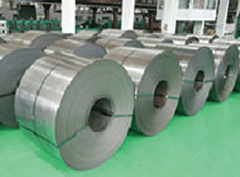
Recent weeks have brought two key developments with regard to trade policy on stainless steel products that will be to the detriment of consumers.
In China, the country’s stainless steelmakers no longer enjoy a 13% export rebate as of May 1, reducing greatly their incentive to export and instead leading them to focus on supplying more material to the domestic market. Export prices have duly risen although, as we highlight in our Asia analysis this month, strong fundamental factors have seen them rise by more than could have been expected merely as a result of this policy change. Prices have increased in China’s domestic market as well, illustrating local market strength, and so have steelmakers’ margins, which have moved toward multi-year highs.
The longer-term impact of this move will be to lift the global floor price for stainless steels, with producers in markets previously subject to intense competition from Chinese suppliers able to operate under reduced price pressure and increase their prices as well.
The move will not directly impact the European market of course, in which Chinese material has long been seen as prohibitively expensive due to steep anti-dumping duties and is thus largely absent from the market. This may change in the short term given the ongoing surge in European pricing, which has seen prices increase so much that even those imports with steep anti-dumping duties are looking competitively priced. But, in general, European consumers are finding their import options increasingly limited.
This month sees anti-dumping duties go into force on European imports of cold-rolled flat products from both India and Indonesia, and at rates that are likely to see such material removed from European markets over the coming months. Suppliers in countries not subject to anti-dumping duties that could supply European consumers in the place of India and/or Indonesia still exist but they are generally small-scale in nature and not as price-competitive as those from Indonesia. Stainless steel is looking expensive at the moment, and the high margins being enjoyed by producers are unlikely to last. Given the protection that they enjoy at present, however, producers are likely to be able to sustain prices around current, high levels for the time being.
In China, the country’s stainless steelmakers no longer enjoy a 13% export rebate as of May 1, reducing greatly their incentive to export and instead leading them to focus on supplying more material to the domestic market. Export prices have duly risen although, as we highlight in our Asia analysis this month, strong fundamental factors have seen them rise by more than could have been expected merely as a result of this policy change. Prices have increased in China’s domestic market as well, illustrating local market strength, and so have steelmakers’ margins, which have moved toward multi-year highs.
The longer-term impact of this move will be to lift the global floor price for stainless steels, with producers in markets previously subject to intense competition from Chinese suppliers able to operate under reduced price pressure and increase their prices as well.
The move will not directly impact the European market of course, in which Chinese material has long been seen as prohibitively expensive due to steep anti-dumping duties and is thus largely absent from the market. This may change in the short term given the ongoing surge in European pricing, which has seen prices increase so much that even those imports with steep anti-dumping duties are looking competitively priced. But, in general, European consumers are finding their import options increasingly limited.
This month sees anti-dumping duties go into force on European imports of cold-rolled flat products from both India and Indonesia, and at rates that are likely to see such material removed from European markets over the coming months. Suppliers in countries not subject to anti-dumping duties that could supply European consumers in the place of India and/or Indonesia still exist but they are generally small-scale in nature and not as price-competitive as those from Indonesia. Stainless steel is looking expensive at the moment, and the high margins being enjoyed by producers are unlikely to last. Given the protection that they enjoy at present, however, producers are likely to be able to sustain prices around current, high levels for the time being.
Source: Fast Markets
Các tin khác
- Viet Nam extends anti-dumping duties on some Thai sugar products to 2031 (05/06/2026)
- Hong Kong: Ministry of Commerce Rules on Inheritance of Anti-dumping Duty Rates for Copolymer Polyoxymethylene Imports Originating from S Korea, Thailand and Malaysia (05/06/2026)
- Early-season Vietnamese lychees conquer US consumers (05/06/2026)
- Global rubber prices surge, raising hopes for Vietnamese exporters (05/06/2026)
- Modern logistics creates new growth opportunities for Lang Son’s border-gate economy (05/06/2026)